Israeli President Isaac Herzog formally tasked opposition leader Gadi Eisenkot on Sunday with forming the next government.
The former army chief now has 28 days to turn a fractured anti-Netanyahu camp into a working majority, and the math does not add up easily.
Eisenkot set a grave tone at the ceremony at the President’s Residence in Jerusalem. “We are in the midst of a political crisis, and our failure would pose a major risk to Israel’s future,” he warned.
Israel, he said, would remain “in a state of emergency” as long as “several fronts remain active” and the goals of the war “have not yet been achieved.”
He also pointed to a “devastating diplomatic crisis,” saying that even some of Israel’s closest allies were calling for their relations with the country to be “reviewed.”
At home, he warned that Israeli democracy faced “one of the most critical moments” in its history. A campaign to delegitimize democracy and growing distrust of state institutions, “fueled day after day,” had brought the country to “an extremely dangerous point.”
Herzog urged Eisenkot to build a government that would serve “both those who voted for you and those who did not.” Israel, he said, needs stability.
The president called for progress in talks with Lebanon and Israel’s other neighbors, and for implementing President Trump’s 20-point plan for Gaza. He also said Israel must adapt to a “new political reality” in the United States after the midterm elections, while pursuing a “relentless and determined fight against terrorism and the empire of evil” on all fronts, according to Haaretz.
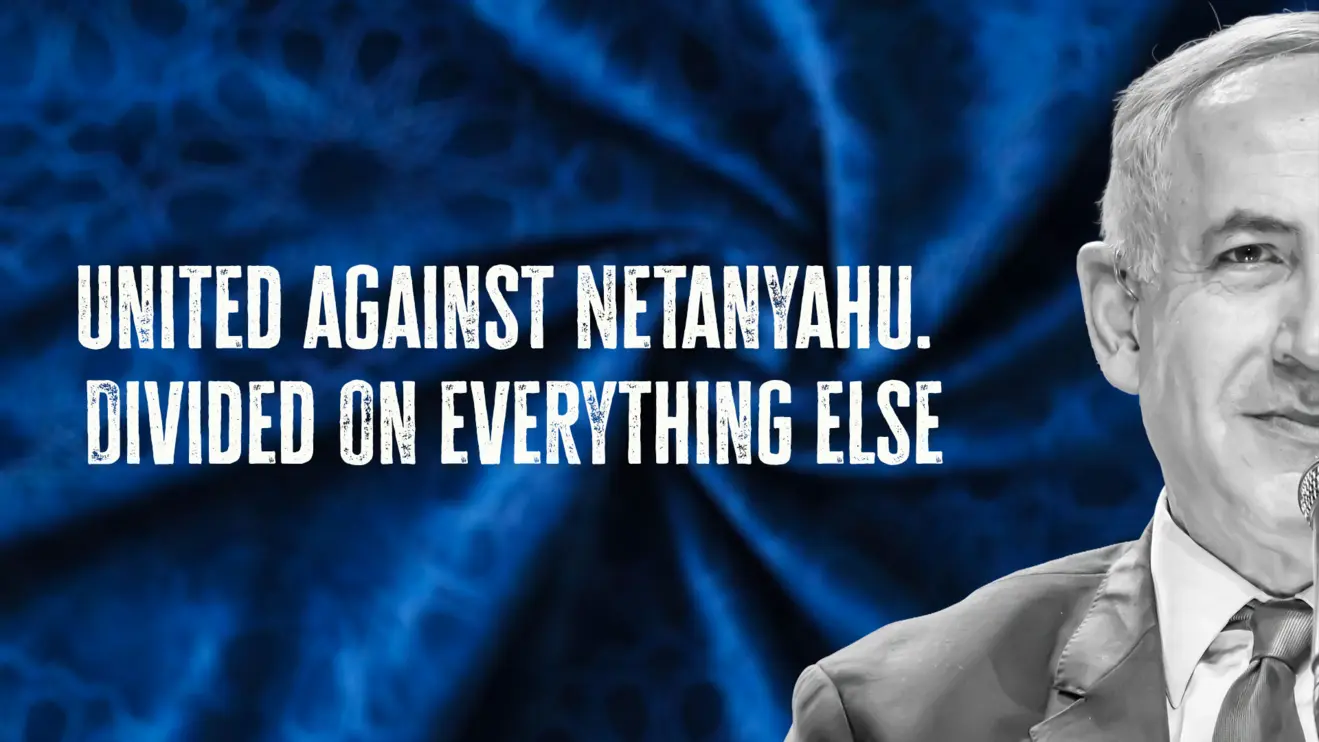
A camp united only against Netanyahu
The real challenge starts now. Eisenkot’s bloc won 48 seats in the October election, well short of the 61 needed. His allies share one goal, ending nearly two decades of Netanyahu rule, but little else.
Every route to a majority runs into a veto. The Arab parties, United List and Ra’am, have offered their 19 seats, enough for a comfortable 67. But Avigdor Liberman’s Yisrael Beytenu refuses any deal with them, even outside support for a minority government.
Liberman has instead opened the door to the ultra-Orthodox parties, Shas and United Torah Judaism, whose 13 seats would give the opposition exactly 61.
That would mean compromising on military service for yeshiva students, the issue that has divided Israeli society for years. Other partners in the bloc may balk at such concessions, and United Torah Judaism has so far refused to back either candidate.
Eisenkot also signaled on Sunday that he was ready to bring Netanyahu’s own Likud into a coalition, a sign of how few options he has.
The clock is ticking: 28 days, with a possible 14-day extension. If he fails, Israel could be heading toward yet another election.