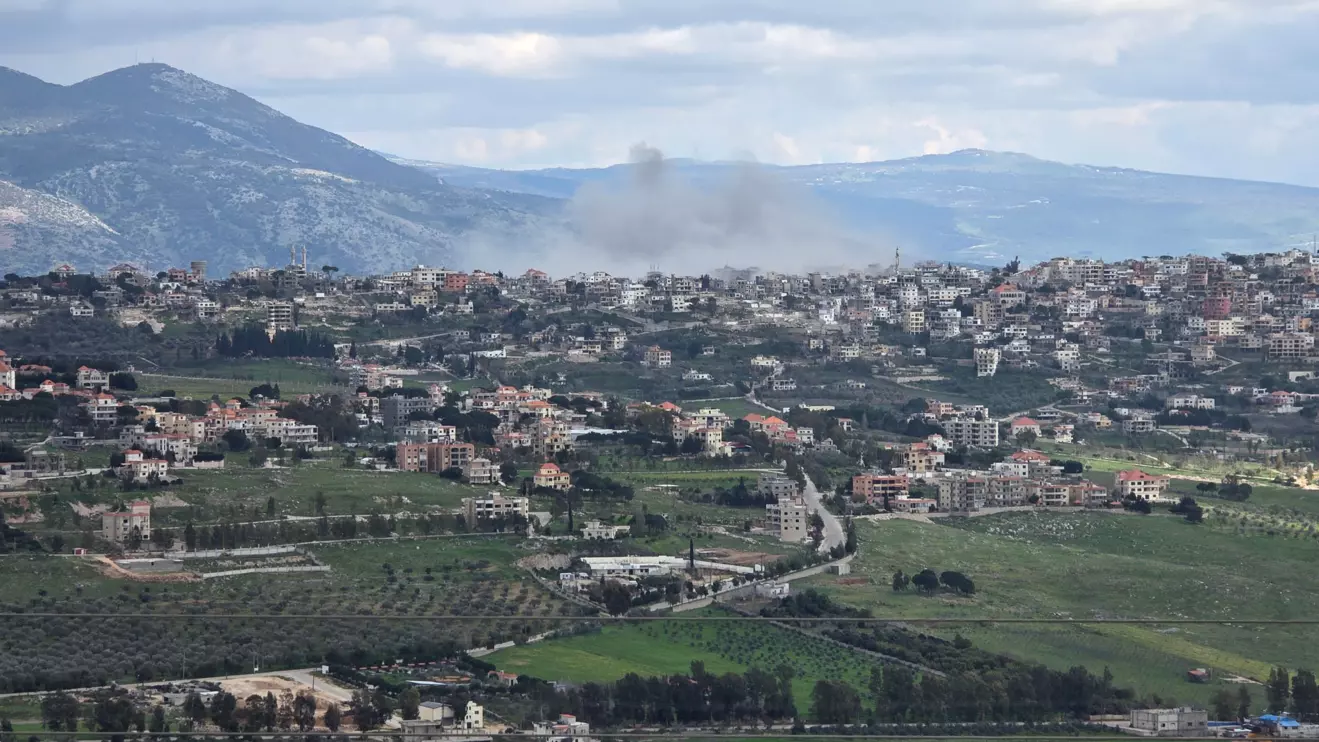
Following the announcement that it had achieved "operational control" of the Ali Taher ridge, the Israeli military is reportedly preparing to reduce troop levels in southern Lebanon and shrink the footprint of its occupied "buffer zone," according to several Israeli security officials cited by Israel's Channel Kan 11.
The officials said discussions are underway to establish a new zone "closer to the border," which would be delineated by a so-called "Grey Line" roughly 3 to 4 kilometers deep from the Blue Line, the UN-recognized demarcation between Israel and Lebanon.
This would represent a significant pullback from the current "Yellow Line," which stretches across the south at a depth of 8 to 10 kilometers from the border.
Within this narrower zone, the Israeli military has reportedly been constructing military positions where troops would be stationed on a more permanent basis.
Ali Taher: Iran's underground stronghold in the south
The reported plans follow the fall of the Ali Taher ridge, a fortified mountain complex in southern Lebanon that had stood for decades as one of the most strategically significant assets in Hezbollah's arsenal, and, by extension, in Iran's regional "ring of fire" network aimed at Israel's northern border.
Carved 30 to 50 meters into solid rock and built over roughly two decades with substantial Iranian engineering and financial support, the underground complex reportedly housed command-and-control centers, weapons depots, field clinics, and staging areas overlooking the Litani River and the Hula Valley, a position considered ideal for coordinating potential ground incursions into the Galilee.
The Israeli military reportedly took the ridge after a months-long siege that favored containment over direct assault: securing the surrounding high ground by May 31, capturing the nearby village of Kfar Tibnit by mid-June to seal off underground access points, and gradually cutting off resupply efforts - including intercepting supply drones - before the remaining fighters inside the tunnel network were forced to abandon the position.
The prospect of a reduced buffer zone suggests Israel may see the neutralization of Ali Taher as removing one of the most pressing threats along the border, potentially allowing for a lighter, more sustainable troop presence going forward.
However, officials cited by Kan 11 stressed that discussions remain ongoing, and no final decision on troop levels or the shape of the new zone has been confirmed.