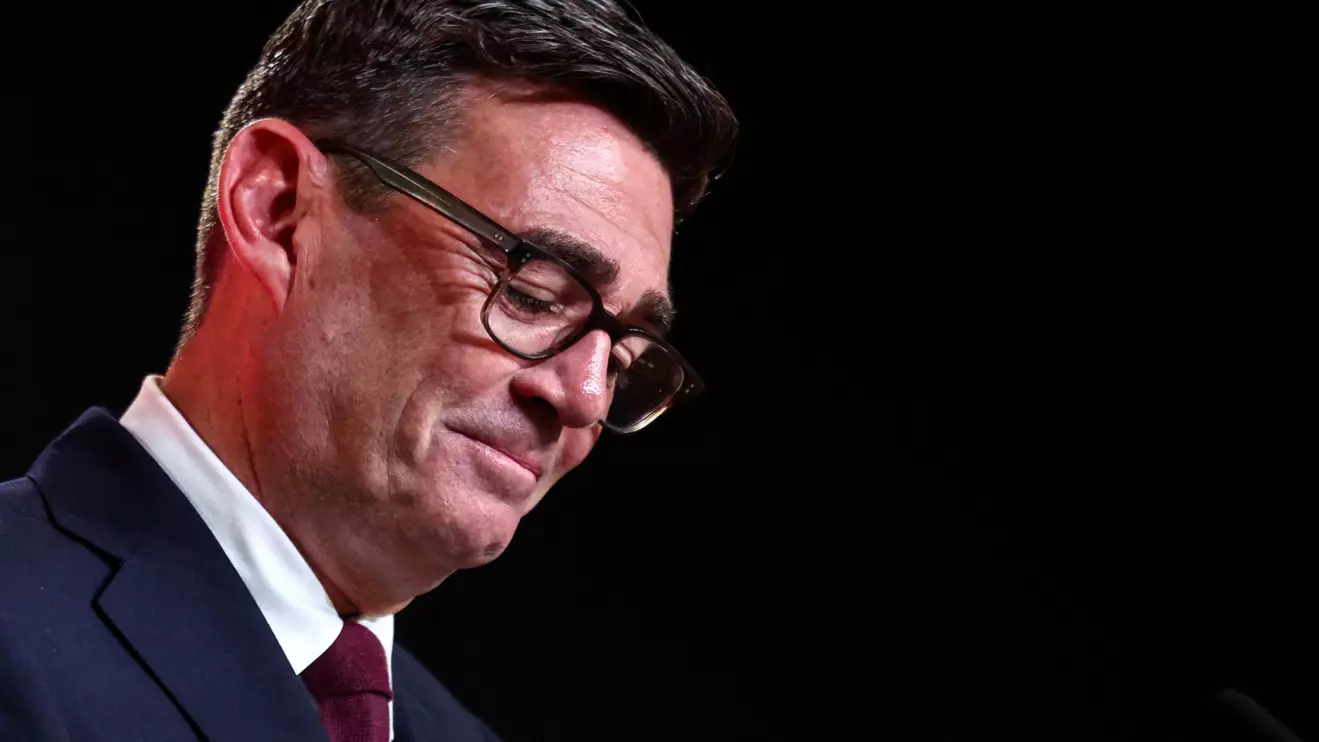
After enduring one of the worst moments of his career when he lost his second bid for the Labour leadership in 2015, Andy Burnham spoke of the pain of being "rejected by people you know" and left for Manchester to escape London politics.
Just over a decade later, the man whose stint as Greater Manchester mayor saw him dubbed 'the King of the North' has taken over as Labour leader to become Britain's seventh prime minister in that period.
The defeat and self-imposed exile that appeared to end his chances of ever becoming prime minister instead helped propel him to the most powerful job in Britain unopposed.
In his first speech as prime minister on the steps of Downing Street on Monday, Burnham promised a new economic model and a more active state to end years of political instability.
"We have not been good enough, and we need to be better," he said. "Britain needs to show the world that we can regain our stability once again."
BURNHAM BRINGS HOPE, CHARISMA — AND UNANSWERED QUESTIONS
Known for his easy-going manner and natural optimism, Burnham, 56, offers a marked contrast to the more restrained and stilted style of his predecessor, Keir Starmer.
Over nine years as Greater Manchester mayor, Burnham earned a reputation as a skilled communicator prepared to take on central government in pursuit of a better deal for his area of northwestern England.
Burnham's pitch to his party is that he has the experience and vision to connect with voters and defeat the populist anti-immigration Reform UK party, led by veteran Brexit campaigner Nigel Farage, which has topped the opinion polls for months.
One Labour lawmaker said Burnham's victory had transformed the mood among colleagues, convincing many that the party had finally found a leader capable of taking on — and defeating — Reform before the next national election in 2029.
"It feels like the dark clouds that had been sitting over the party have been lifted," the lawmaker said, on condition of anonymity. "There is an element of hope again."
Yet despite the enthusiasm surrounding Burnham, there is anxiety from some in his party about what his government will actually look like.
Burnham has repeatedly said a main theme of his government would be shifting power from central government towards regional leaders, something he called the "biggest rebalancing of power" in recent British history.
That ambition sits alongside his belief in "business-friendly socialism", a philosophy that seeks to combine greater state control of essential services such as energy and transport with close cooperation between government and business.
The approach has left investors unsure how much he will prioritise either state intervention or market forces.
Even senior ministers were not informed in advance what Burnham's cabinet team would look like, according to their aides, complicating efforts to gauge his government's priorities.
Those who worked with him in Manchester say this is the way Burnham likes to work: by listening, and testing ideas.
"He would spend the day out and about talking to people rather than ... writing reports," said Rose Marley, a mayoral adviser in Manchester and the head of Co-operatives UK, a not-for-profit body that supports member-owned businesses.
ROSE THROUGH RANKS UNDER TONY BLAIR AND GORDON BROWN
Burnham was born in Liverpool, where his father worked as a telephone engineer and his mother as a receptionist. He graduated in English from Cambridge and then followed a familiar route into politics, working first as a researcher and then as an adviser in parliament.
He first served as a junior minister under then-prime minister Tony Blair, and later as culture and then health minister under Blair's successor, Gordon Brown.
He mounted his first unsuccessful bid for the Labour leadership in 2010, his second five years later.
Some Labour critics accuse Burnham of repeatedly changing priorities during his career.
In the last year, Burnham has criticised the government for "being in hock to the bond markets" with its fiscal conservatism. He has called for nationalisation of key industries and for Britain to rejoin the European Union.
But in recent weeks, he has modified his message. He said his "bond markets" comment had been misrepresented; that the nation's finances were too constrained for large-scale nationalisations; and that Britain was not going to rejoin the EU any time soon.
In 2022, after the last soccer World Cup, Starmer as opposition leader poked fun at Burnham, always seen as a rival, likening him to someone who would switch allegiance to whoever might win the tournament.
Burnham "got to see his 'boyhood team' Argentina win the World Cup", he said in a speech. "It was a mixed bag because he also got to see his 'boyhood team' France lose the final and his 'boyhood teams' Morocco and Croatia lose in the semis."
Yet Starmer eventually undermined his own standing in his time in office with perennial U-turns when his policies faced pushback.
To avoid this trap and rebuild support before the next parliamentary election, several lawmakers said Burnham would have to show he could lead boldly.
Otherwise, one Labour lawmaker said, he could also find himself out of power in two years.