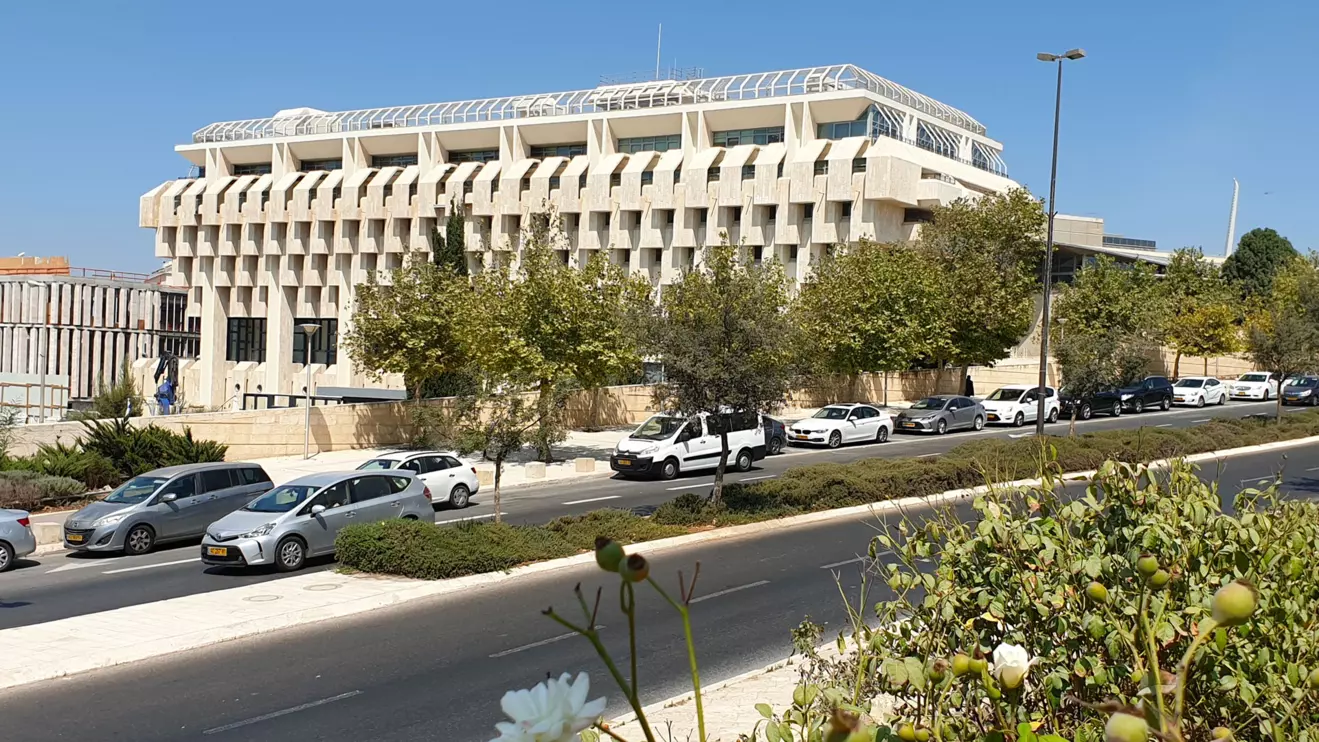
The Bank of Israel’s Monetary Committee, chaired by Governor Prof. Amir Yaron, cut the benchmark interest rate from 4.25% to 4% in a move that surprised most economists, who had expected policy to remain unchanged.
It marks a second consecutive reduction after the committee lowered the rate by 0.25 percentage points at its previous meeting at the end of November—its first cut since early 2024.
In its statement, the central bank pointed to easing inflation pressures. It said the inflation environment has moderated, noting that the Consumer Price Index for November fell 0.5% and annual inflation stands at 2.4%.
Forecasters, the bank added, expect annual inflation to rise in the December CPI reading before easing again toward the midpoint of the 1%–3% target range.
The committee also highlighted currency dynamics since the last decision.
The shekel has strengthened 3.1% against the US dollar, 1.5% against the euro and 2.2% on a nominal effective basis, moves that, all else equal, tend to reduce imported inflation and can provide additional room for a more supportive monetary stance.
Alongside the rate decision, the Bank of Israel’s Research Division released an updated macroeconomic forecast, its first major revision since September, when its previous projection was compiled amid heightened uncertainty at the peak of the Gaza war.
The new forecast is built on the assumption that the ceasefire holds and that the number of reservists continues to decline.
Under that scenario, the bank expects supply-side constraints to gradually ease while domestic demand rises in a measured way, helping to limit excess demand pressures.
The Research Division estimates GDP grew 2.8% in 2025 and projects growth of 5.2% in 2026 and 4.3% in 2027. Unemployment in the core working-age population (25–64) is expected to remain low, averaging 3.3% in 2026 and 3.5% in 2027.
Inflation is now forecast at 2.5% in 2025, down from 3% in the September projection, and at 1.7% and 2% in 2026 and 2027, respectively.
On fiscal metrics, the budget deficit is estimated at 4.8% of GDP in 2025, narrowing to 3.9% in 2026, while public debt is expected to hold around 68.5% of GDP through 2025–2027. The bank cautioned that while uncertainty has declined following the ceasefire, risks to the outlook remain significant.