Turkish violations of Greek airspace have surged back into a common occurrence in 2026, concentrated over the Aegean Sea and increasingly carried out by drones, Kathimerini reported Thursday.
From zero recorded Turkish violations in 2024, the number jumped to 225 in 2025 and has already reached 433 since the start of 2026, with "a clearly upward trend," the newspaper said, citing public data from the Greek Ministry of Defence.
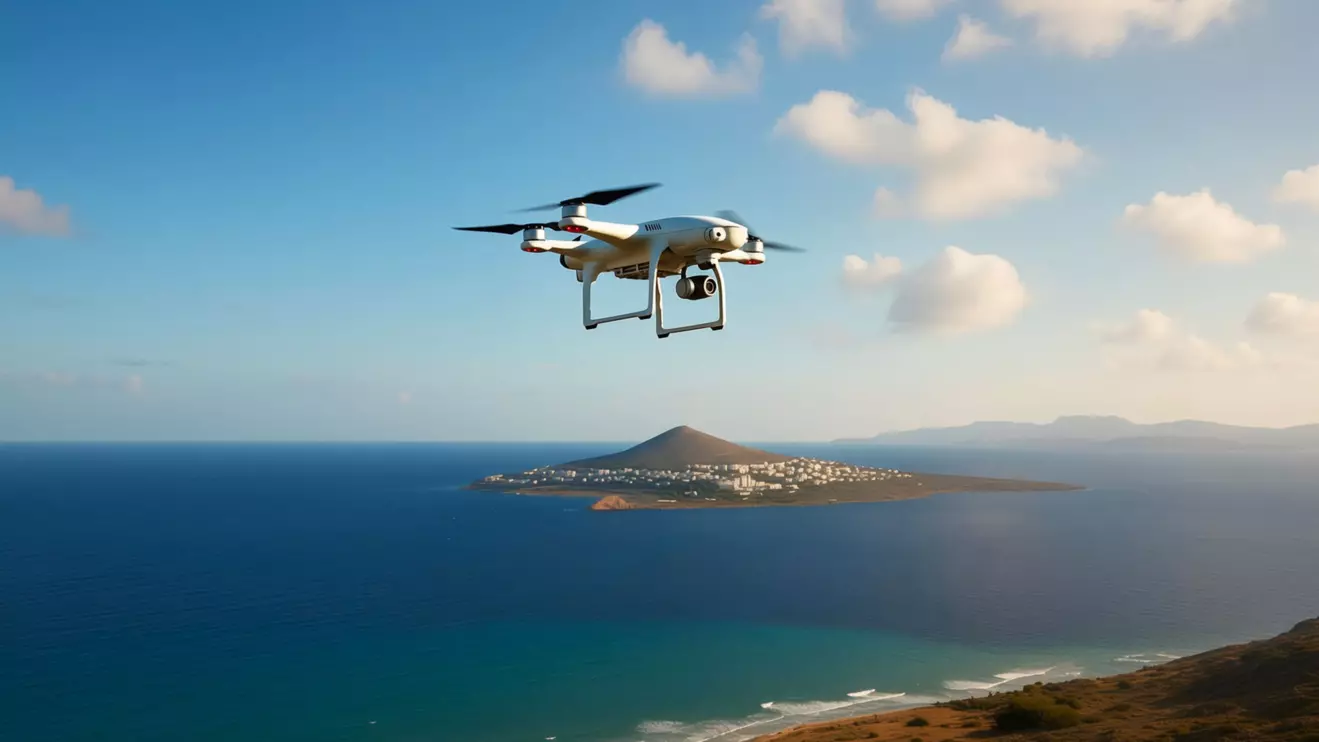
The increase, recorded above the Aegean, has become even sharper over the past two months, marked by what Kathimerini calls a "new element": these intrusions are "no longer mainly carried out by fighter jets, but by drones of various types," both armed and unarmed, deployed across all branches of the Turkish armed forces, navy, air force, army, gendarmerie and intelligence services. The drones most commonly used are the Bayraktar, the Aksungur and the ANKA-S.
Since the start of August, Greece's Defence Ministry has recorded 97 violations of national airspace, 72 of them by drones, according to Kathimerini's tally.
Official figures reviewed by AFP show these were carried out by 33 drones, including two armed ones, and six aircraft. A military source declined to comment when contacted by AFP, referring instead to the ministry's website.
In doing so, "Ankara is adopting a logic of low-cost, risk-free violations, forcing Athens into perilous interceptions at an exorbitant financial cost," Kathimerini argues, pointing to this new "asymmetry." Greece's air force doctrine remains based on maintaining continuous air presence "until all Turkish aircraft that have entered Athens' area of responsibility are intercepted and leave the Aegean", interceptions carried out using F-16 and Mirage 2000-5 fighter jets, as well as CN-235 and ATR-72 surveillance aircraft.
"The cost of an F-16 taking off for a reconnaissance and interception mission is around €20,000 per flight hour, while the equivalent cost for a Bayraktar drone violating national airspace can be ten times lower, and without any risk to human life," Kathimerini notes.
Ankara has also resumed this year triggering virtual aerial confrontations, a phenomenon that had ceased over the Aegean for the past three years, the paper observes.
Even so, these figures remain far below those recorded during the peak years of Greek-Turkish tensions, with 11,258 violations in 2022 and 1,172 in 2023.