Iran
Iran's endgame: Agreement or capitulation
President Donald Trump warned Monday, in a Truth Social post, that the US naval blockade on Iran would only be lifted in the event of a "deal" or "total surrender."
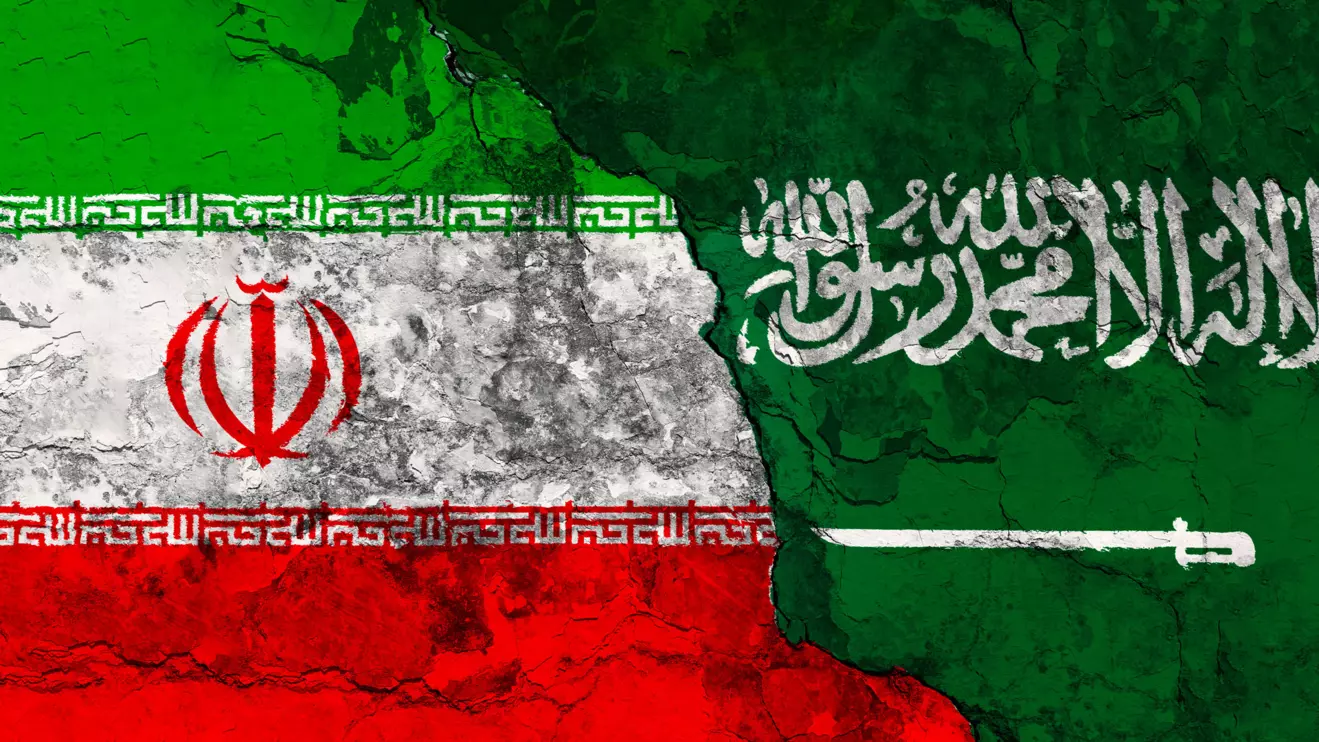
Saudi Arabia officially condemned Friday’s deadly Israeli strikes on Iran, describing them as "blatant aggression" against a “brotherly nation,” according to a statement by the Kingdom’s Foreign Ministry.
"The Kingdom expresses its strong condemnation and denunciation of the blatant Israeli aggressions against the Islamic Republic of Iran, a brotherly country, which violate its sovereignty and security, and constitute a clear breach of international laws and norms," the statement read.
While the language was aligned with diplomatic protocol and regional expectations, analysts suggest that behind closed doors, Riyadh views the Israeli strikes quite differently.
Saudi officials reportedly see the overnight Israeli air raids as a strategic correction delivered to a long-time rival. Despite recent efforts to thaw relations, Saudi Arabia continues to consider Iran a regional threat — particularly over its nuclear ambitions and its role in supporting proxy militias across the Middle East.
For Crown Prince Mohammed bin Salman, Israel’s bold military response may be perceived as a containment of Iranian influence — a move that aligns, albeit unofficially, with Saudi strategic interests.
Though Riyadh has not publicly endorsed the strikes, its silence beyond the initial condemnation could speak volumes about the deeper geopolitical calculations at play in the Gulf.
President Donald Trump warned Monday, in a Truth Social post, that the US naval blockade on Iran would only be lifted in the event of a "deal" or "total surrender."
Iran said on Monday there were no talks under way with the United States and no plans for any meetings, contradicting U.S. President Donald Trump, who had cited talks he said would take place that afternoon as justification for calling off attacks.
U.S. President Donald Trump said talks with Iran will happen on Monday but declined to set a deadline for an agreement after earlier saying he had called off an imminent attack in hopes of quickly reaching a deal to reopen the Strait of Hormuz and resolve the impasse over Tehran's nuclear capabilities.
To make this website run properly and to improve your experience, we use cookies. For more detailed information, please check our Cookie Policy.
Necessary cookies enable core functionality. The website cannot function properly without these cookies, and can only be disabled by changing your browser preferences.