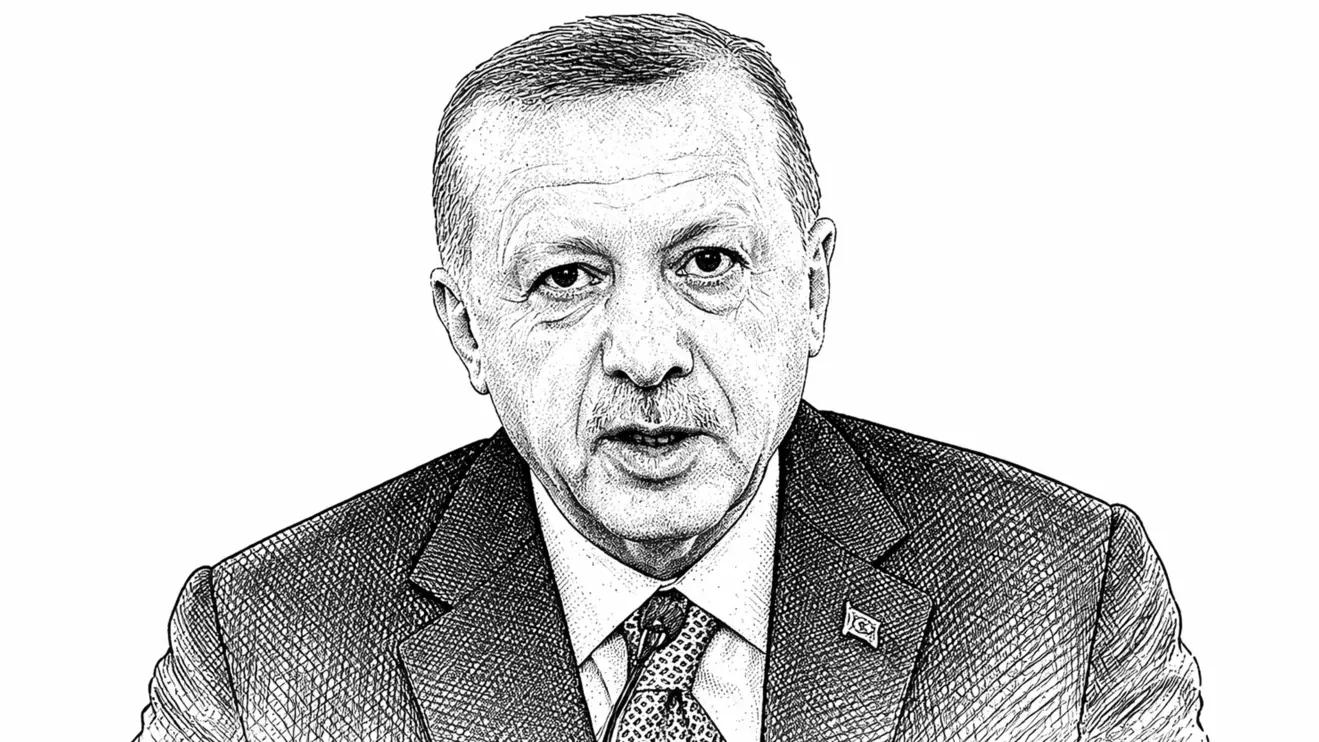
How to retreat without appearing to retreat? That's the equation Turkish President Recep Tayyip Erdoğan is attempting to solve as he quietly backtracks from his inflammatory anti-Israel stance.
Erdoğan positioned himself as the champion of the Palestinian cause and a vocal supporter of Hamas long before the October 7, 2023 massacres of Israeli civilians.
He relentlessly denounced Israeli policy and its leaders while imposing an embargo on Turkish exports to Israel, a theatrical gesture aimed primarily at his domestic audience ahead of Turkey's presidential election.
But today, the Turkish Raïs is attempting to reconcile with Jerusalem, having concluded that his extreme position has proven counterproductive. Diplomatic relations, notably, were never actually severed, a detail that exposes the performative nature of Erdoğan's anti-Israel theatrics.
Erdoğan now seeks to restore ties with Israel politically, but also, crucially, economically. The embargo has severely damaged Turkish companies, who watched helplessly as competitors filled the vacuum they were forced to leave.
Turkey's construction firms, defense contractors, and exporters have paid dearly for their president's grandstanding.
The Turkish leader has recognized that his extreme posture harms rather than helps him diplomatically. While Turkish rhetoric thundered against Israel, other regional players, normalized relations and reaped economic benefits. Turkey, meanwhile, isolated itself for diminishing returns.
Hosting Hamas While Seeking Israeli Favor
The irony is rich. Turkey continues hosting senior Hamas leadership in Istanbul while Erdoğan attempts to mend fences with Jerusalem. This duplicity reveals the transactional cynicism underlying Turkish foreign policy, loud denunciations for domestic consumption, quiet accommodation for practical interests.
Erdoğan's calculation was simple: position Turkey as the defender of Palestinians and leader of the Muslim world while undermining rivals like Saudi Arabia and Egypt. The strategy worked domestically, his fiery rhetoric resonated with Turkish voters and helped secure his re-election.
But internationally, it backfired spectacularly. Turkey found itself diplomatically sidelined as the Abraham Accords reshaped Middle Eastern alignments.
While Gulf states forged partnerships with Israel yielding technological cooperation, investment opportunities, and strategic coordination, Turkey reaped only rhetorical satisfaction, and economic pain.
The Limits of Erdoğan's Influence
Perhaps most damaging, Erdoğan discovered his passionate advocacy for Palestinians yielded no meaningful influence. Hamas continued pursuing its own agenda regardless of Turkish preferences. The Palestinian Authority viewed Turkey's Hamas support with suspicion. And the broader Arab world largely ignored Turkish posturing, recognizing it as self-serving rather than genuinely principled.
Erdoğan's embrace of Hamas, a designated terrorist organization by the United States, European Union, and many others, also strained Turkey's relations with Western allies already troubled by his authoritarian drift, regional adventurism, and purchase of Russian weapons systems.
Now comes the awkward retreat. Turkish officials float trial balloons about "pragmatic engagement" with Israel. Business delegations quietly explore restoring commercial ties. The harsh anti-Israel rhetoric has notably softened, replaced by more measured language about "regional stability" and "two-state solutions."
But here's Erdoğan's dilemma: having built his brand on uncompromising support for Palestinians and denunciation of Israel, how does he pivot without appearing weak, unprincipled, or, worse, having been wrong? His domestic audience, fed years of inflammatory rhetoric, won't easily accept a sudden about-face.
The Art of the Tactical Reversal
Erdoğan's likely strategy involves gradual de-escalation wrapped in face-saving narratives. Perhaps Turkey's "principled stand" created space for Palestinian voices. Maybe "changed circumstances" require "flexible approaches." Possibly Turkey's "unique position" enables it to serve as a "bridge" between parties.
The reality is simpler: Erdoğan's radical posturing proved expensive and ineffective. Turkish companies lost contracts, investments, and market access. Turkey's regional influence diminished rather than grew. And the Palestinians themselves gained nothing from Turkey's performative solidarity beyond empty rhetoric.
This isn't Erdoğan's first such reversal. He's executed similar pivots on Syria, Russia, Egypt, and the Gulf states—thundering opposition followed by quiet accommodation when circumstances demanded.
Each time, domestic audiences receive carefully constructed narratives explaining why the shift represents strength rather than weakness, principle rather than pragmatism.
But the pattern reveals a fundamental problem with Turkish foreign policy under Erdoğan: it prioritizes short-term domestic political gains over long-term strategic interests. The president's need to project strength, champion causes, and dominate headlines drives decisions that ultimately undermine Turkish national interests.
Every such reversal erodes Turkey's credibility. Why should any party, whether ally or adversary, trust Turkish commitments when they're transparently driven by domestic political calculations and subject to reversal when convenient? Why invest in relationships with Ankara when positions shift with electoral calendars?
Erdoğan's Hamas embrace and Israel denunciations won him votes at home but cost Turkey influence abroad. Now he's discovering what many predicted: radical posturing is politically satisfying but strategically sterile. You cannot simultaneously host terrorist leaders and expect to be taken seriously as a responsible regional power.
What Comes Next
Watch for Erdoğan to slowly restore Israeli ties while maintaining enough pro-Palestinian rhetoric to satisfy his base. Economic relationships will normalize before political ones. Business will precede diplomacy. And Turkish media—tightly controlled by the regime—will present the shift as wise statesmanship rather than tactical retreat.
But the damage is done. Turkey has demonstrated, again, that its positions are negotiable, its principles flexible, and its commitments conditional. This may serve Erdoğan's domestic political needs, but it undermines Turkey's standing as a serious regional power.
The Turkish president is learning what many populist leaders eventually discover: inflammatory rhetoric is easy, but results are hard.
Posturing wins headlines, but pragmatism wins influence. And sometimes, the positions you adopt for short-term gain become long-term liabilities you must awkwardly unwind.
Erdoğan wanted to be the champion of Palestinians and scourge of Israel. He's ending up as neither, just another leader discovering that international politics requires more than theatrical gestures and crowd-pleasing denunciations.
The question now is whether he can execute his retreat gracefully enough to preserve face while restoring relationships.
Based on past performance, expect a prolonged, messy process featuring contradictory signals, selective amnesia about previous positions, and creative narratives explaining why what looks like retreat is actually strategic repositioning.
Erdoğan's trying to back away from a corner he painted himself into, and the paint is still wet.