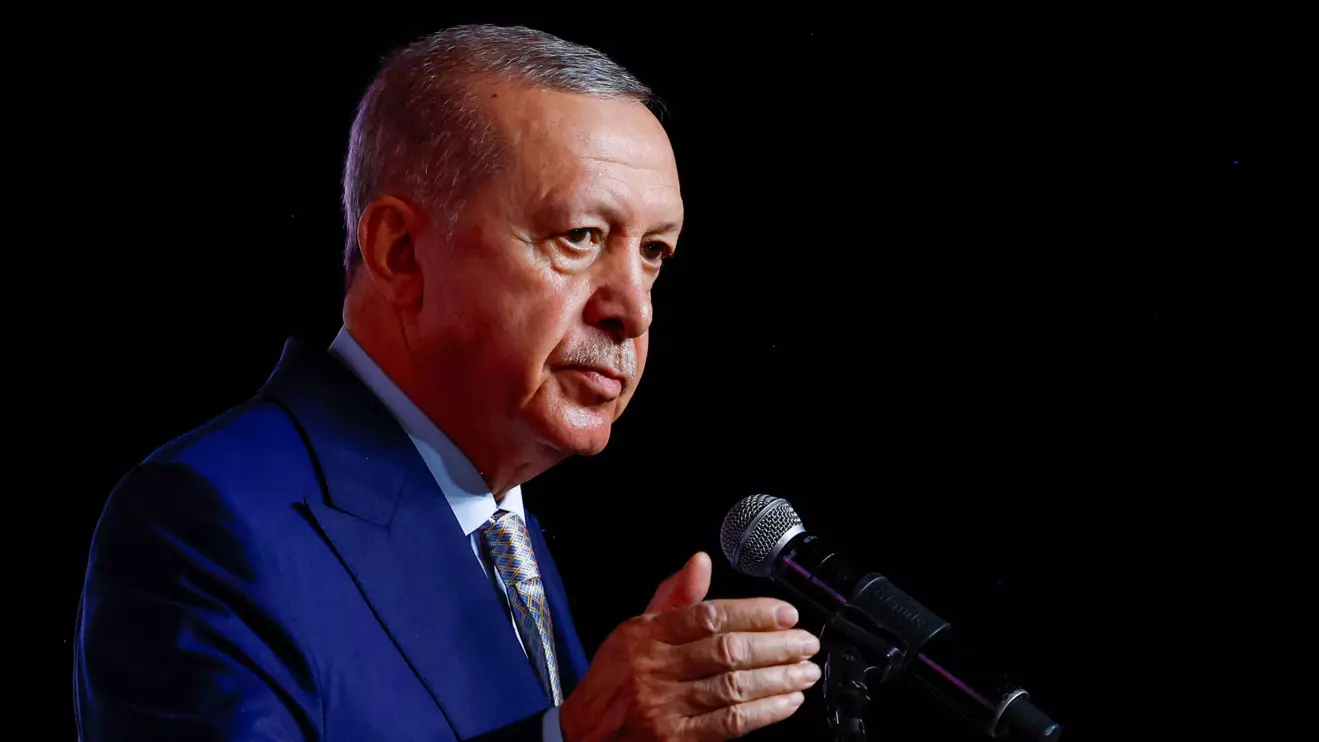
Turkish President Recep Tayyip Erdogan escalated his rhetorical offensive against Israel on Wednesday, telling lawmakers from his ruling AK Party that Israeli attacks on Lebanon and Syria had reached a point where they "also threaten Turkey », a claim that says far more about Turkish domestic politics than it does about regional security realities.
Let us be clear about what Wednesday's parliamentary address actually was: a carefully crafted performance for Turkish public opinion. Erdogan has built much of his political brand in recent years on championing the Palestinian cause and positioning himself as the Muslim world's most vocal defender against Israeli "aggression." With Turkey's economy under persistent pressure and his popularity facing headwinds at home, few topics rally his base more reliably than attacking Israel and Benjamin Netanyahu.
The claim that Israeli operations in Lebanon and Syria threaten Turkey's security stretches credibility. Israel has not targeted Turkish territory, Turkish forces or Turkish interests. Erdogan's assertion that Ankara's security is "tied to that of Lebanon and Syria" is a political statement, not a strategic assessment.
The Subcontractors of Zionism
Erdogan's speech took a conspiratorial turn when he accused unnamed "small entities" of acting as "Zionist subcontractors" to destabilise Africa and the Mediterranean, including, apparently, by "igniting discord" on Cyprus. He declined to name these entities or provide any evidence.
This is classic Erdogan: vague enough to mean everything, specific enough to feed the imagination of his supporters.
Israeli Prime Minister Benjamin Netanyahu wasted no time firing back, writing on X: "The antisemitic dictator Erdogan, who is committing genocide against the Kurds, supports the Hamas terrorist organization, oppresses his own people and imprisons political rivals, is the last person who can lecture the State of Israel on morality."
It is a response that lands hard, because the facts behind it are largely accurate. Turkey's treatment of its Kurdish population, Erdogan's documented support for Hamas, and his systematic dismantling of democratic institutions and press freedom at home make his lectures on morality and international law difficult to take seriously.
This is not the first time Erdogan has used the Israeli-Palestinian conflict as a foreign policy megaphone aimed primarily at a domestic audience. He has done so repeatedly, and with increasing intensity as his political fortunes have required it.
Turkey has halted trade with Israel and called for international measures against it, moves that play well in Ankara and Istanbul but have done precisely nothing to change the situation on the ground.
The genuine victims of the conflicts Erdogan so passionately denounces deserve advocates who are motivated by principle rather than poll numbers. On the evidence of Wednesday's performance, Erdogan is not that advocate.