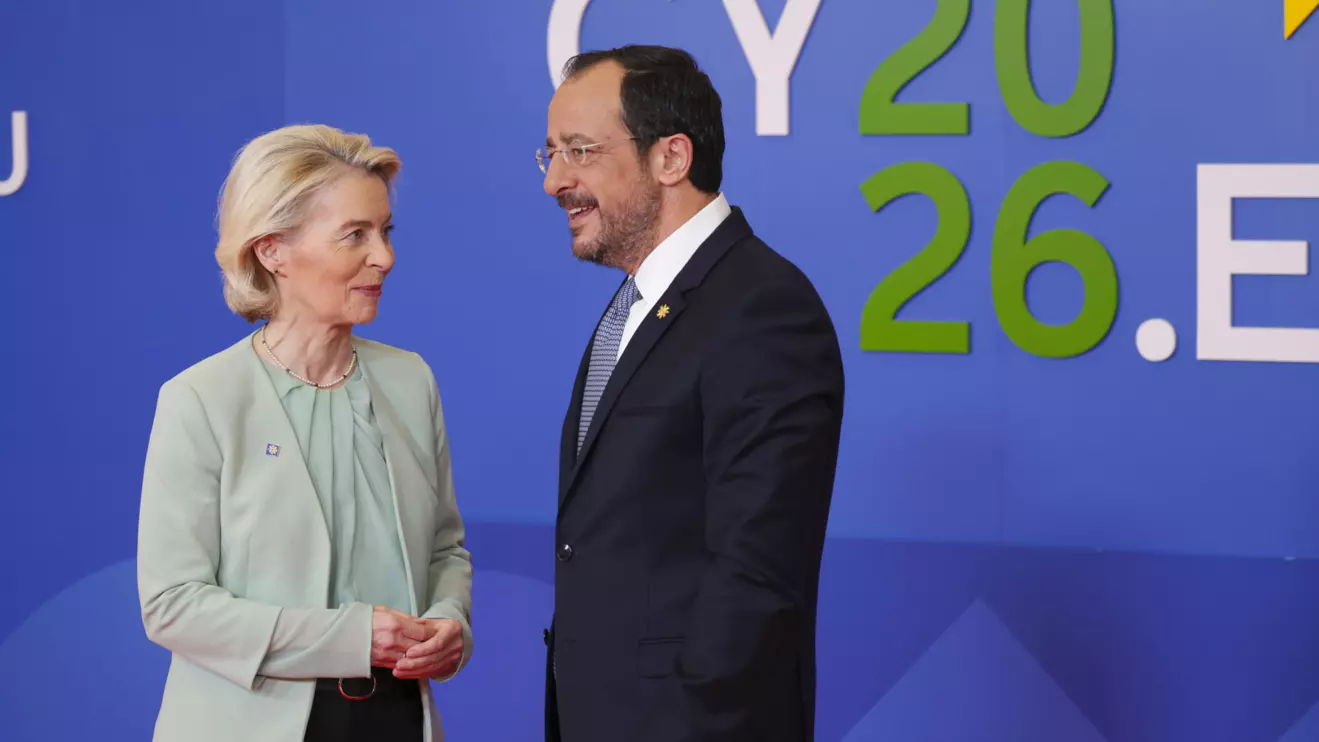
The leaders of all 27 EU member states convened in Cyprus on Thursday for an emergency summit dominated by the twin shocks of the Iran and Ukraine wars, and their mounting economic consequences for Europe.
On Friday in Nicosia, the European leaders will be joined by Lebanese President Joseph Aoun, Egyptian President Abdel Fattah el-Sissi, Syrian President Ahmed al-Sharaa and Jordanian Crown Prince Hussein bin Abdullah for a working lunch focused on Lebanon, where a ten-day ceasefire — extended by three weeks by US President Donald Trump on Thursday — is holding against the backdrop of renewed Israel-Hezbollah hostilities.
But it is Iran's effective closure of the Strait of Hormuz that is generating the sharpest alarm in European capitals. Around 20% of the EU's jet fuel relies on imports through the strategic waterway, and the disruption has sent energy prices surging across the continent.
Latvia's Prime Minister Silina urged her counterparts to go beyond existing tools. "I think we need to discuss what else we can do, is there something Europe can do to stop this high rise of prices which can affect our inflation rate?" she said.
Ireland's Taoiseach Micheál Martin, whose country takes over the EU's rotating presidency later this year, struck a broader note, warning that IMF growth forecasts are being downgraded worldwide. "It's extremely important that we get that conflict ended," he said.
The Cyprus summit underscores how the Middle East's wars have stopped being a distant crisis for Europe, and become a direct economic and strategic challenge.