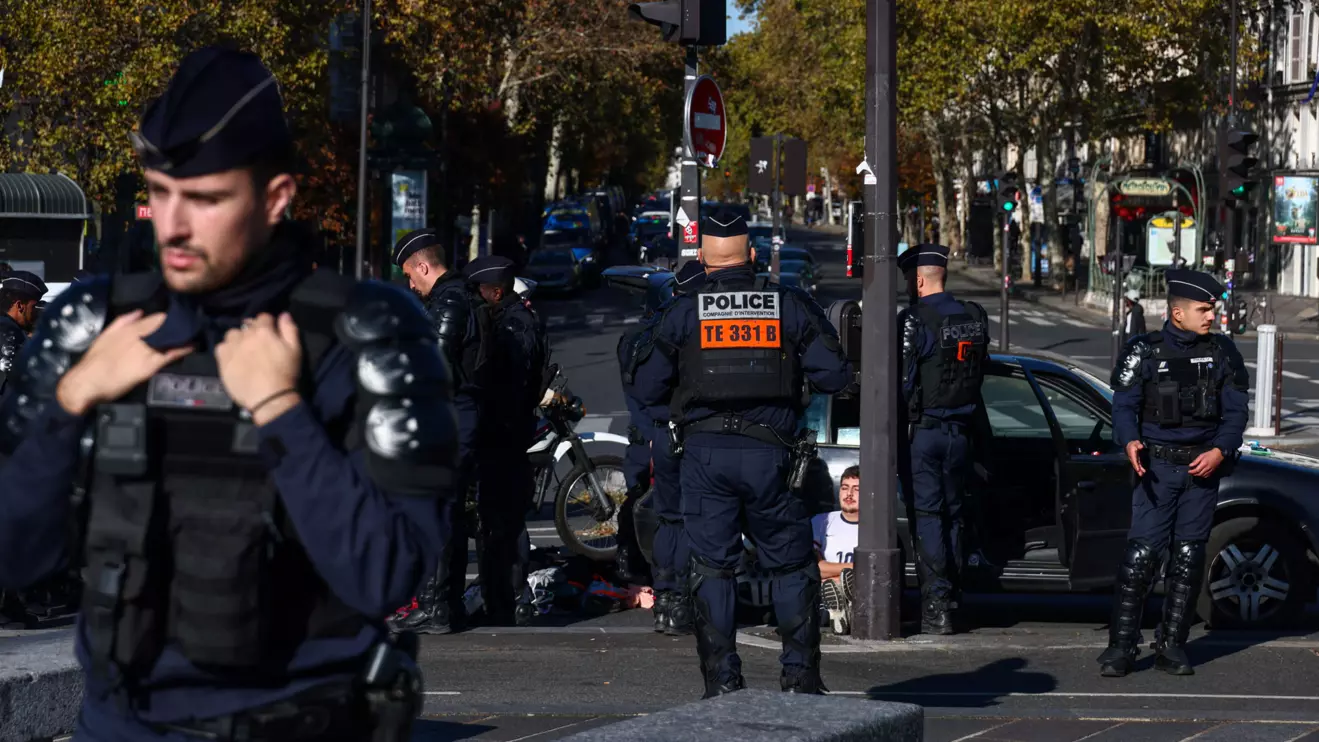
France deployed a 70,000-strong police presence to contain a widely expected bout of fresh unrest on Saturday in the latest nationwide protests driven by anger over living costs, public services and President Emmanuel Macron's government.
The demonstrations, which fall on Halloween, come two weeks after riots and looting caught security forces off guard, leaving damaged shops, public buildings and businesses in cities across France. Interior Minister Laurent Nunez has vowed not to let a repeat happen.
"Everyone is on deck to ensure an extremely firm response to any trouble," Nunez told a news conference earlier this week as he set out details of security arrangements for a day he described as carrying "a very high risk" of unrest.
France's top administrative court confirmed on Saturday a march between the emblematic Paris squares of Republique and Bastille will be banned, rejecting a challenge by unions. Demonstrations will instead have to be held on boulevards on the eastern fringe of the city, away from the main shopping areas in central Paris.
Authorities are also alert to the possibility that rioters could use Halloween masks to conceal their identities. Nunez noted that laws already allow police to ban face coverings when public order is at risk.
Some 150 gatherings were planned across France, the interior ministry said.
The US Embassy advised travellers to avoid areas where demonstrations or large gatherings are planned.
The protests gathered pace in late September as Macron's minority government launched 2027 budget talks. Facing public debt approaching 120% of economic output and rising borrowing costs, the government is under pressure to rein in spending, narrowing its room for manoeuvre.
Students angry at the dilapidated state of many schools, crowded classes and a university admissions system widely seen as unfair, have been joined by trade unions and a re-emergent "Yellow Vest" movement demanding action on the cost of living.
PROTESTS SPREAD ACROSS EUROPE
The protests have inspired youth-led protests across Europe, with demonstrations planned in more than 30 German cities on Saturday.
The French government's promises to reform education and ease fuel costs have failed to calm discontent.
"When I was little, I was told young people were the future," said Aaron Berthier de Grandry, a 15-year-old high school student in the Paris suburb of Nogent-sur-Marne who plans to join his third consecutive weekend of protests.
"Well, if we, as the future of France, lack resources, that means France will end up collapsing."
The unrest has handed a political boost to far-right leader Marine Le Pen, who leads opinion polls ahead of April's presidential election, while potential centrist successors to Macron remain divided.
The troubles are the latest blow to an economy which, data on Friday showed, was already shrinking in the third quarter.
The Chamber of Commerce estimates losses to retailers exceed €1 billion ($1.1 billion). Other estimates put the total at double that when including uninsured damage and lost revenue.
Along Paris' main shopping boulevards, early Christmas lights glow around boarded-up windows and security grilles. Among the shops targeted in previous unrest were outlets belonging to luxury brands including Hermes, Louis Vuitton and Burberry.
The government is pushing ahead with a controversial law making rioters liable to pay up to €10,000 for damage caused either by themselves or by groups they are deemed to be part of. Rights groups and some lawyers say the measure risks undermining the right to peaceful protest.
By Dominique Vidalon and Noemie Olive