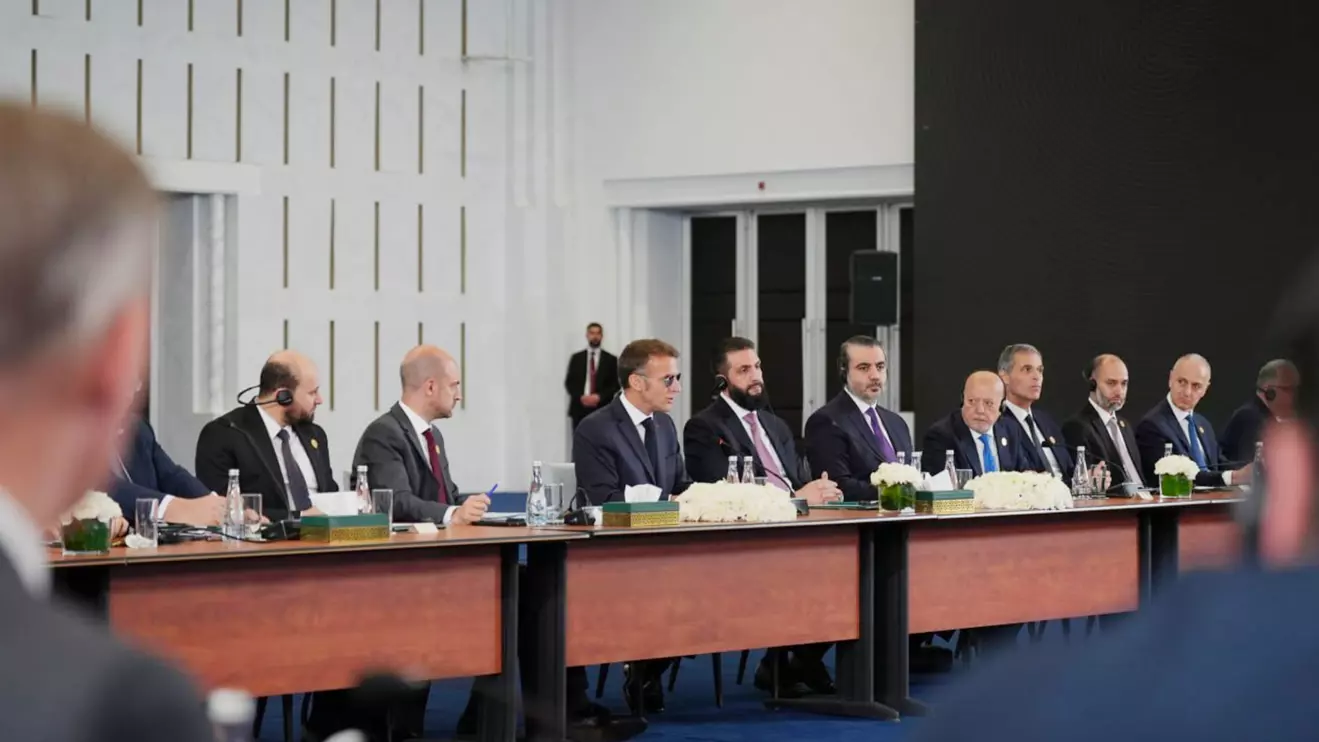
French President Emmanuel Macron visited Damascus on Tuesday, becoming the first Western head of state to travel to Syria since the fall of Bashar al-Assad.
During the visit, he signed a series of cooperation agreements with Syrian President Ahmad al-Sharaa covering investment, infrastructure, transport, healthcare, banking and institutional development.
The signing ceremony was suitably ceremonial. French Foreign Minister Jean-Noël Barrot and his Syrian counterpart Asaad al-Shaibani signed a Framework Declaration for Comprehensive Cooperation, alongside agreements with the French Development Agency (AFD) and Expertise France.
The optics were excellent. The substance is another matter.
France is discovering Syria at precisely the moment when the most lucrative reconstruction opportunities have already been allocated.
Turkey has been embedded in northern Syria since long before Assad's fall. The UAE, Kuwait and Saudi Arabia have signed major investment agreements and are actively deploying capital across the country. These are not latecomers, they are the established players who shaped the post-Assad economic landscape while France was still figuring out its diplomatic positioning.
French companies hoping to win contracts in Syria will find themselves competing against well-connected Gulf and Turkish rivals who got there first and have spent months cultivating relationships with the new authorities in Damascus.
The Syria visit follows a familiar Macron playbook: arrive after the key decisions have been made, sign agreements of principle and declare a historic turning point.
It is the same approach France attempted in Lebanon, where despite years of diplomatic activism, emergency conferences, ceasefire proposals, calls for Hezbollah disarmament, French influence on the actual trajectory of events has been close to zero.
In Lebanon, France talked. The United States, Israel and the Gulf states acted. The Washington framework agreement of June 26, the most significant diplomatic development in Lebanon in decades, was negotiated without Paris at the table.
In Syria, the pattern may repeat itself. The agreements signed Tuesday are real. Whether they translate into meaningful French economic or political influence in a country where Ankara, Abu Dhabi and Riyadh have already planted their flags is a question that the markets, not the ceremony rooms, will answer.
What Macron Actually Achieved
To be fair: the visit itself has symbolic value.
Normalising relations with post-Assad Syria, lifting some sanctions and opening a diplomatic channel costs France little and may yield modest dividends. And for a president with low domestic approval ratings and a term winding down, a historic first visit to Damascus generates the kind of international coverage that domestic politics rarely provide.
But symbolism and influence are different things. France in Syria and Lebanon is increasingly a spectator dressed in the clothes of a protagonist.
The agreements are signed. The real question is whether anyone in Damascus - or Beirut - will remember them when the contracts are awarded.