Egypt
Turkey’s maritime gambit: offering Egypt waters it doesn’t own
Turkey says it is ready to sign a maritime boundary deal with Egypt in the eastern Mediterranean, offering Cairo extra waters at Greece’s expense.

On 4 September 2026 the UN General Assembly adopted, by 164 votes to 1, the resolution Correct the Map: rebalancing global cartographic representation and promoting equitable representation of the world’s regions, particularly Africa.
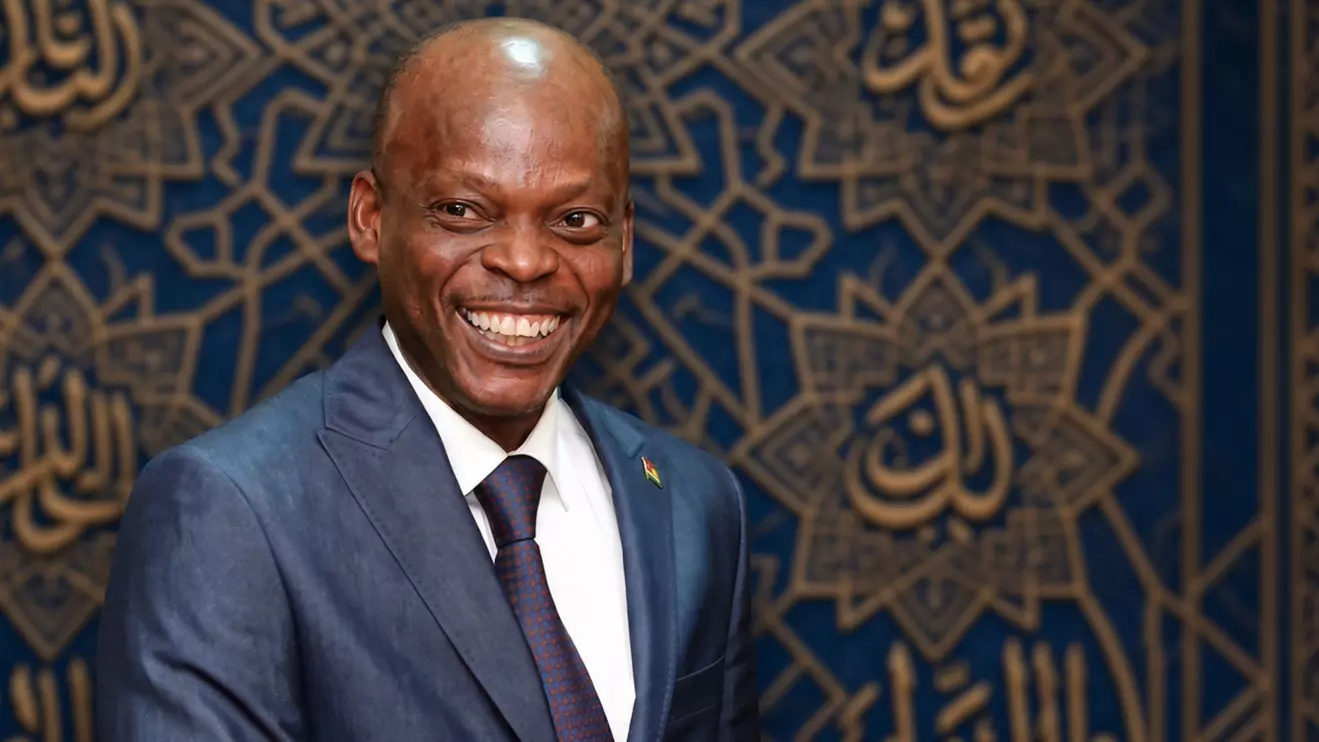
Robert Dussey © Mena Today
On 4 September 2026 the UN General Assembly adopted, by 164 votes to 1, the resolution Correct the Map: rebalancing global cartographic representation and promoting equitable representation of the world’s regions, particularly Africa.
Togo carried the text for the African Union. The United States cast the only vote against. Six states abstained. Equal-area projections, notably Equal Earth, are now the recommended standard when relative size matters.
Mena Today spoke with Foreign Minister Robert Dussey.
Mena Today: Friday’s vote looked like a technical cartographic debate. What did the Assembly actually decide?
Robert Dussey: It decided to name a distortion that has shaped how the world is taught. The Mercator projection, drawn in 1569 for maritime navigation, enlarges lands near the poles and shrinks those near the equator. On many classroom maps Greenland appears to rival Africa. Africa is about fourteen times larger. Maps are not neutral.
They guide education, nourish the imagination and influence collective perceptions. When they shrink a continent for generations, they reduce its place in the global mind. The resolution does not ban Mercator for shipping or aviation, where it remains suited. It asks governments, schools, UNESCO, UNDP, the media and technology companies to use equal-area maps — especially Equal Earth — when size is what we need to show, and to teach that every flat map is a compromise.
Mena Today: Togo is a small West African country. How did Lomé turn this into a near-universal text?
Robert Dussey: The President of the Council, Faure Gnassingbé, placed the question at the centre of our diplomacy. The African Union endorsed the campaign and mandated Togo. Our task in New York was to convert an African decision into a resolution the whole membership could own. We argued first from science: area is measurable. Dignity followed.
A fair map does not change the geography of the world; it changes how we see the world. That is cognitive justice, not ideology. One hundred and sixty-four states agreed.
Mena Today: For a MENA readership the political map of the vote matters. Every Arab country that voted supported the resolution, the United Arab Emirates, Qatar, Kuwait, Saudi Arabia, Morocco, Libya, Lebanon and their neighbours. Israel voted yes as well. What does that coalition mean for Togo?
Robert Dussey: It is a significant political fact. A West African state of modest size assembled a majority that included the entire Arab group and Israel on the same side of the aisle. That is rare. It shows the issue was understood as one of accurate representation of the Global South, not as a bloc quarrel.
From Abu Dhabi and Doha to Riyadh, Kuwait, Rabat, Tripoli and Beirut, and from Jerusalem, the answer was the same: the map should match the land. For Togo that support is more than numbers. It is recognition that a precise African initiative can speak to the whole international community.
Mena Today: Washington called the text an “ideological agenda” and a distraction from peace and prosperity. Your reply?
Robert Dussey: Mercator remains the right tool where compass direction is the point. We said so in the text. What we reject is using a sixteenth-century navigational chart as the default picture of relative size in schools and on screens.
The effects are cognitive, educational, cultural and, over time, geopolitical. If children grow up seeing Africa as a narrow strip under an inflated North, that is an error with consequences. France voted with us. The Arab states voted with us. Israel voted with us. The United States stood alone. The record is clear.
Mena Today: What happens now, in Togo and beyond?
Robert Dussey: Togo will introduce Equal Earth in its school materials by the end of this year. The resolution is not legally binding, but it sets a standard. Once international organisations, publishers and digital platforms change the default, the old classroom map becomes the exception. We will work with the African Union, UNESCO and willing partners so that the next generation sees continents in their true proportions.
Mena Today: A closing word for readers from the Gulf to the Maghreb and the Levant?
Robert Dussey: Friday was a victory for exactitude, and for every child who will now grow up seeing Africa’s true place on the map. When the Arab world and Israel stand with Africa on a question this fundamental, the message is simple: representation is dignity. A fair world begins with a fair map.
______
Vote: 164 in favour, 1 against (United States), 6 abstentions (Estonia, Georgia, Lithuania, Moldova, Serbia, Ukraine). The resolution is non-binding.
Turkey says it is ready to sign a maritime boundary deal with Egypt in the eastern Mediterranean, offering Cairo extra waters at Greece’s expense.
Turkish Foreign Minister Hakan Fidan cautioned on Friday against any renewed attack on Iran, saying such a move would exacerbate tensions and further expand the conflict there, adding that diplomacy and dialogue were the only way to end the war.
Ukrainian President Volodymyr Zelenskiy said on Friday that peace negotiators from Ukraine, Russia and the United States had agreed to meet at a technical level in the first half of November in Abu Dhabi, adding that he hoped a meeting of the countries' leaders would follow.
To make this website run properly and to improve your experience, we use cookies. For more detailed information, please check our Cookie Policy.
Necessary cookies enable core functionality. The website cannot function properly without these cookies, and can only be disabled by changing your browser preferences.