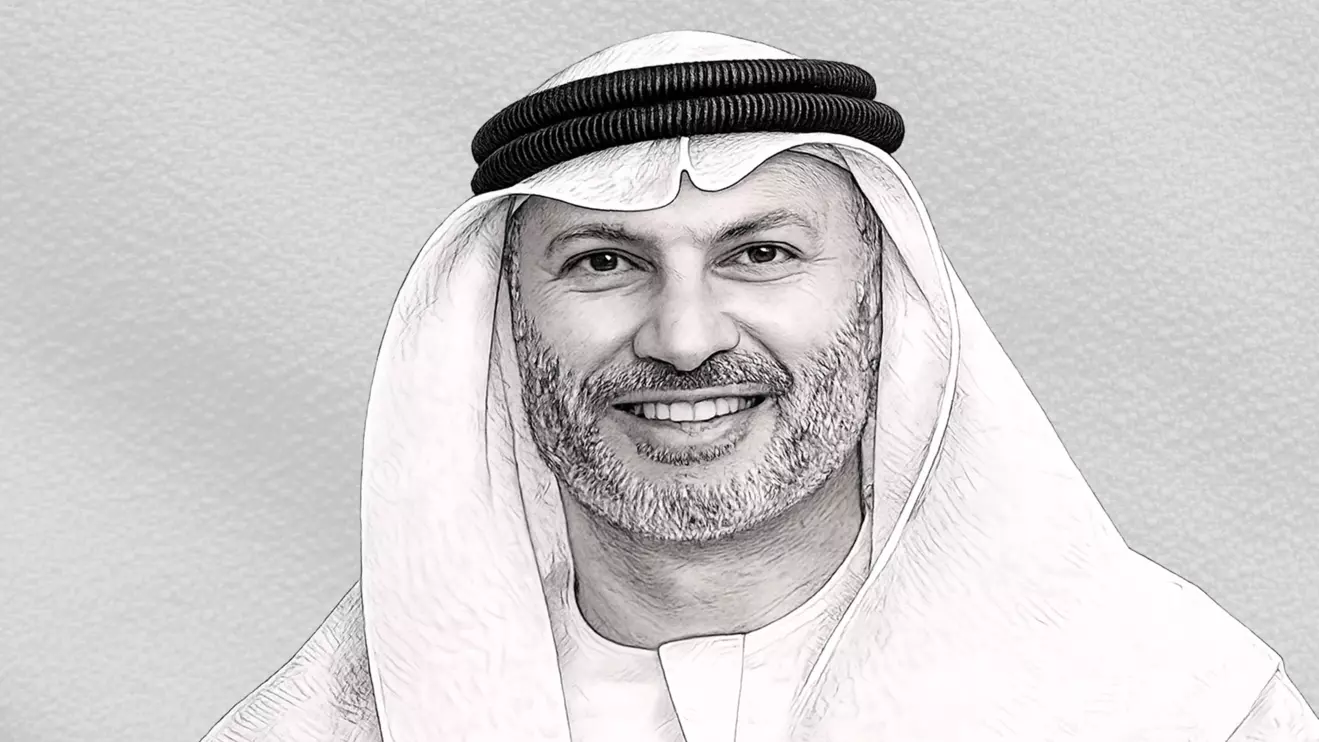
The words were measured. The message was seismic.
Anwar Gargash, the UAE president's influential diplomatic adviser, told the World Policy Conference organised by France's IFRI think tank near Paris on Friday that restoring trust between the Emirates and Iran after the latter's missile and drone campaign would take "an eternity."
"You cannot be hit by 2,800 missiles and drones and then talk about trust," he said bluntly. "Restoring confidence is illusory."
Gargash went further, accusing Tehran of having deliberately planned its strikes on Gulf states — targeting, he said, roughly 90% civilian infrastructure rather than the military installations Iran claims to have hit. "This shows how little importance Iran places on Arab-Iranian relations," he said.
But beyond the condemnation of Tehran lay something more consequential: a frank acknowledgment that the war has fundamentally redrawn the region's strategic map, and that Israel sits differently within it than it did before.
Gargash suggested that a growing number of regional leaders "will no longer perceive Israel as a threat," even as they remain committed to the Palestinian cause. More strikingly, he predicted that many will "open political channels and perhaps show increasing interest in Israeli defence equipment."
It is as close as a senior Gulf official has come to describing, in public, the emergence of a quiet but deepening Gulf-Israel alignment, one accelerated not by diplomacy, but by Iranian missiles.
On the current ceasefire between Washington and Tehran, Gargash was cautiously optimistic but clear-eyed. He warned that Iran's leadership may interpret the survival of the regime and the blockade of the Strait of Hormuz as a « victory », a miscalculation, he argued, that "can last weeks, but not indefinitely."
"I am betting on a resumption of negotiations," he said, describing the Iranian leadership as "deeply divided and disorganised" after weeks of US-Israeli strikes.
His long-term prognosis? The war will strengthen, not weaken, America's military presence in the region, and bring the Gulf states and Israel closer together than any peace summit ever could have.