
Israel
AI exports flatter Israel’s GDP, Moody’s says
Moody’s has raised its growth forecasts for the Israeli economy, but cautions that the stronger headline figures overstate the health of domestic activity.

In a single trading day, Wall Street went from celebrating artificial intelligence to questioning how it is paid for. Jacques Lemoisson, head of the economic intelligence firm Gate Advisory, says the warning signs had been building for months.
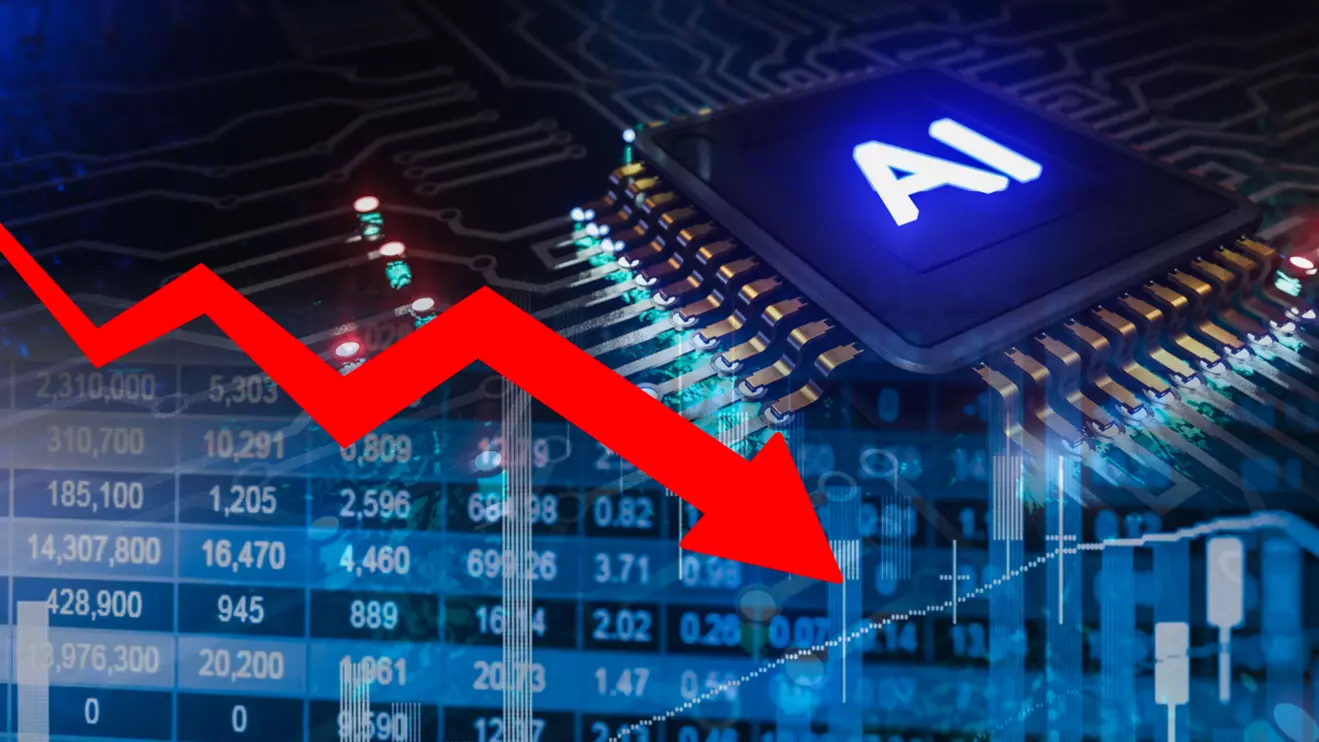
AI boom meets its financing problem © Mena Today
In a single trading day, Wall Street went from celebrating artificial intelligence to questioning how it is paid for. Jacques Lemoisson, head of the economic intelligence firm Gate Advisory, says the warning signs had been building for months.
Thursday’s sell-off was one of the most violent in years. The Nasdaq Composite fell 5.52%, the Nasdaq 100 6.36% and the S&P 500 4.36%. The Philadelphia Semiconductor Index (SOX) dropped 12.2%.
Chipmakers took the heaviest losses. Nvidia lost 9.3%, while AMD and Micron each shed more than 17%.
About $3 trillion in market value was wiped off the S&P 500 in one day. The Nasdaq is now in correction territory, close to 12% below its October peak.
Lemoisson argues that markets did not overreact. “They simply took several months to grasp what was becoming increasingly obvious,” he writes.
Five forces at once
There was no single trigger, Lemoisson says. The rout came from five pressures feeding off one another:
Revolution and bubble can coexist
Lemoisson has been making the same point since the summer. AI can be a major industrial revolution and, at the same time, a financial disaster for those who overpaid to fund it.
The distinction was easy to dismiss while the Nasdaq kept climbing. After a 5% drop in one session, it is much harder to ignore.
As U.S. investors start to question the cost of America’s AI dominance, Lemoisson raises a strategic question. If the American infrastructure race slows, could China gain ground? Its open-source models and less capital-hungry approach to AI could prove an advantage if money for mega-data centers dries up.
Moody’s has raised its growth forecasts for the Israeli economy, but cautions that the stronger headline figures overstate the health of domestic activity.
Turkish authorities ordered the detention of six people, including the former Capital Markets Board deputy chair, as part of the investment fund investigation, broadcaster NTV reported on Tuesday.
The Tel Aviv Stock Exchange suffered one of its worst sessions in months after the election produced no clear winner, wiping out all its October gains. The shekel tumbled, long-term government bonds fell and the local volatility index jumped 30%.

To make this website run properly and to improve your experience, we use cookies. For more detailed information, please check our Cookie Policy.
Necessary cookies enable core functionality. The website cannot function properly without these cookies, and can only be disabled by changing your browser preferences.