From Paris to Abu Dhabi: How the Arab World moved its cultural capital

1 min Chantal Stambouli

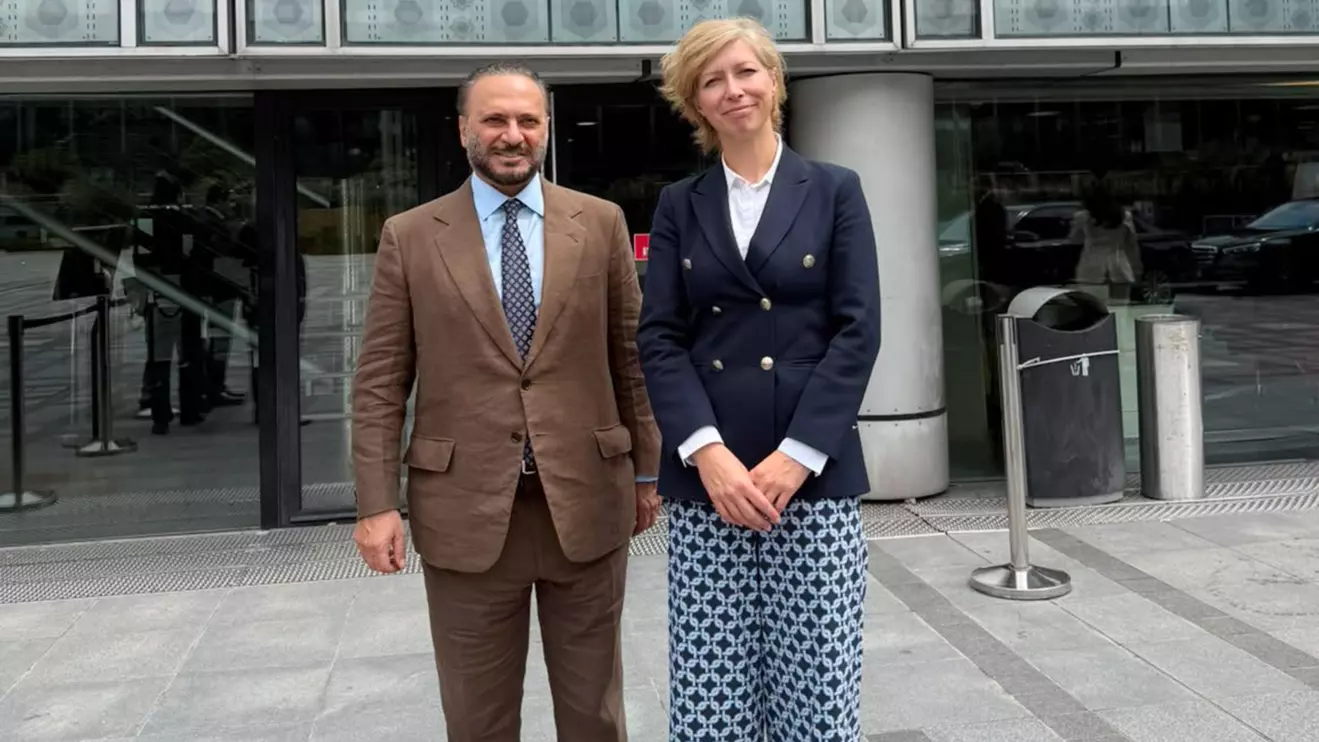
Anwar Gargash, the influential diplomatic adviser to the UAE president, met Monday in Paris with Anne Claire Le Jeune, the newly appointed president of the Institut du Monde Arabe (IMA), praising the cultural institution for its role in "strengthening cultural and civilisational dialogue between the Arab world and Europe."

Anwar Gargash and Anne Claire Le Jeune © X

Anwar Gargash and Anne Claire Le Jeune © X

Anwar Gargash, the influential diplomatic adviser to the UAE president, met Monday in Paris with Anne Claire Le Jeune, the newly appointed president of the Institut du Monde Arabe (IMA), praising the cultural institution for its role in "strengthening cultural and civilisational dialogue between the Arab world and Europe."

The meeting was cordial, but it masks a deeper challenge facing one of Paris's most iconic cultural institutions.

The Institut du Monde Arabe, founded in 1980 as a joint French-Arab project to bridge two civilisations, has long struggled to secure consistent financial contributions from Arab member states. The gap between its lofty ambitions and its actual resources has grown wider over the years, leaving the institution in a perpetual search for funding and relevance.

The context could hardly be more challenging. The UAE, Qatar and Saudi Arabia have each invested billions in world-class museums and cultural institutions that now attract millions of visitors annually.

The Louvre Abu Dhabi, the Qatar Museums network and Saudi Arabia's ambitious cultural projects under Vision 2030 have fundamentally reshaped the global Arab cultural landscape, drawing attention, prestige and audiences that might once have looked to Paris.

Against this backdrop, the Institut du Monde Arabe finds itself struggling to define its unique value proposition in a world where the Arab world is increasingly telling its own story, on its own soil, with its own money.

Whether Wednesday's meeting signals renewed Gulf interest in supporting the IMA, or was simply a diplomatic courtesy call, remains to be seen.

Chantal Stambouli

Chantal Stambouli

Based in Dubai, Chantal Stambouli covers lifestyle, fashion, emerging trends, and gastronomy across the UAE, Kuwait, Qatar, Bahrain, Saudi Arabia, Oman and Morocco 

Related

Saudi Arabia

100 cities, 132 Dreamliners, one very big ambition: Meet Riyadh Air

Saudi Arabia launched Riyadh Air on Wednesday, with its inaugural flight departing King Khalid International Airport at 2:35am bound for London Heathrow, marking the culmination of more than four years of preparation and a bold challenge to Gulf aviation giants Emirates, Qatar Airways and Etihad.

Diplomacy

In international politics, perception becomes power

The stakes in the confrontation with Iran extend far beyond the Middle East. If Tehran emerges from this crisis looking stronger, the damage will not be confined to Israel or the Gulf. 

Iran

Iranian funds could be redirected to rebuild Gulf allies

The U.S. government will attempt to redirect Iranian assets to Gulf states for rebuilding and repairs of damage caused by Iran, a source familiar with the matter said, as Tehran followed up a wave of strikes against Kuwait and Bahrain with further drone launches.

Subscribe to our newsletter

Mena banner 4

To make this website run properly and to improve your experience, we use cookies. For more detailed information, please check our Cookie Policy.

  • Necessary cookies enable core functionality. The website cannot function properly without these cookies, and can only be disabled by changing your browser preferences.