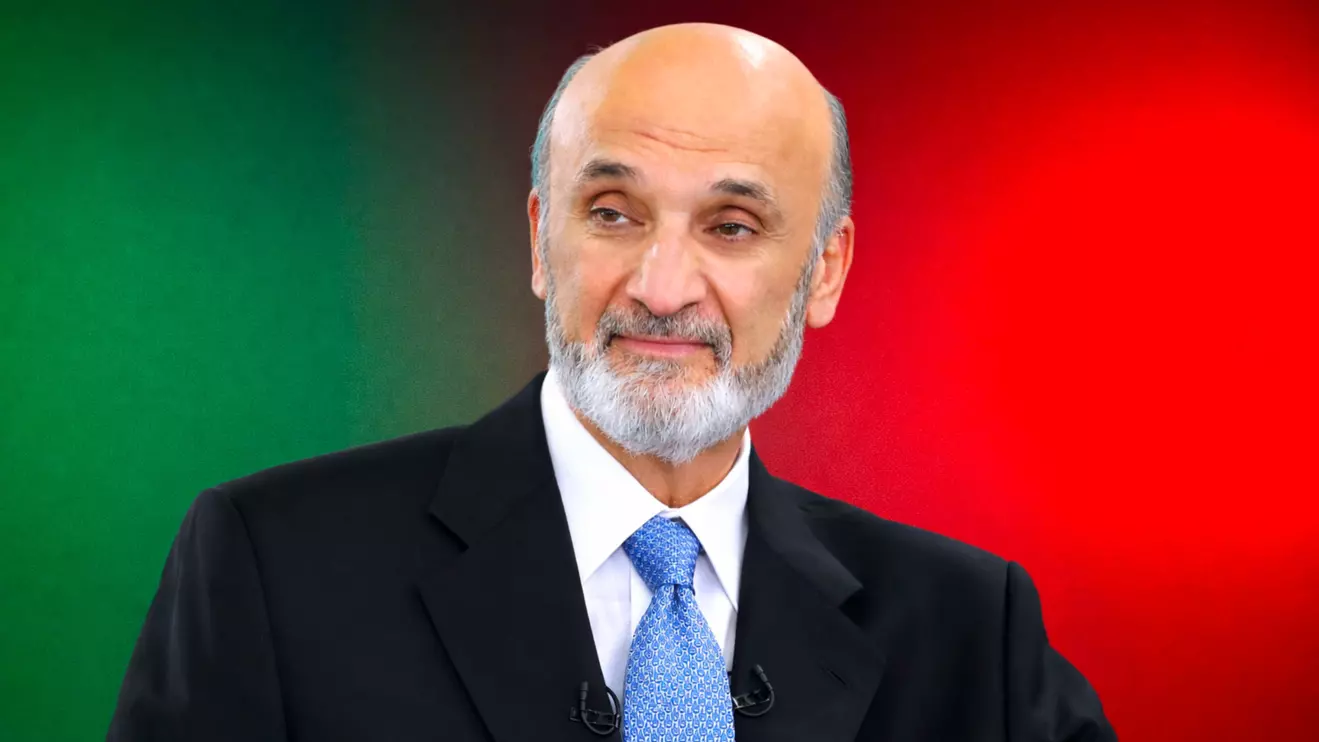
As the Lebanese Army prepares to expand its disarmament operations north of the Litani River, following months of activity in the southern border area with Israel, Samir Geagea, leader of the Lebanese Forces, has publicly challenged Hezbollah’s long-standing narrative on the scope of the ceasefire agreement and UN Resolution 1701.
In a letter addressed on Sunday to Naim Qassem, the secretary general of Hezbollah, Geagea rejected Qassem’s repeated claim that the ceasefire agreement limits disarmament to areas south of the Litani River, leaving weapons north of the river to be decided internally by Lebanese factions.
“Out of intellectual honesty,” Geagea wrote, “this assertion is in total contradiction with what is clearly stipulated in the ceasefire agreement.”
Qassem has reiterated in several speeches, including his most recent on December 13, that Hezbollah categorically refuses to hand over its weapons across Lebanese territory. While he has accepted disarmament south of the Litani, he has framed Hezbollah’s arsenal elsewhere as non-negotiable, despite vague references to an internal dialogue on a so-called “defense strategy.”
He has even claimed readiness for “the greatest sacrifices,” a familiar rhetorical posture that has repeatedly come at the expense of the Lebanese state and society.
Geagea’s letter points to the preamble of the ceasefire agreement, which explicitly calls for the “full implementation of UN Security Council Resolution 1701.”
Adopted in 2006 to end the war between Israel and Hezbollah, the resolution demands the disarmament of all armed groups in Lebanon and the restoration of the state’s exclusive authority over weapons.
For decades, Hezbollah’s armed dominance has paralyzed state institutions, dragged Lebanon into regional conflicts it did not choose, and contributed directly to the country’s political isolation and economic collapse
While paragraph 8 of Resolution 1701 specifies that the area south of the Litani must be free of all weapons except those of the Lebanese Army and the UN Interim Force in Lebanon (UNIFIL), the text goes further.
It recalls earlier international and national commitments, including the Taif Agreement, which require the dissolution of all militias outside state authority and oblige the Lebanese government to extend its control over the entire national territory.
Geagea also emphasized another often-ignored provision of the resolution: the absolute prohibition on the sale or transfer of arms to Lebanon without the explicit authorization of the Lebanese government.
This clause directly contradicts Hezbollah’s parallel military structure, which operates independently of the state and is supplied through illicit regional networks.
According to Geagea, a majority of Lebanese citizens now support the dismantling of all armed organizations outside the state, foremost among them Hezbollah and armed Palestinian factions.
This sentiment reflects growing frustration with a group that has entrenched itself above the law while systematically undermining Lebanon’s sovereignty.
For decades, Hezbollah’s armed dominance has paralyzed state institutions, dragged Lebanon into regional conflicts it did not choose, and contributed directly to the country’s political isolation and economic collapse.
Shielded by weapons and backed by foreign interests, the party has obstructed reforms, intimidated opponents, and hollowed out the very state it claims to defend.
As the Lebanese Army moves to assert its authority beyond the Litani, the core issue is no longer legal ambiguity but political will.
Resolution 1701 leaves little room for interpretation: Lebanon cannot recover its sovereignty, stability, or economy as long as a single faction maintains an armed veto over the nation’s future.