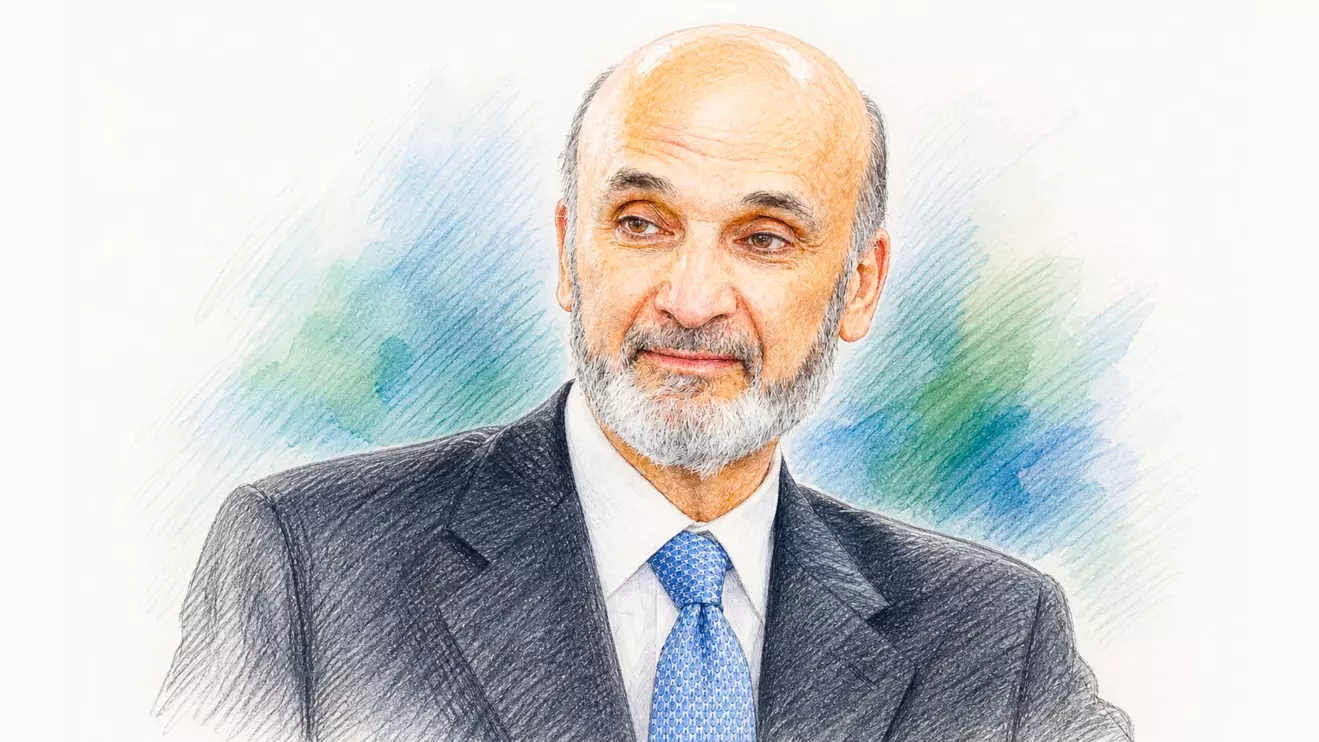
Samir Geagea has had enough. The leader of the Lebanese Forces party fired back Tuesday at Hezbollah's blanket rejection of direct Lebanon-Israel negotiations, delivering one of the sharpest rebukes yet from within the Lebanese political establishment.
"Those who say they are not concerned by the legal and constitutional negotiations conducted by the President of the Republic, in coordination with the Prime Minister and the government, are denying Lebanon as a state, the majority of Lebanese, and the country as a homeland," Geagea declared.
His words were aimed squarely at Hezbollah Secretary-General Naïm Kassem, who on Monday reiterated his group's rejection of direct talks between Beirut and Jerusalem, calling instead for indirect negotiations, a position that conveniently mirrors Tehran's own.
Iran's hand behind Hezbollah's refusal
Make no mistake about what is driving Hezbollah's stance. The group's rejection of direct Lebanon-Israel talks is not a Lebanese position, it is an Iranian one.
Tehran, severely weakened by months of US-Israeli strikes and navigating a leadership crisis following the death of Supreme Leader Ali Khamenei, has every interest in preventing a diplomatic settlement between Beirut and Tel Aviv that would further isolate Iran and consolidate the emerging Gulf-Israel realignment.
Hezbollah, financed, armed and directed by Tehran, faithfully transmits that position into Lebanese politics, using its parliamentary bloc and its military threat to obstruct a state it claims to defend.
Geagea called this out without ceremony. "We are not concerned by your words or by anything you do, except that it has provoked catastrophes in Lebanon and for the Lebanese," he said — a direct reference to Hezbollah's unilateral decision to fire rockets at Israel on 2 March, dragging Lebanon into a regional war it had not chosen.
The stakes could not be higher. Direct negotiations between Beirut and Jerusalem are expected to open shortly, facilitated by Washington.
The United States is also reportedly pushing Lebanese President Joseph Aoun to meet Israeli Prime Minister Benjamin Netanyahu, a meeting that would be historically unprecedented and politically explosive.
Aoun has already called for direct talks from the outset of the conflict. The government and Prime Minister are aligned. The Lebanese state is speaking with one voice.
Hezbollah is speaking with another, and that voice, as Geagea made plain on Tuesday, belongs not to Lebanon, but to Iran.