A rare Israeli strike in Aïn Saadé, in the Christian Metn district long considered safely removed from the conflict, has shattered the illusion of security in Lebanon's Christian heartland.
The overnight strike on Sunday targeted an Iranian Quds Force operative believed to be hiding in a residential building, it missed its target, but killed at least three people, including Pierre Moawad, a local Lebanese Forces official whose apartment was directly above the floor that was struck. His wife and a visiting friend also perished when the ceiling collapsed.
In a gesture of acknowledgement, the Israeli military extended its condolences to the Moawad family, an implicit recognition that the strike had claimed innocent lives with no connection to its intended target.
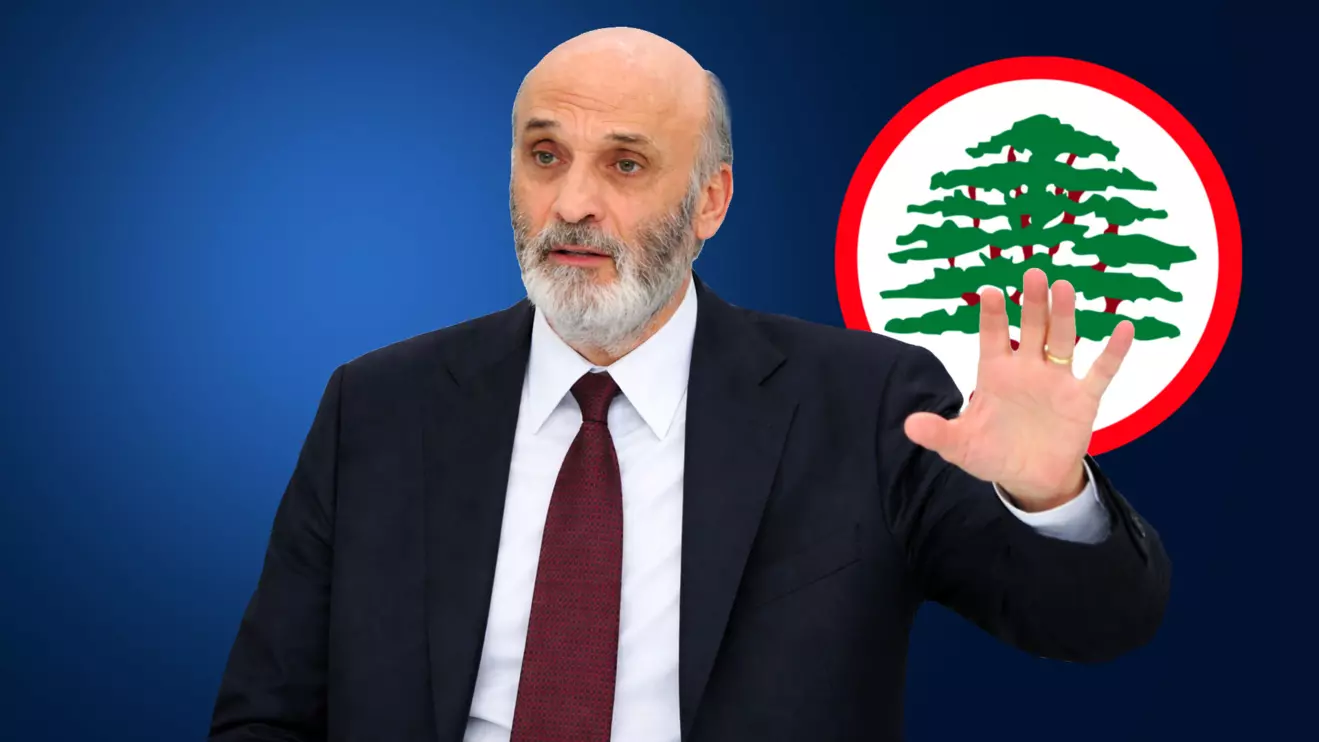
Geagea's Message: This Is Iran's War, Not Lebanon's
Lebanese Forces leader Samir Geagea, one of the most uncompromising opponents of Hezbollah in Lebanese politics, responded with grief, anger and characteristic clarity. He called Pierre Moawad a martyr, describing a man who had fought for Lebanon during the civil war, stayed active in politics through the darkest years of Syrian occupation, and dedicated his life to the Lebanese Forces' cause in the Metn.
But Geagea refused to stop at mourning. His message was direct and damning: innocent Christian civilians are dying in their homes because Iranian Revolutionary Guards operatives and Hezbollah agents are hiding among them, using Lebanon's Christian districts as cover, deliberately exposing civilian populations to Israeli strikes.
Lebanon's Christian districts cannot be allowed to become hiding places for Iran's military apparatus
"What happened is that the Israelis were targeting an Iranian Quds Force official. A strike was directed at an old building, causing the ceiling to collapse on our comrade Pierre Moawad's home. He fell, along with his wife and a woman visiting them." Then, with devastating simplicity: "What happened does not require much interpretation."
Geagea's call to action is unambiguous. Lebanon's security services must compile precise lists of displaced persons present in so-called safe zones, conduct rigorous screening, and ensure that Hezbollah operatives and Revolutionary Guards personnel are not sheltering among civilian displaced communities in Christian areas.
The message is clear: Lebanon's Christian districts cannot be allowed to become hiding places for Iran's military apparatus.
He also turned his fire on what he called the "deep state", the networks of Iranian-aligned influence embedded within Lebanese institutions that allow this infiltration to continue unchallenged. "75% of people respect the state," he said, "but the state does not respect them in return." A sentence that captures four decades of institutional betrayal in eleven words.
Pierre Moawad did not die because of a war Lebanon chose. He died because Iran decided that Lebanon belongs to its axis of resistance, and because Hezbollah, acting as Tehran's proxy, dragged the entire country into a conflict that serves Iranian interests and no one else's.
Iran brought this war to Lebanon. Hezbollah keeps it burning. And Lebanese civilians, Christian, Sunni, Druze and Shia alike, continue to pay the price.