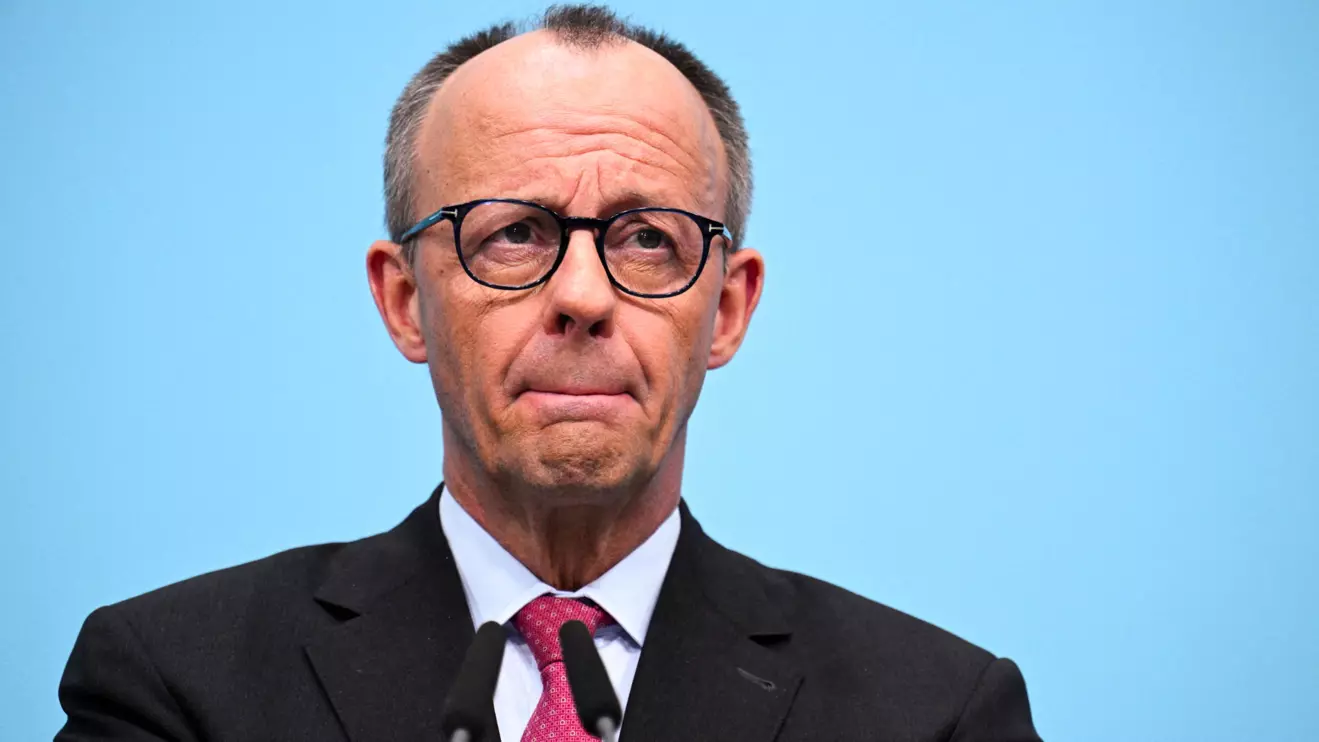
German Chancellor Friedrich Merz's conservatives face their second electoral test this month on Sunday when they hope to unseat the centre-left Social Democrats, their coalition partner at the national level, in the state of Rhineland-Palatinate.
For Merz, however, battling to shore up Western support for Ukraine and facing the looming threat of an energy shock caused by the Iran war, an election he once counted on to boost his domestic support has become uncomfortably tight.
Following a narrow loss to the environmental Greens in the neighbouring state of Baden-Wuerttemberg on March 8, the latest survey gave Gordon Schnieder from Merz's Christian Democrat (CDU) party a two-point lead over the sitting Social Democrat (SPD) state premier, Alexander Schweitzer.
For the SPD, which suffered its worst-ever state election result in Baden-Wuerttemberg, the Rhineland-Palatinate election is a crucial opportunity to stem the steady slide in support which has seen it fall behind the far-right Alternative for Germany (AfD) party in nationwide opinion polls.
The western state of Rhineland-Palatinate, one of Germany's main wine-growing regions and home to chemicals giant BASF, has been hit by economic stagnation in recent years.
But polls have shown Schweitzer narrowing the commanding lead held by the CDU at the beginning of the year, offering the SPD some hope of holding on to power after the disastrous result in Baden-Wuerttemberg, where it won just 5.5% of the vote.
THREE MORE GERMAN STATE ELECTIONS THIS YEAR
The SPD has ruled Rhineland-Palatinate, which borders France, Belgium and Luxembourg, for 35 years and losing control would deepen the air of crisis that has overshadowed the party since the collapse of former SPD Chancellor Olaf Scholz's governing coalition in Berlin in 2024.
Merz insisted following the narrow defeat for his party in Baden-Wuerttemberg that the result would not affect the work of the coalition in Berlin, and commentators say a CDU/SPD coalition in Rhineland-Palatinate is a clear possibility in the event of a narrow result.
The Rhineland-Palatinate election is the second of five state elections this year, ahead of closely watched races in September in Berlin and the eastern states of Mecklenburg-Vorpommern and Saxony-Anhalt, where the far-right AfD is hoping to win its first major election.