Iran
China enlists Pakistan to reopen Iran-US channel
Pakistan is exploring a path towards a resumption of stalled U.S.-Iran talks over ending their nearly five-month-old war, three Pakistani sources said, following a push initiated by China.
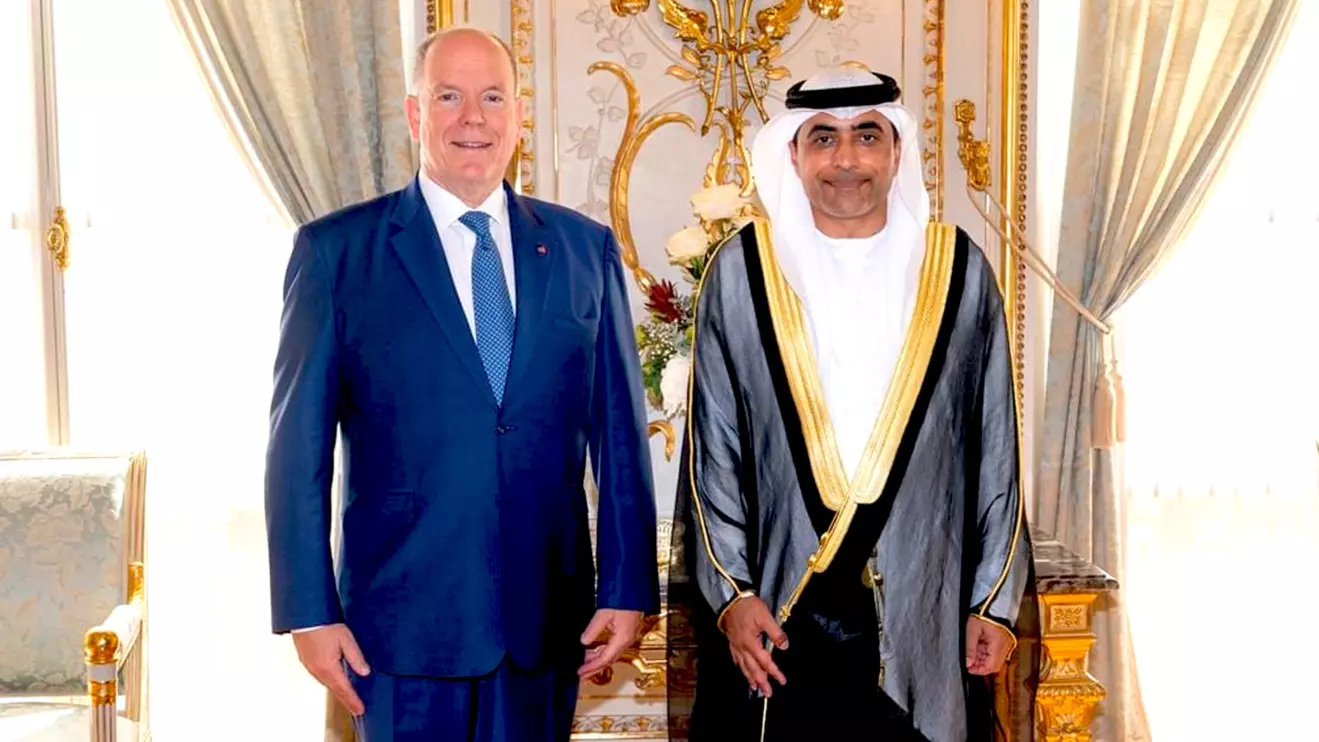
Fahad Saeed Al Raqbani, the UAE’s Ambassador to France, presented his credentials on Friday as Non-Resident Ambassador to Monaco to Prince Albert II.
Prince Albert II with Fahad Saeed Al Raqbani © WAM
Fahad Saeed Al Raqbani, the UAE’s Ambassador to France, presented his credentials on Friday as Non-Resident Ambassador to Monaco to Prince Albert II. Al Raqbani conveyed greetings from President Sheikh Mohamed bin Zayed Al Nahyan, while the Prince expressed confidence in his mission and pledged support to strengthen bilateral ties.
The two sides also discussed areas of cooperation across various sectors. Yet beyond the ceremonial exchange, the episode raises questions about the real weight of Monaco’s diplomacy.
Despite appearances, Monaco has no autonomy in foreign policy, as its diplomatic prerogatives remain under French control. The Sovereign Prince’s role is largely protocolary, focused mainly on environmental projects and symbolic outreach.
A Symbolic Recognition of Palestine
Just days ago, Monte Carlo recognized the State of Palestine, a move widely seen as the result of pressure from French President Emmanuel Macron rather than a principled foreign policy decision by the principality itself.
While Monaco is world-famous for its luxury hotels, casinos, and high-profile events, it also carries a long-standing reputation as a haven for questionable financial practices and money laundering.
In this context, the UAE’s outreach to Monaco appears less about substantive diplomacy and more about cultivating symbolic ties with a microstate whose influence is limited but image carefully staged.
Pakistan is exploring a path towards a resumption of stalled U.S.-Iran talks over ending their nearly five-month-old war, three Pakistani sources said, following a push initiated by China.
Residents began entering the southern Lebanese town of Zawtar al-Gharbiyeh on Friday, some inspecting damaged homes and searching for belongings after Israeli troops withdrew and the Lebanese army deployed under a U.S.-brokered agreement.
United Nations Human Rights chief Volker Turk, an outspoken critic of Russia's war in Ukraine and Israel's conduct in Gaza, faces opposition from both countries to a second four-year term ahead of a potentially contentious vote on Friday, diplomats told Reuters.
To make this website run properly and to improve your experience, we use cookies. For more detailed information, please check our Cookie Policy.
Necessary cookies enable core functionality. The website cannot function properly without these cookies, and can only be disabled by changing your browser preferences.