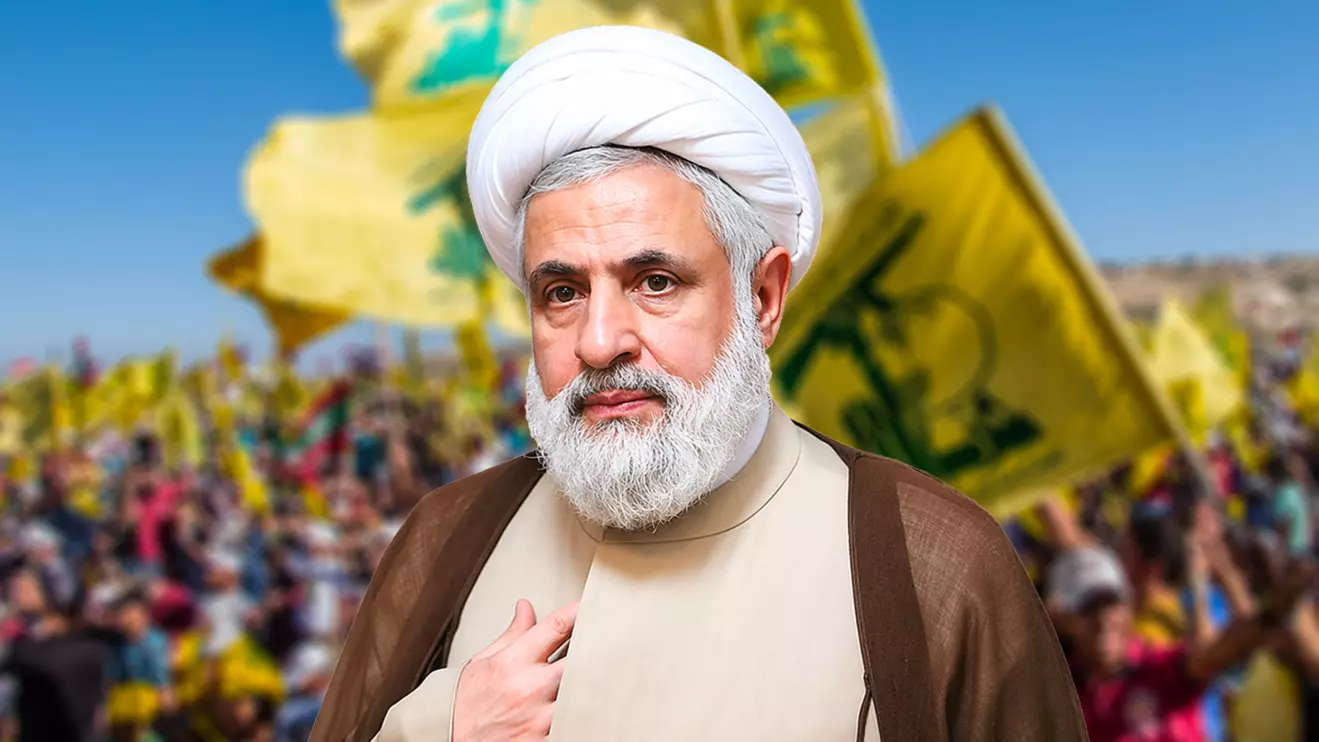
The ink on the Lebanon-Israel ceasefire had barely dried when Hezbollah's leader Sheikh Naim Kassem took to the airwaves , not to welcome peace, but to claim triumph.
In a speech read by a presenter on the party's Al-Manar channel, Kassem declared that the ceasefire, brokered by Washington and effective since Thursday midnight, would never have been possible "without the legendary struggle of the resistance fighters on the southern fronts, a struggle that stupefied the world." The enemy, as always in Hezbollah's narrative, is described as the "Israeli-American foe." The movement's fighters, he insisted, "will remain on the ground."
This is vintage Hezbollah. A movement battered by months of Israeli strikes, significantly weakened and forced into a ceasefire it did not choose, emerges from the rubble claiming an "indestructible resistance" against overwhelming odds.
Every setback becomes a historic victory. Every concession becomes a strategic masterstroke. It is a propaganda playbook refined over decades — and one that makes any durable agreement fundamentally elusive.
Kassem also paid tribute to Iran, crediting Tehran with forcing Washington's hand by closing the Strait of Hormuz in response to alleged ceasefire violations — a move he claimed "compelled the United States to yield." He also thanked Pakistan for its mediation efforts.
The message is transparent: Hezbollah is not a Lebanese movement seeking peace, it is an Iranian proxy pursuing Tehran's regional agenda, with Lebanese sovereignty as collateral damage.
The Illusion of Cooperation
In a notable contradiction, Kassem simultaneously condemned what he called the "humiliations" inflicted on Lebanon during the Washington negotiations, direct talks between Lebanese and Israeli ambassadors that Hezbollah fiercely opposes, while claiming his movement is open to "the fullest cooperation with Lebanese authorities."
This is the fundamental paradox at the heart of any attempt to build lasting peace in Lebanon.
An organisation that denounces its own government's diplomatic efforts while pledging cooperation cannot be a genuine partner for stability.
As long as Hezbollah defines the terms of Lebanese sovereignty, frames every negotiation as surrender and keeps its fighters permanently "on the ground", a durable ceasefire will remain exactly what it is, temporary.