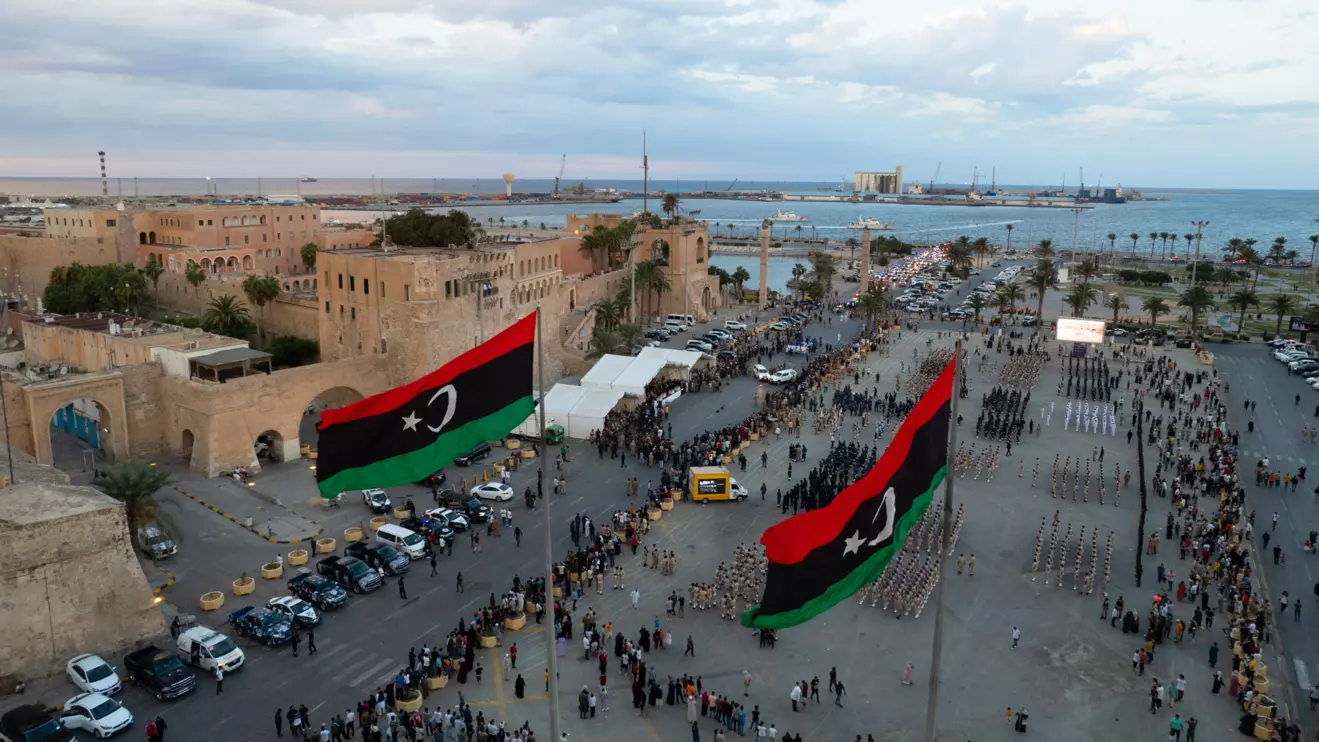
Libya’s extremely cheap, government subsidized electricity has made the country an attractive place to mine Bitcoin, helping trigger a surge in large and small scale operations.
The dynamic is simple: mining Bitcoin uses huge amounts of power, so when electricity is almost free, miners can turn cheap energy into digital currency and pocket the difference.
Researchers at the Cambridge Center for Alternative Finance estimated that Libya accounted for about 0.6 percent of the global Bitcoin “hash rate” in 2021, a measure of total computing power used to mine the currency.
The same research suggested Libya briefly outpaced other Arab and African countries, and even some European economies, before authorities began stepping up enforcement as mining started straining the national grid.
Why Libya became a magnet for miners
In plain terms, Libya offered miners a rare combination of incentives and weak constraints.
First, power prices are among the lowest in the world, estimated at roughly $0.004 per kilowatt hour, largely because the state heavily subsidizes fuel and keeps tariffs low.
That creates an “arbitrage” opportunity, meaning miners buy electricity far below its real cost and convert that energy into Bitcoin. Even older, less efficient machines can remain profitable under those conditions, which encourages operators to ship in used equipment and accept the legal and political risk.
Second, enforcement has been inconsistent. The country has cycled through multiple political and administrative arrangements since 2011, creating long stretches of legal and institutional ambiguity. According to the report, that instability helped mining grow faster than authorities could respond.
The hidden cost: a fragile grid pushed closer to failure
Libya’s grid has long suffered from damage, theft, and underinvestment. The General Electricity Company of Libya has said the country can lose about 40 percent of generated electricity before it even reaches homes. Against that backdrop, large mining farms are a direct stress test on an already leaky system.
At its peak in 2021, Cambridge researchers estimated Libya’s mining activity may have consumed around 2 percent of the country’s total electricity output, roughly 0.855 terawatt hours per year. That kind of demand is not just a technical issue. It can translate into more outages and weaker service for schools, hospitals, and households.
Libyan authorities have increasingly moved from warnings to enforcement. Prosecutors convicted and sentenced nine people to three years in prison for operating Bitcoin miners inside a steel factory in the coastal city of Zliten. The equipment was seized, and profits were forfeited to the state.
Authorities have also carried out raids in other cities, including Benghazi and Misrata, and have arrested foreign nationals accused of operating industrial scale mining sites.
In one case, officials confiscated more than 1,000 devices from a single location in Benghazi that was alleged to be generating tens of thousands of dollars per month. Separate reporting has also described large scale seizures and arrests in earlier operations.
Illegal status hasn’t stopped the business
Bitcoin mining continues despite a central bank warning issued in 2018 that deemed digital assets illegal in Libya, citing concerns such as money laundering and terrorism financing.
A 2022 decree from the Ministry of Economy also prohibited the import of mining hardware, but the trade has reportedly continued anyway.
Operators have reportedly argued that enforcement will remain difficult because even if authorities shut down large hubs, it is hard to locate thousands of smaller machines scattered across homes and workshops.
That persistence, however, comes with a public cost: illegal mining adds yet another strain on a fragile electricity system that ordinary Libyans rely on every day.