The ink was barely dry on the US-Iran ceasefire when the contradictions began piling up.
Hezbollah halted its fire on northern Israel and on Israeli troops inside Lebanon in the early hours of Wednesday, three Lebanese sources told Reuters, presenting the move as part of the broader truce framework.
Pakistani Prime Minister Shehbaz Sharif, a key intermediary in the talks, said the two-week ceasefire would include Lebanon. Iran, Reuters reported last month, had pushed hard for exactly that outcome.
Benjamin Netanyahu said otherwise. The Israeli Prime Minister was categorical: Lebanon is not part of the deal. Israel promptly issued a new evacuation order for a southern Lebanese city, a signal, unmistakable in its language, that strikes would follow.
So which is it?
The confusion is not accidental. Tehran has every incentive to blur the boundaries of the ceasefire, to fold Hezbollah's front into the broader truce and shield its most valuable regional proxy from further military pressure.
Linking Hezbollah's military operations to the Iran-US agreement is a sleight of hand, one that transforms a bilateral deal between Washington and Tehran into a multilateral shield covering an organisation that answers to neither.
The logic is straightforward and the timeline is revealing. Two weeks is precisely enough time for Hezbollah to regroup, redistribute, and begin the quiet work of restoring what Israel's campaign has degraded. It has done this before.
After 2006, the organisation rebuilt its arsenal under international observation, larger, more sophisticated, better concealed. The pattern is not a secret. It is a strategy.
Iran knows this. The push to include Lebanon in the ceasefire was not motivated by concern for Lebanese civilians. It was motivated by concern for Hezbollah's operational continuity.
On the ground, the ambiguity has consequences
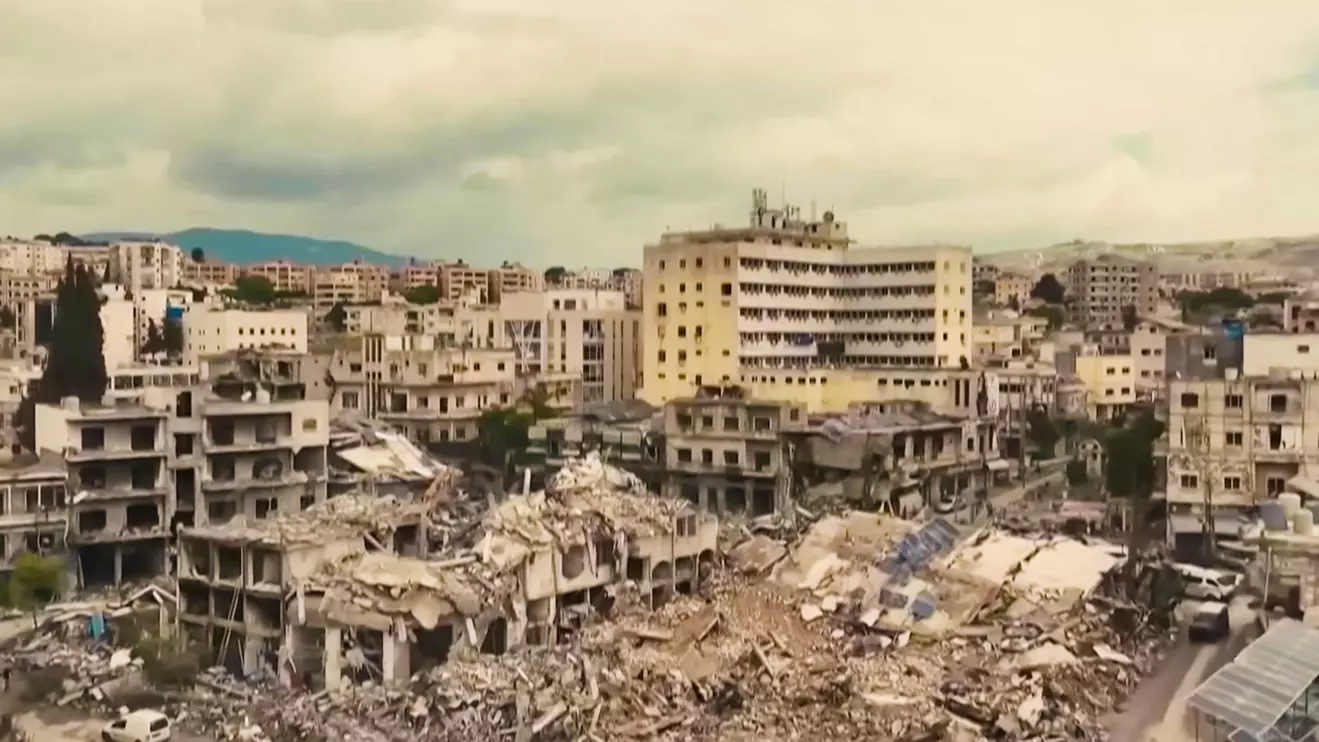
Lebanon's army on Wednesday urged displaced families to delay their return home, warning of ongoing Israeli attacks and unexploded ordnance across the south.
Whatever the diplomatic language being exchanged in capitals, the reality on the ground is unchanged: the fighting has not stopped, the danger has not passed, and the population remains caught between a militia that uses their towns as cover and an army that is determined to remove it.
Hezbollah's last formal military statement, posted at 1 a.m. local time on Wednesday, reported strikes on Israeli troops inside Lebanon the previous evening. Its formal position on the ceasefire — and on Netanyahu's assertion that it is excluded, was still pending, according to the Lebanese sources.
That statement, when it comes, will matter. But the more important question is not what Hezbollah says. It is what it does with the time it has just been given.