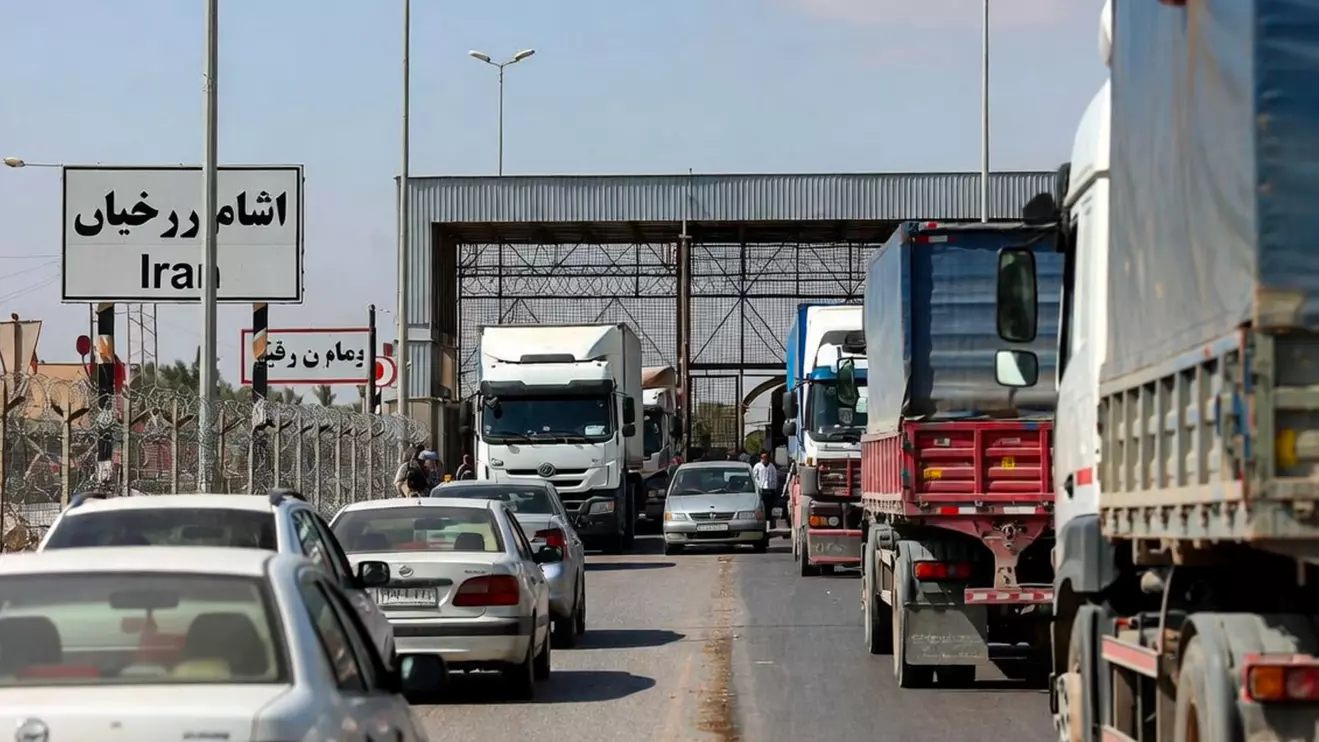
Iraq closed three border crossings with Iran on Saturday, security officials told AFP, after a drone attack on a Saudi pipeline was launched from Iraqi territory, according to Riyadh and Baghdad.
The attack, carried out Thursday with drones, struck Saudi Arabia's East-West pipeline linking Abqaiq, near the Gulf, to the Red Sea port of Yanbu.
It wounded several people, according to the official Saudi Press Agency. No group has claimed responsibility, and Iran-aligned Iraqi armed factions, previously accused by Riyadh of past attacks on Saudi oil infrastructure, have denied involvement.
Shortly after the attack, Iraqi Prime Minister Ali al-Zaidi dismissed the military commander of Missan province in the south, after authorities quickly determined the drones had been launched from that area. Two Iraqi security sources said Saturday that drone launchers had been found near a remote stretch of the Iraq-Iran border.
A security source and a government official told AFP that authorities had ordered the closure of three border crossings with Iran, as part of "intelligence efforts to track down the perpetrators and prevent them from fleeing... as well as to disrupt drone smuggling through these crossings," according to the security source. Neither could say when the crossings would reopen.
The closed crossings are Shalamcheh in Basra province and al-Shib in Missan province, both in southern Iraq, along with al-Mandali in the central province of Diyala. Other border crossings with Iran remain open.
Iraq's government security media cell said authorities had "begun administrative and security reorganization operations at several border crossings, requiring their closure," adding that intelligence activities had been stepped up to identify "gaps" at these crossings, without mentioning the attack.
Al-Zaidi's military spokesman, Sabah al-Numan, said the prime minister had approved "an Iranian request to conduct a joint investigation to uncover drone launch sites near the Iraq-Iran border."
In July, the United States and Saudi Arabia announced they had struck Iran-aligned fighters in Iraq in response to attacks on American forces and Saudi oil facilities, killing 20 fighters, including five Iranians. Since taking office in spring, Iraq's prime minister has pledged to bring armed factions under state control by having them surrender their weapons, an issue that has fueled tensions in recent weeks, with several groups refusing to disarm.