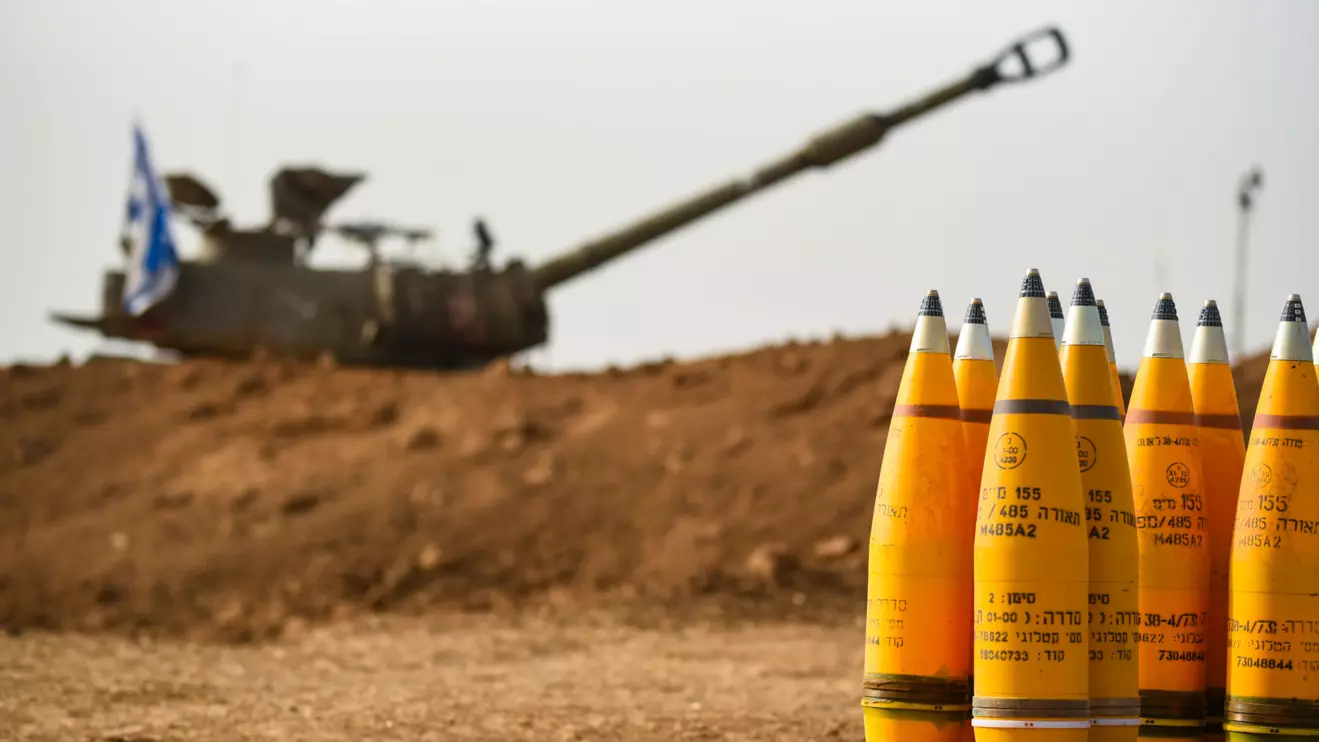
Israel’s military has begun establishing a new maneuver-oriented division, the first of its kind in decades, in a move that reflects not only an organizational reshuffle but a deeper rethink of how the army expects to fight its next war.
The new 38th Division will consolidate several training brigades and command schools under a single headquarters and integrate armored, artillery and combat-engineering elements into one operational framework.
The goal, according to military officials, is to create a force that can move quickly from training to real-world missions and operate as a unified ground maneuver formation.
Around 1,200 reservists have already been assigned to the division’s headquarters at a base in southern Israel. Over the coming year, the unit is expected to take part in large-scale exercises as it builds toward full operational readiness.
The move is part of a broader effort to rebuild and expand the army’s ground forces, including the reactivation of armored units and the strengthening of combat-engineering capabilities. Some of the platforms currently used in training are aging, but the military says refurbishment programs and new equipment are planned.
More than a technical restructuring, the new division reflects a growing recognition inside the military that the doctrine guiding Israel’s ground forces before October 7 is no longer sufficient.
For years, operational thinking placed heavy emphasis on intelligence superiority, advanced sensors and layered border defenses, supported by limited and carefully calibrated ground maneuvers. The shock of the October 7 attacks exposed how vulnerable that approach can be when warning fails and multiple threats emerge simultaneously.
By creating a division designed specifically around maneuver and rapid deployment, the army is signaling a shift toward a doctrine that prioritizes immediate, large-scale ground action under conditions of uncertainty.
The structure is intended to shorten the gap between routine training and combat operations, improve coordination between branches and give commanders ready-made combined-arms formations rather than ad hoc task forces assembled in a crisis.
In practical terms, the new division is meant to restore ground maneuver as a central pillar of Israel’s warfighting concept, not as a last resort after air and intelligence tools are exhausted, but as an early and decisive response when strategic surprise occurs.
Whether this marks a lasting change will depend less on the number of brigades assigned to the 38th Division and more on how deeply the lessons of October 7 are absorbed into training programs, command culture and operational planning.
The reorganization offers a framework for a new doctrine. Turning it into real battlefield advantage will require sustained investment, and a willingness to rethink assumptions that shaped the army for more than a generation.