Israel officially recognizes Armenian genocide

1 min Edward Finkelstein

The Israeli government unanimously approved Sunday the recognition of the Armenian genocide, dealing a pointed blow to Turkish President Recep Tayyip Erdogan at a moment of acute tension between the two countries.

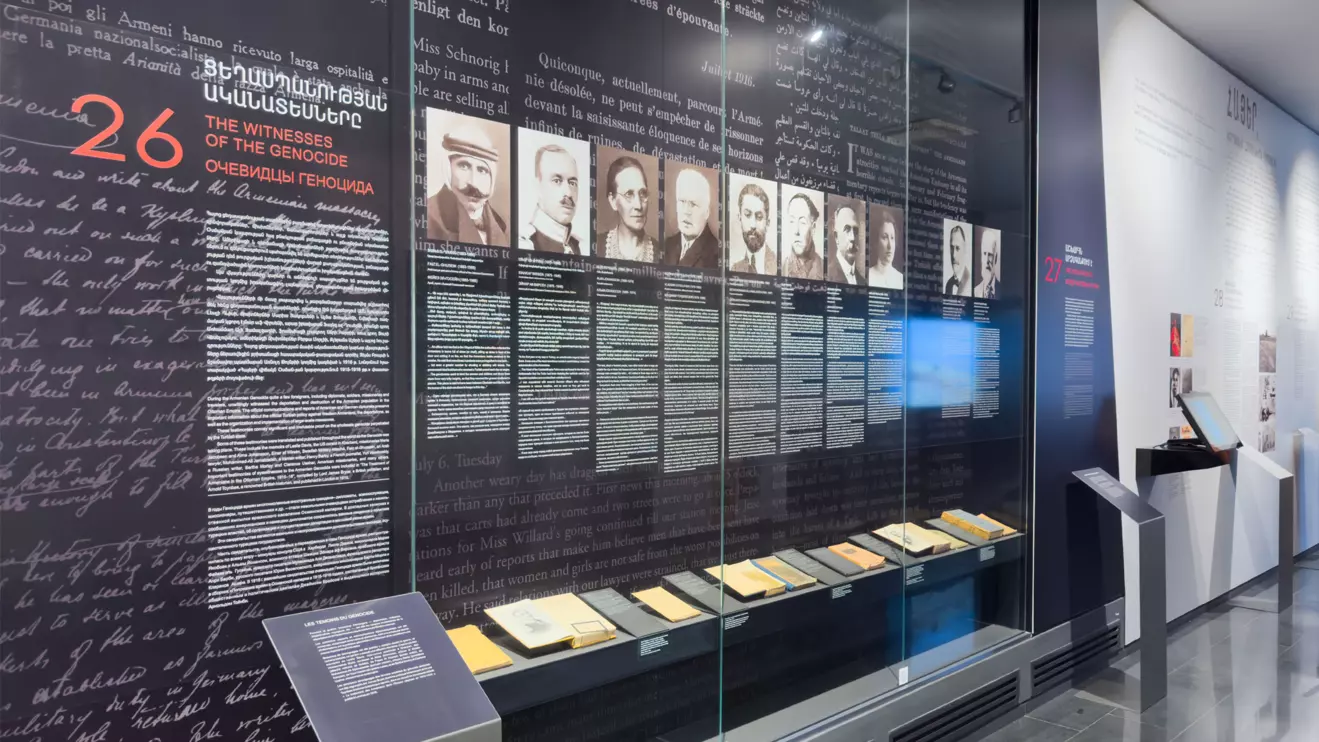
The Tsitsernakaberd Armenian Genocide Memorial and Museum-Institute in Yerevan © Mena Today 

The Tsitsernakaberd Armenian Genocide Memorial and Museum-Institute in Yerevan © Mena Today 

The Israeli government unanimously approved Sunday the recognition of the Armenian genocide, dealing a pointed blow to Turkish President Recep Tayyip Erdogan at a moment of acute tension between the two countries.

"It is never too late to do what is right. This is both a moral and historical duty," declared Foreign Minister Gideon Saar, whose proposal was adopted by the full cabinet. The decision still requires parliamentary approval.

Previous Israeli governments had deliberately avoided recognising the Armenian genocide, between 600,000 and 1.5 million Armenians killed under the Ottoman Empire during World War One,  largely to preserve ties with Turkey, once one of Israel's closest regional partners. 

Those ties are now in ruins, and with them, any reason for restraint.

The Erdogan Factor

The timing is no coincidence. Erdogan has spent years positioning himself as Israel's most vociferous critic, comparing Israeli leaders to Nazi officials, suspending the bulk of trade relations and throwing Turkey's diplomatic weight behind Hamas. 

Netanyahu has consistently fired back, labelling Erdogan "an antisemitic dictator who commits genocide against the Kurds."

The man who lectures Israel on genocide while denying one of history's most documented massacres — and while waging a decades-long military campaign against the Kurdish people — is in no moral position to occupy the high ground on anything.

Sunday's decision reminds the world of that contradiction. Loudly, clearly and unanimously.

Edward Finkelstein

Edward Finkelstein

From Athens, Edward Finkelstein covers current events in Greece, Cyprus, Turkey, Egypt, Libya, and Sudan. He has over 15 years of experience reporting on these countries. He is a specialist in terrorism issues

Related

Turkey

Main opposition party splits after years of repression

Ozgur Ozel, ousted as leader of Turkey's main opposition Republican People's Party (CHP), said on Tuesday he was formally resigning from his party to launch a new one, the latest twist in an unprecedented crackdown on President Tayyip Erdogan's opponents.

Syria

Damascus foils another arms shipment toward Hezbollah

Syria's General Authority for Land and Sea Ports and Customs said Tuesday that customs officers had thwarted an attempt to smuggle more than 200 hand grenades hidden inside a vehicle attempting to cross the border toward Lebanon.

Turkey

Erdogan faces new political challenger

Turkey's opposition leader, Ozgur Ozel, said on Tuesday he will resign from the main opposition party and form a new one, amid a nearly two-year long legal crackdown on President Tayyip Erdogan's political opponents. 

Subscribe to our newsletter

Mena banner 4

To make this website run properly and to improve your experience, we use cookies. For more detailed information, please check our Cookie Policy.

  • Necessary cookies enable core functionality. The website cannot function properly without these cookies, and can only be disabled by changing your browser preferences.