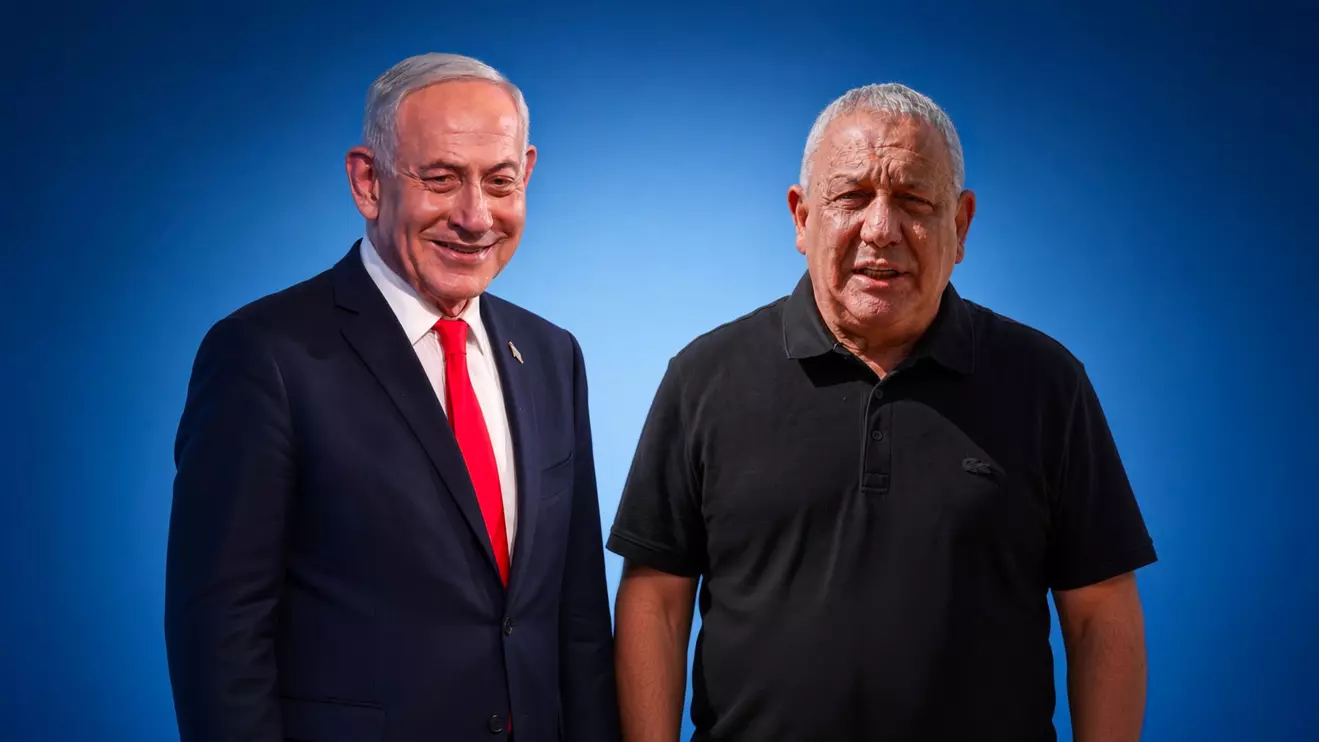
Benjamin Netanyahu came first. He did not win. Final results from Tuesday’s election hand his camp a lead but no majority, deliver a historic breakthrough for Arab parties and leave Israel facing weeks, perhaps months, of political uncertainty.
Netanyahu’s outgoing coalition of right-wing, far-right and ultra-Orthodox parties secured 53 of the Knesset’s 120 seats, eight short of a majority.
His Likud party remains the largest single faction with 27 seats. The opposition bloc led by former army chief Gadi Eisenkot won 48. The two Arab lists, Ra’am and the Joint List, took 19 seats, the highest Arab representation in the country’s history.
Turnout hit 77%, the highest in more than a quarter of a century. Israelis, it seems, understood the stakes.
What the voters said
The verdict is not a rejection of Netanyahu. Three years after the October 7 attack that shattered his image as Israel’s guardian, and while still on trial for corruption, he has once again proved his extraordinary resilience. Likud remains the country’s dominant party, and his base has held.
But it is not an endorsement either. His bloc has shrunk since 2022, and for the first time in years, a majority of Knesset seats now belong to parties that want him gone.
The problem for his opponents is that they agree on little else. Eisenkot gave the opposition what it had long lacked: a credible leader with security credentials and a reputation for integrity. Yet his bloc spans hawkish nationalists, centrists and the left. United against Netanyahu, it is divided on almost everything else.
The Arab factor
The election’s real surprise came from Israel’s Arab citizens, who make up a fifth of the population. Driven by a reunited Joint List, anger over a record crime wave in their communities and a deep sense of political marginalisation, they turned out in force.
Their 19 seats change the equation. On paper, Eisenkot’s bloc and the Arab parties together command 67 seats, more than enough to govern. In practice, most Jewish parties still refuse to rely on them. Netanyahu has made that taboo a central campaign weapon, and Naftali Bennett, a key opposition figure, has ruled out repeating his 2021 partnership with Ra’am.
Israel’s Arab minority now holds the arithmetic key to power, while much of the political class treats it as untouchable.
That paradox may define the weeks ahead.
A Netanyahu comeback. He needs eight more seats. That means persuading defectors or entire parties to cross the aisle, such as Avigdor Lieberman’s Yisrael Beytenu or Bennett’s Together. Both have spent years attacking him. But in Israeli politics, enemies have a way of becoming partners.
An opposition government with Arab support. The numbers work. The politics may not. A minority cabinet backed by Arab parties from the outside, as in 2021, is possible, but it would expose its leaders to relentless accusations of betrayal from the right.
A national unity government. A Likud-Yashar alliance would provide a stable majority. But it would almost certainly require Netanyahu to step aside or agree to a rotation, something he has always refused. Eisenkot, for his part, ran on a promise to replace him, not to serve under him.
Another election. If talks collapse, Israel heads back to the polls, its sixth election since 2019. In the meantime, Netanyahu would remain caretaker prime minister, with full authority over security, including the explosive Iran file.
A country that cannot wait
The final results will be presented to President Isaac Herzog on Wednesday. He will consult all party leaders before choosing who gets the first chance to form a government. He has already urged them to do “everything possible” to avoid another vote.
The deadlock mirrors a society torn apart since October 7: over the war, over ultra-Orthodox conscription, over the place of Arab citizens and over Netanyahu himself. It also exposes the flaws of an electoral system that splinters the Knesset and hands disproportionate power to small parties.
Meanwhile, the in-tray is daunting. A fragile ceasefire in Lebanon, an unresolved Gaza, the looming threat of renewed war with Iran and a cost-of-living crisis that weighs on every household.
Israelis delivered a clear message on only one point: no one has earned the right to govern alone. The question now is whether their leaders are capable of governing together.