
Politics
Suspected spy for Russia arrested in Germany
A Ukrainian national has been arrested in the German state Brandenburg on suspicion of spying for Russia, a statement by federal public prosecutors said on Thursday.

Exit polls on Monday suggested Italian Prime Minister Giorgia Meloni had narrowly lost a referendum on her flagship reform of the judicial system, dealing a potential blow to the ruling coalition ahead of next year's general election.
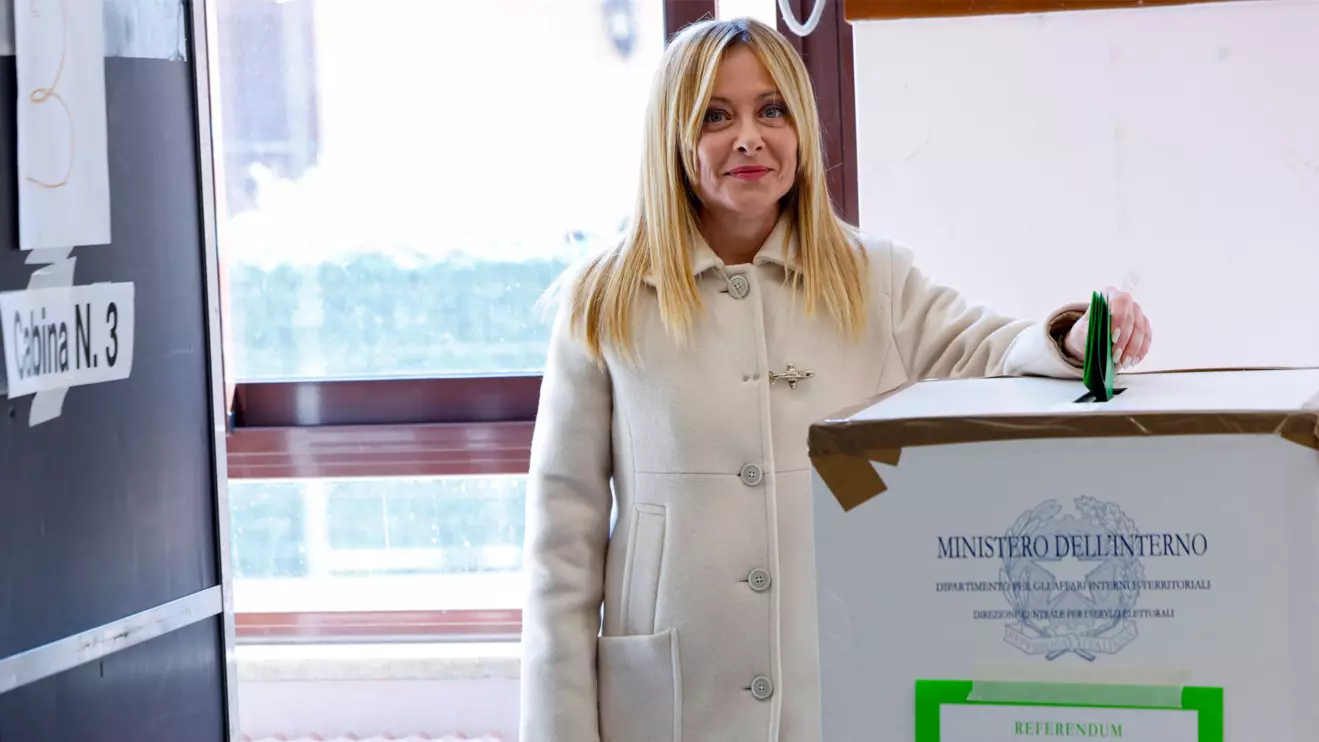
Italian Prime Minister Giorgia Meloni casts her vote during a referendum on reforms to Italy’s justice system before the polls close in Rome, Italy, March 23, 2026. Reuters/Remo Casilli
Exit polls on Monday suggested Italian Prime Minister Giorgia Meloni had narrowly lost a referendum on her flagship reform of the judicial system, dealing a potential blow to the ruling coalition ahead of next year's general election.
The opposition-backed "No" camp secured between 49% and 53% of the vote, compared to 47% to 51% for the government's "Yes" campaign, according to surveys by Opinio for state broadcaster RAI and SWG for La7 TV channel.
Youtrend pollsters put "No" on 51.5% against 48.5% for "Yes".
Turnout was close to 60% -- much higher than expected following an ill-tempered campaign that revealed a deep, mutual animosity between the right-wing coalition and Italy's judiciary, that will leave lasting scars.
If the exit polls are right, defeat might mark a turning point for Meloni, stripping her of the aura of being a winner in the eyes of the Italian electorate after four years of victories in local and national polls.
By contrast, the result may re-energize the fragmented centre-left, giving the two largest opposition parties, the Democratic Party and 5-Star Movement, the impetus to forge a broad alliance to take on Meloni and her allies.
MELONI PLANS TO STAY IN OFFICE REGARDLESS OF REFERENDUM
While Meloni has firmly ruled out resigning over the result, avoiding the fate of former premier Matteo Renzi, whose tenure ended abruptly after a failed 2016 constitutional referendum, a loss will nonetheless leave her vulnerable, analysts said.
The timing of the contest proved challenging for Meloni, with Italians harbouring a clear dislike of her ally, U.S. President Donald Trump, and fearful that the U.S.-Israeli war on Iran will drive up already high domestic power prices.
Pollsters said in the run-up to the ballot that many who voted "No" would likely do so to register dissatisfaction with Meloni's administration rather than engaging with the substance of the highly technical reform.
The referendum proposed separating the careers of judges and public prosecutors, and splitting magistrates' self-governing body, the High Council of the Judiciary (CSM), into two sections, with members chosen by lot rather than elected.
The government argued the changes were needed to make the judiciary more accountable for its mistakes, remove potential bias in the system against defendants and prevent politically motivated factions from doling out top jobs to supporters.
By the government's own admission, the changes would not have addressed one of the main problems afflicting Italy -- a notoriously slow legal system that weighs on the economy.
The magistrates' union and opposition parties said the reform would have eroded judicial autonomy, giving Meloni de facto control over the magistrature -- something she denied.
Victory in the referendum would have likely emboldened the prime minister to press ahead with other significant constitutional changes, such as making the post of prime minister directly elected.
The likely rejection by voters leaves her weakened domestically as she grapples with a stagnant economy and complex international headwinds. It could also weaken her standing in Europe, where previously she was seen as unexpectedly resilient and enduring.
By Crispian Balmer and Angelo Amante
A Ukrainian national has been arrested in the German state Brandenburg on suspicion of spying for Russia, a statement by federal public prosecutors said on Thursday.
Ukrainian President Volodymyr Zelenskiy was due on Tuesday in Oslo to meet US special envoy Steve Witkoff, trying to repair ties that have deteriorated this month as President Donald Trump courted Moscow.
France’s worst bout of civil unrest in years has plunged President Emmanuel Macron’s final months in office deeper into turmoil, exposing the powerlessness of a leader struggling to contain social anger with little money to spend, scant political capital and an increasingly fragile grip on public order.

To make this website run properly and to improve your experience, we use cookies. For more detailed information, please check our Cookie Policy.
Necessary cookies enable core functionality. The website cannot function properly without these cookies, and can only be disabled by changing your browser preferences.