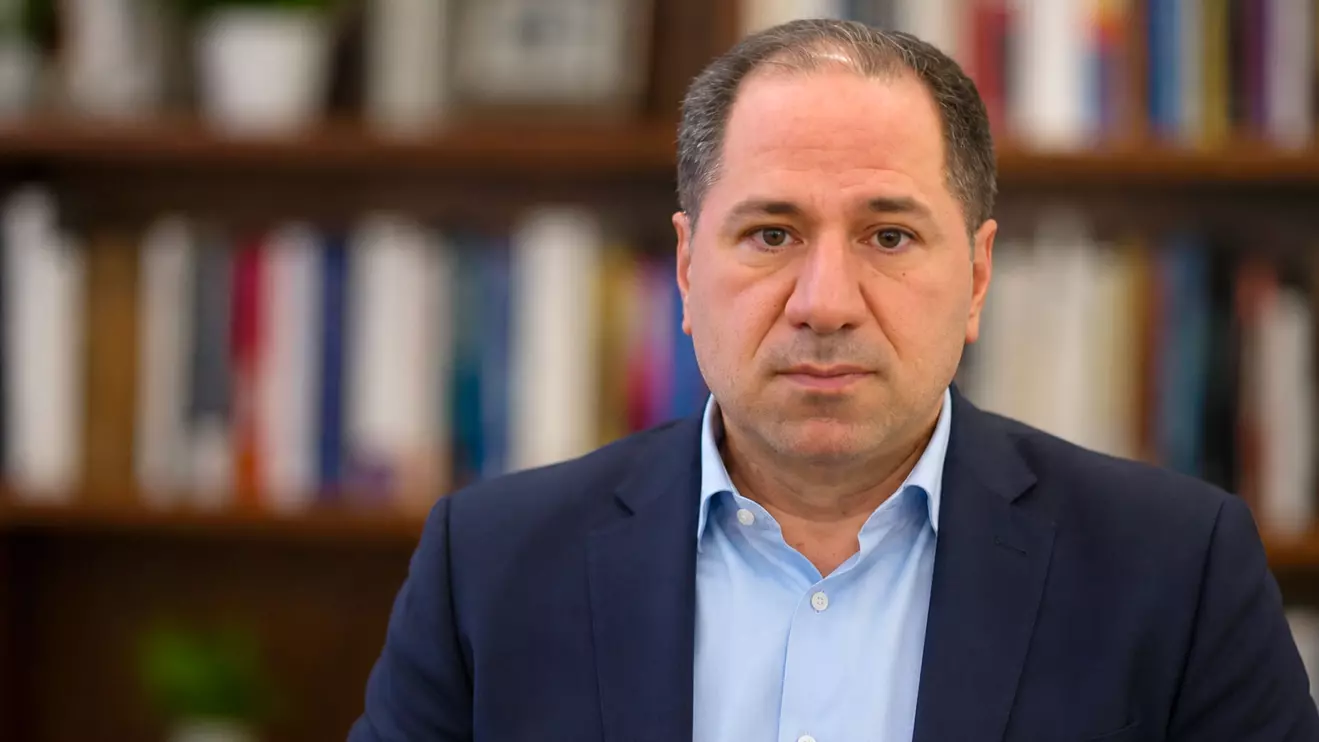
Lebanese Kataeb party chief Samy Gemayel drew a hard line Monday, declaring that Lebanese sovereigntists would never accept living alongside an armed Hezbollah, regardless of what is agreed in the US-Iran talks in Switzerland.
The Kataeb Party is one of Lebanon's oldest and most storied political movements. Founded in 1936 by Pierre Gemayel, Samy's grandfather, the party has historically championed Lebanese sovereignty, Christian political identity and resistance to foreign interference in Lebanese affairs.
A right-of-centre, nationalist movement with deep roots in the Maronite Christian community, the Kataeb played a central role in the Lebanese Civil War (1975-1990) and has remained one of the most vocal opponents of Hezbollah's armed presence and Iranian influence in Lebanon. Samy Gemayel, grandson of the founder, has led the party since 2015, positioning it as a leading force in Lebanon's sovereigntist camp.
"Merci l'Iran? For What?"
Gemayel was scathing about those celebrating a supposed Iranian victory. "We have never seen someone whose villages have been destroyed say thank you. Merci for what?" he asked, pointing to a devastating human toll: 5,000 Lebanese dead among a population of 5 million, proportionally far higher than Iran's 3,500 losses among 93 million. "What connection do we have with Iran's nuclear programme? And why are we paying the price?"
Hezbollah Must Disarm - Full Stop
The Kataeb leader was unambiguous: "As long as the militias' weapons exist, the land will not be liberated, the displaced will not return, reconstruction will not happen, Lebanon will not live in peace and the economy will not recover." Hezbollah's disarmament, he insisted, is the "principal and ultimate obstacle" to Lebanon's recovery.
On the Switzerland talks, Gemayel accused Tehran of deliberately inserting Lebanon into the US-Iran negotiations to protect its most valuable regional asset.
"Iran introduced Lebanon into this file because it wants to preserve this card - Hezbollah - its arsenal and its military base," he said, warning that Iran is trying to "save what remains of Hezbollah's fighters" for future use.
Gemayel threw his support behind President Joseph Aoun, Prime Minister Nawaf Salam and the government's direct negotiation process with Israel - rejected by Hezbollah - while calling on the Lebanese army to step up. "The moment has come for the Lebanese army. The more it consolidates its authority, the more Israel will withdraw."
One message ran through everything Gemayel said Monday: Lebanon's future belongs to the Lebanese state, not to Tehran, and not to Hezbollah.