Kuwait's Zain wins $747 million Syria mobile licence

1 min Edward Finkelstein

Syria's Ministry of Telecommunications announced Wednesday that Kuwait's Zain Group has been awarded a new mobile telecommunications licence in Syria, the latest in a series of Gulf investments flowing into the country since the fall of Bashar al-Assad in December 2024.

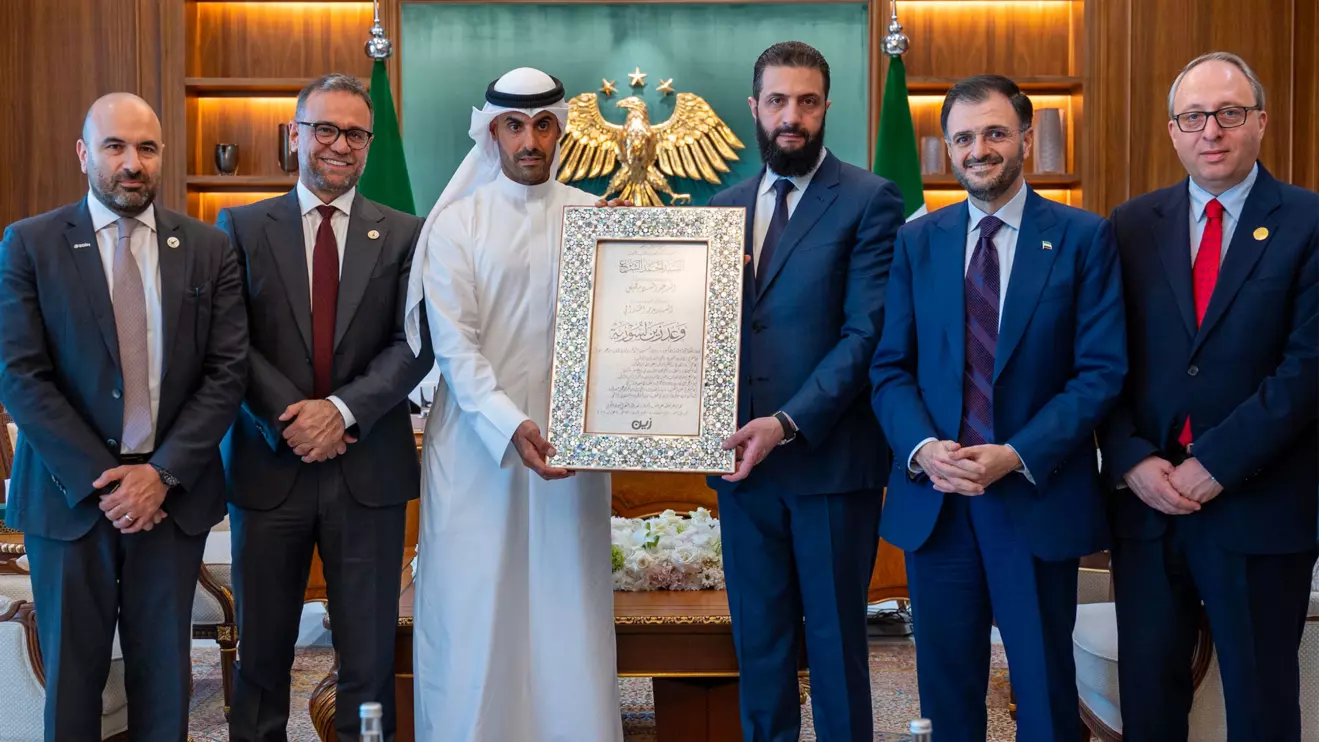
President Al-Sharaa with Al-Kharafi, Syrian Minister of Communications and Information Technology Abdulsalam Haykal, and senior officials from the Ministry and Zain Group © Zain 

President Al-Sharaa with Al-Kharafi, Syrian Minister of Communications and Information Technology Abdulsalam Haykal, and senior officials from the Ministry and Zain Group © Zain 

Syria's Ministry of Telecommunications announced Wednesday that Kuwait's Zain Group has been awarded a new mobile telecommunications licence in Syria, the latest in a series of Gulf investments flowing into the country since the fall of Bashar al-Assad in December 2024.

The 25-year licence, valued at $747 million, replaces MTN Syria and makes Zain the second mobile operator in the country alongside the private operator Syriatel. Zain plans to deploy 5G technology and digital solutions, with commercial services expected to launch in the first quarter of 2027.

Zain Group CEO Bader al-Kharafi met with Syrian President Ahmad al-Sharaa in Damascus on Tuesday, underscoring the strategic significance of the deal for both sides.

Zain Group is one of the Middle East and Africa's most prominent telecommunications conglomerates, headquartered in Kuwait City. Founded in 1983 as the Mobile Telecommunications Company (MTC), it rebranded as Zain in 2007.

The group currently operates in eight countries, Kuwait, Saudi Arabia, Bahrain, Iraq, Jordan, South Sudan, Sudan and now Syria, serving tens of millions of customers across the region. Listed on the Kuwait Stock Exchange, Zain has built a reputation as a pioneer of mobile connectivity in emerging and frontier markets.

Syria's Gulf Pivot

The Zain deal reflects the broader economic strategy of Syria's new authorities, who have been actively courting Gulf investment to rebuild an economy devastated by over thirteen years of civil war. 

Saudi Arabia signed a major investment accord with Damascus in February 2026, and the new government has been systematically replacing Iranian and Russian economic influence with Gulf capital and partnerships.

For Syria, a functioning modern telecoms network - including 5G - is not merely a commercial priority. It is an essential infrastructure for reconstruction, digital governance and economic reintegration into the regional and global economy.

Tags

Edward Finkelstein

Edward Finkelstein

From Athens, Edward Finkelstein covers current events in Greece, Cyprus, Turkey, Egypt, Libya, and Sudan. He has over 15 years of experience reporting on these countries. He is a specialist in terrorism issues

Related

Iraq

Iraq and Syria pledge closer ties

Syria and Iraq agreed Tuesday to deepen cooperation across multiple sectors, including energy, marking the first visit by Iraq's foreign minister to Damascus since the fall of Bashar al-Assad in late 2024.

Syria

Disarm Hezbollah by force: Syria's Liberal Party offers Lebanon a way out

The Syrian Liberal Party has issued a bold call for a decisive international military alliance to disarm Hezbollah and restore full stability to Lebanon, proposing that Beirut formally request assistance from the existing US-sponsored international counterterrorism coalition.

Iran

Rubio defends Iran deal as Israel holds firm on Lebanon troops

The United States' top diplomat sought backing from sceptical Gulf allies on Wednesday for President Donald Trump's deal with Iran to end their war, while in another challenge to the accord, Israel insisted it would keep troops in southern Lebanon.

Subscribe to our newsletter

Mena banner 4

To make this website run properly and to improve your experience, we use cookies. For more detailed information, please check our Cookie Policy.

  • Necessary cookies enable core functionality. The website cannot function properly without these cookies, and can only be disabled by changing your browser preferences.