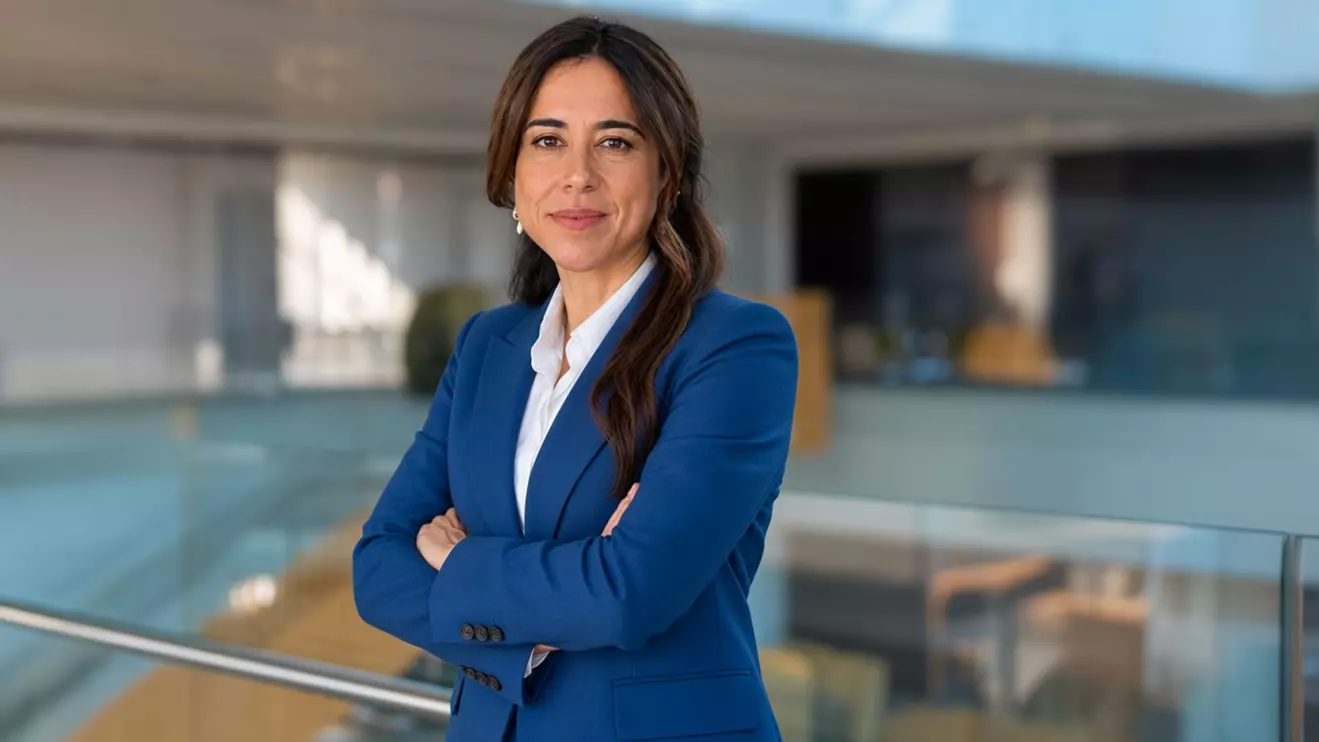
Senior Emirati diplomat Lana Nusseibeh has thrown her hat into the ring to become the next United Nations secretary-general, injecting a prominent Middle Eastern candidate into a contest that has so far failed to produce a consensus among the Security Council’s most powerful members.
Nusseibeh is no stranger to the UN. She served as the UAE’s ambassador to the world body for more than a decade before becoming minister of state for foreign affairs. Her pitch: restore the United Nations as a diplomatic problem-solver at a time of mounting global crises.
An unusual profile
Her background is anything but conventional. Of Palestinian descent, she was educated at Wycombe Abbey, an elite girls’ boarding school in England, before reading history at Cambridge University. She then made a choice few would have expected from someone with her family roots: a master’s degree in Israeli and Jewish diaspora studies at the University of London, which she completed with honours in 2003.
She speaks Arabic, English, French and Hebrew.
Several seasoned observers of UN elections say she would be an inspired choice for what is often described as the world’s most impossible job.
But Nusseibeh enters the race late. The Security Council has already held six informal straw polls, and Costa Rica’s Rebeca Grynspan, head of the UN Conference on Trade and Development, has led most of them. The other contenders include Argentina’s Rafael Grossi, director general of the International Atomic Energy Agency.
How the UN chooses its leader
Under the UN Charter, the secretary-general is appointed by the 193-member General Assembly on the recommendation of the Security Council. In practice, the real decision is made by the Council’s 15 members.
The process unfolds in several stages. Candidates are nominated by member states, then face public hearings before the General Assembly, a transparency measure introduced in 2016. The Security Council then holds a series of secret straw polls, in which members can “encourage” or “discourage” each candidate, or express no opinion. Results are never officially published.
The decisive moment comes when the ballots are colour-coded to identify the votes of the five permanent members: the United States, China, Russia, Britain and France. A single “discourage” from any of them amounts to a veto. In 2016, the Council held six straw polls before settling on António Guterres, and only used colour-coded ballots in the final round.
Once the Council agrees on a name, it adopts a resolution recommending that candidate to the General Assembly, whose approval has long been considered a formality.
Gender and geography
Two unwritten rules weigh on this year’s race. Many member states are pushing for the first woman to lead the organisation in its 81-year history. And although the Charter does not require regional rotation, many argue it is Latin America’s turn.
Nusseibeh ticks the first box but not the second. Time is also short: Guterres’s second term ends on December 31, and his successor is due to take office on January 1, 2027.
Whether a late, unconventional candidate can break the deadlock may depend on one question: can she win over all five permanent members of the Security Council?