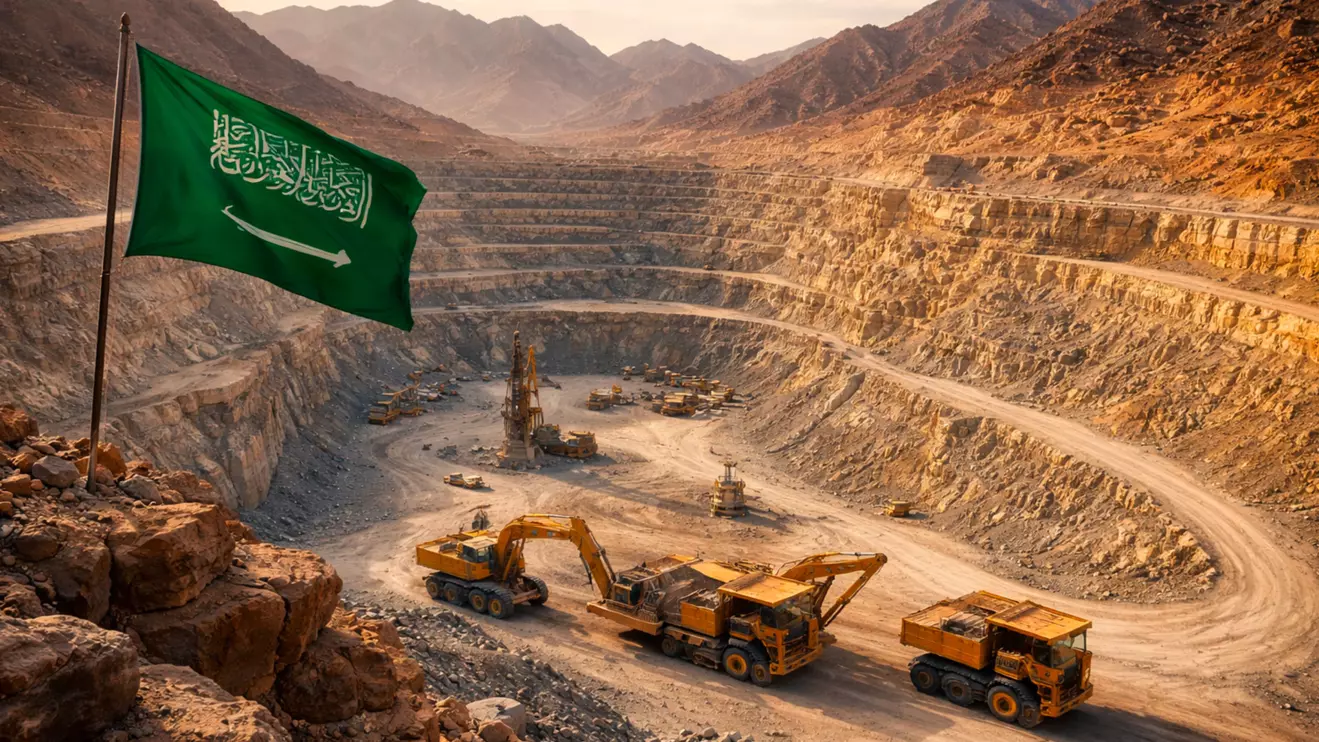
Saudi Arabian Mining Co. (Maaden) and Australia-based Midana Exploration Pty Ltd, part of Hancock Prospecting, have formed a joint venture to accelerate mineral exploration across Saudi Arabia, with initial work set to target the Nabita–Ad-Duwayhi Gold Belt after winning exploration licenses from the Ministry of Industry and Mineral Resources.
The licensed areas cover more than 24,000 square kilometers of mineral-rich territory, according to the regulatory disclosure.
Under the shareholders’ agreement signed Dec. 29, Maaden will own 50.1% of the joint venture and Hancock will hold 49.9%, the company said in a Tadawul filing.
The venture’s scope includes exploration, development and mining, as well as the sale and marketing of minerals in licensed areas. It will start with $5 million in initial share capital and will approve budgets and business plans for its operations on an ongoing basis.
The transaction remains subject to regulatory and antitrust approvals, the filing said, and no related parties were identified.
The partnership comes as Saudi Arabia intensifies efforts to expand mining under Vision 2030, seeking to draw in international partners and private investment to develop the Kingdom’s mineral potential. Authorities have accelerated licensing rounds and increased incentives to boost geological mapping and downstream development.
Gold’s surge adds a powerful tailwind
The timing also aligns with a blockbuster gold market that is strengthening the case for exploration spending globally.
Gold has been trading near record highs after a sharp rally through 2025, supported by expectations of easier monetary policy, persistent geopolitical risk, and steady demand from central banks and institutional investors.
In bullish markets, higher prices can materially improve the economics of new discoveries: deposits that looked marginal at lower prices can become viable, and companies are often more willing to fund drilling programs and fast-track promising targets.
That backdrop could prove especially supportive for a large, early-stage license package such as the Nabita–Ad-Duwayhi belt, where initial success can rapidly expand exploration scope and speed the path to development decisions.
Saudi Arabia has ramped up exploration activity in recent years, with spending rising to SR487 per square meter, more than double the Vision 2030 target — and total exploration expenditures in 2024 exceeding SR1.05 billion, supported by government and private-sector funding.