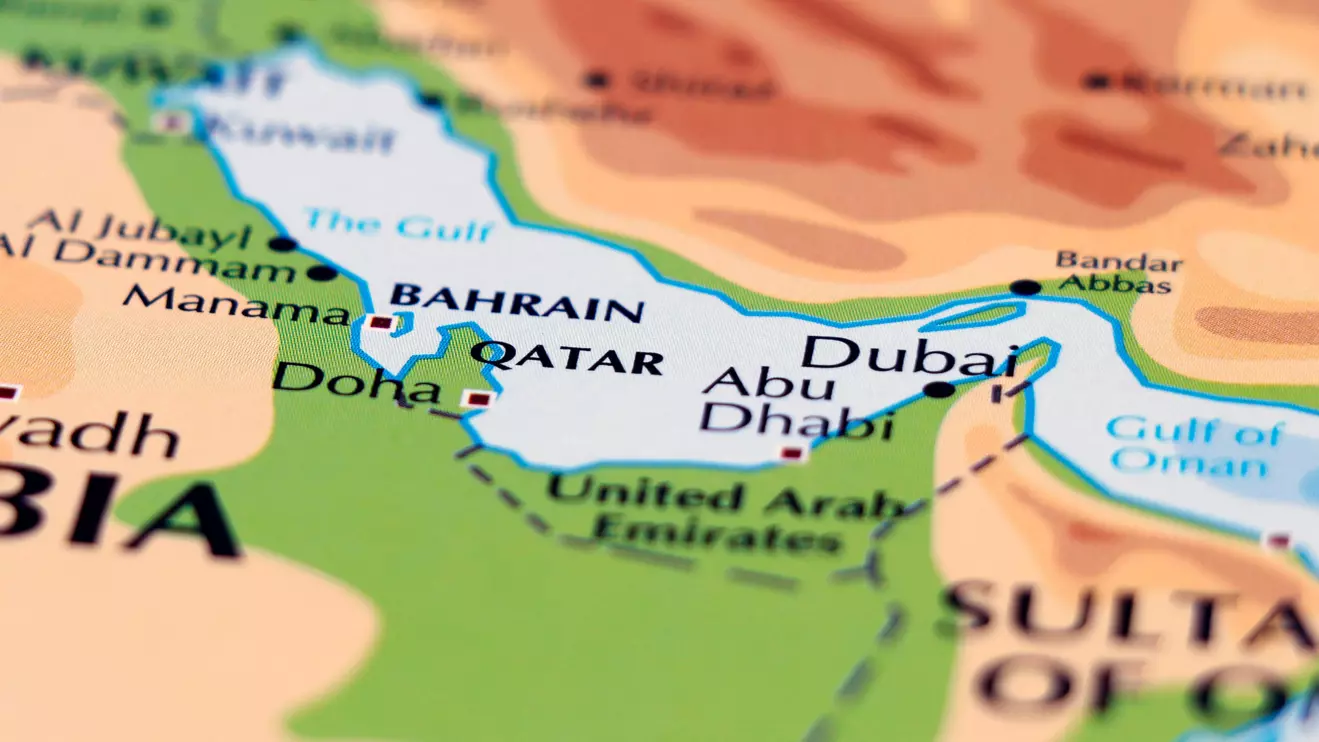
In a sweeping retaliatory offensive following US-Israeli strikes on Iranian territory, Tehran launched a massive missile campaign Saturday targeting American military installations and Gulf states across the region. From Bahrain to Jordan, the Middle East is now a active war zone.
Bahrain: US Fifth Fleet Headquarters Hit
The blow struck at the heart of American naval power in the Gulf. Bahrain's National Communication Centre confirmed that the US Fifth Fleet headquarters was struck by a missile attack — a direct and deliberate hit on America's most critical regional command center. Further details are expected.
UAE: One Dead, Missiles Intercepted Over Abu Dhabi
At least one person was killed in Abu Dhabi after Iranian missiles were launched toward the Emirati capital — home to a base housing American personnel. Several missiles were intercepted, but the psychological impact was immediate. Residents reported hearing massive explosions across both Abu Dhabi and Dubai.
The UAE responded with fury, declaring the attack "a flagrant violation of national sovereignty and international law" and reserving "the full right to respond." The country partially closed its airspace as a precautionary measure.
Qatar: Patriot Missiles Down Iranian Strike, Al-Udeid on Alert
Qatar's American-made Patriot interceptors shot down an incoming Iranian missile as air raid sirens wailed across the emirate. The stakes could not be higher — Qatar hosts Al-Udeid Air Base, the largest American military installation in the entire region. Qatar Airways suspended all departures from Doha as airspace was shut down.
Kuwait: Missiles Intercepted, Explosions Heard
AFP correspondents on the ground reported hearing explosions across Kuwait. The country's military chief of staff confirmed that air defense systems intercepted incoming missiles detected in Kuwaiti airspace.
Jordan: Two Ballistic Missiles Shot Down
Jordanian armed forces intercepted and destroyed two ballistic missiles targeting the kingdom. Both were successfully neutralized by Jordanian air defense systems. The Royal Air Force had earlier scrambled to "protect the kingdom's skies" following the initial US-Israeli strikes.
Saudi Arabia: Explosions in Riyadh, Official Silence
Perhaps the most intriguing development of the night: AFP journalists in Riyadh reported hearing multiple explosions in the Saudi capital, yet the kingdom's official statement made no mention of strikes on Saudi territory. Riyadh condemned Iran's attacks on its neighbors in the strongest terms, but the conspicuous silence about its own situation speaks volumes.
Shipping in the Gulf: Maximum Alert
The world's maritime industry is sounding the alarm. Bimco, one of the world's leading shipowner associations, warned that the strikes have "considerably increased the security risk for vessels" in and around the Gulf, noting that ships with American or Israeli commercial ties face elevated targeting risk.
Iran has responded not with precision, but with breadth. By striking simultaneously across Bahrain, the UAE, Qatar, Kuwait, Jordan and potentially Saudi Arabia, Tehran has sent an unmistakable message: if it burns, everyone burns.
The Gulf is no longer a buffer zone. It is a battlefield.
Follow Mena Today for live updates as this story develops.