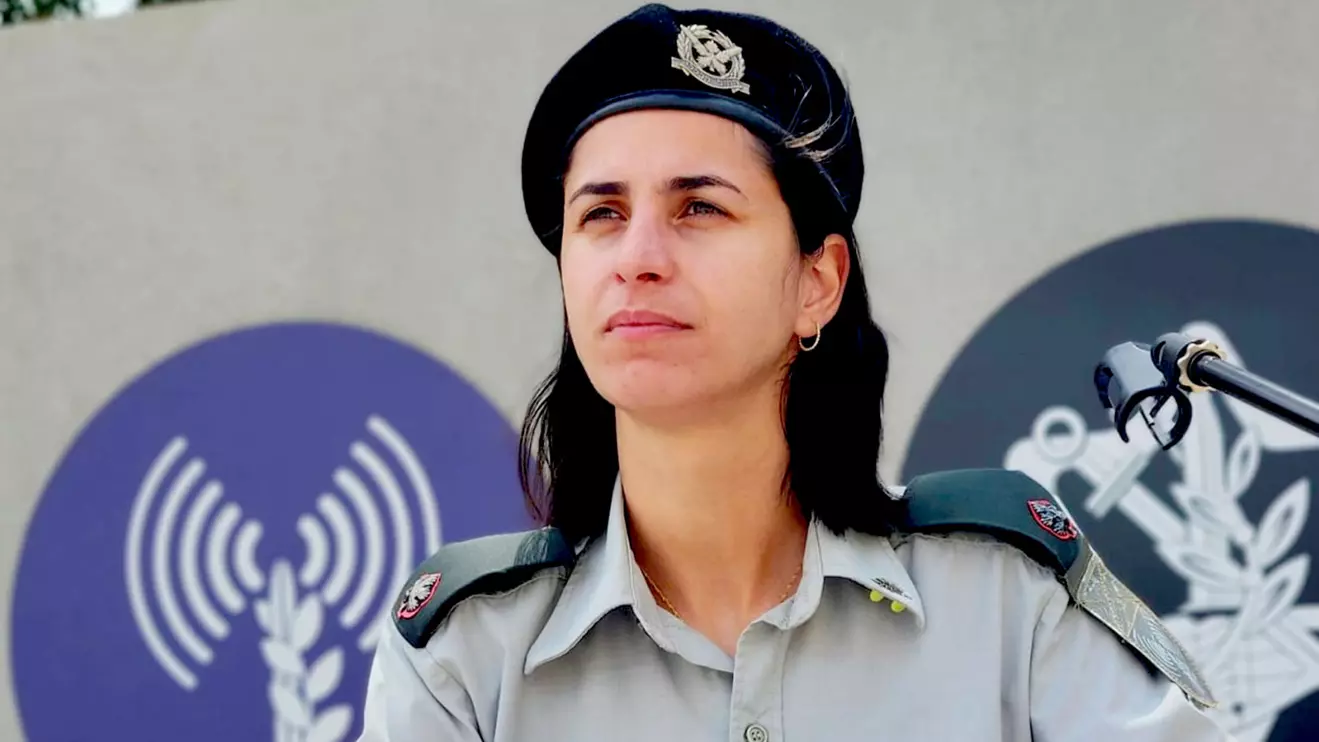
The Israel Defense Forces has appointed Lt. Col. Ella Waweya as its new Arabic-language spokesperson, replacing Col. Avichay Adraee after 20 years in the role.
Waweya, 36, previously served as Adraee’s deputy and is known publicly as “Captain Ella.” With her recent promotion to lieutenant colonel, she has become the highest-ranking female Arab Muslim officer in the IDF. A formal handover ceremony was held at the Spokesperson’s Unit headquarters in Tel Aviv.
Adraee will remain involved in an advisory capacity, assisting the unit during both routine and emergency situations. He is also expected, at least in the near term, to continue operating his established social media accounts, which have served as a key channel for communication with Arabic-speaking audiences.
Waweya’s appointment carries weight beyond its ceremonial dimension. In an era when narrative battles often move as quickly as military operations, the Arabic-language spokesperson plays a crucial role in shaping how Israel’s actions are perceived across the region.
In that respect, elevating a senior Arab Muslim officer to the position is both symbolically powerful and strategically sound. It signals institutional confidence, and it reflects the complexity of Israeli society in a way that external observers often overlook.
At the same time, it stands out precisely because such moves have been rare.
For years, Israel’s public diplomacy efforts, particularly in the Arabic-speaking world, have struggled with inconsistency, reactive messaging, and at times a failure to anticipate how events would resonate beyond its borders.
Tactical military effectiveness has not always been matched by strategic communications discipline. Messaging has often appeared fragmented, overly defensive, or tone-deaf to regional sensitivities.
Against that backdrop, Waweya’s promotion feels less like a routine personnel change and more like an overdue recalibration.
Beyond Symbolism
The true test, however, will not be symbolic representation alone. Success in this role requires clarity, credibility, and agility, particularly during moments of escalation.
Arabic-language audiences are highly attuned to nuance, and trust cannot be manufactured through branding alone.
If Israel intends to compete effectively in the information arena, it will need to empower its communicators with coherence, strategic foresight, and a willingness to address uncomfortable realities head-on.
Waweya’s appointment suggests recognition that communication is no longer secondary to operations — it is part of the operational field itself. Whether this represents the beginning of a broader cultural shift within Israel’s public diplomacy apparatus remains to be seen.
For now, her elevation is a notable development: a rare example of strategic thinking in an area where Israel has too often underperformed relative to its capabilities.