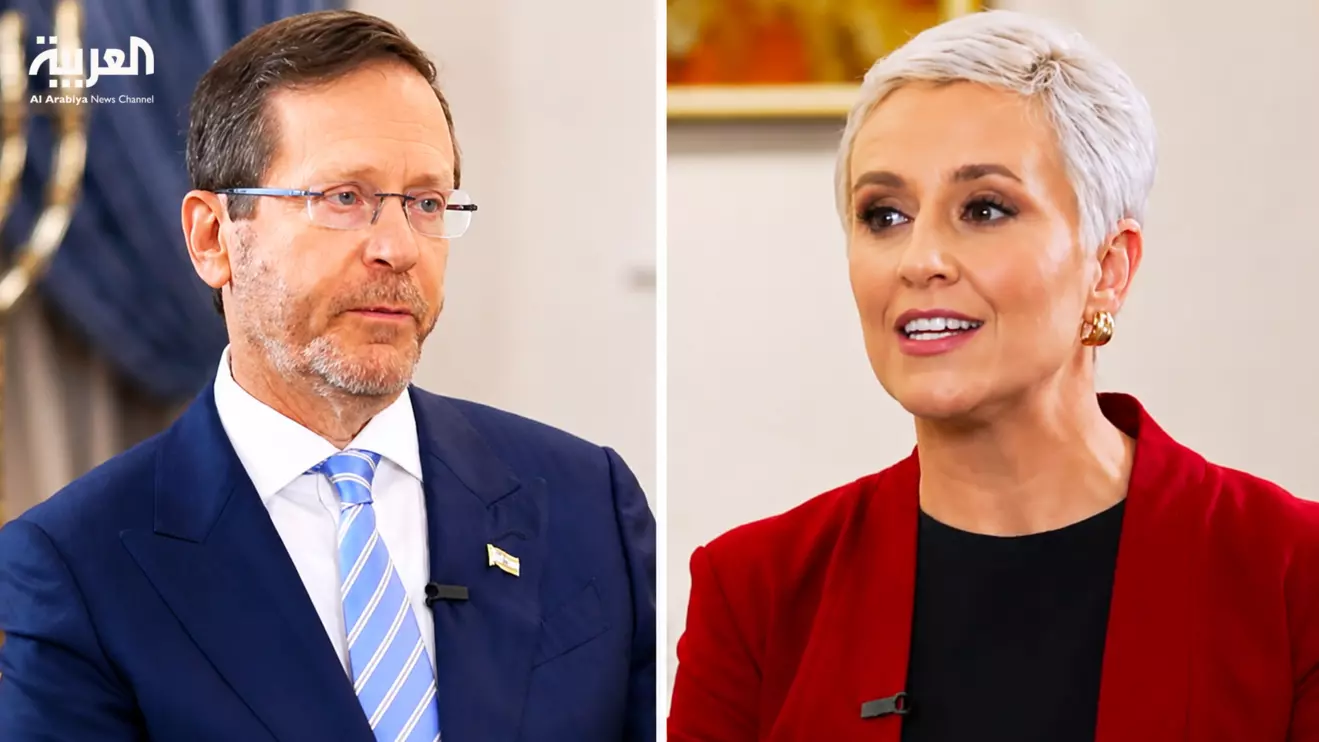
Saudi state-owned Al Arabiya broadcast an interview with Israeli President Isaac Herzog on Thursday, filmed at his residence in Jerusalem, a striking image that is, by any historical measure, rare.
Saudi Arabia and Israel have no formal diplomatic relations, and Riyadh's flagship broadcaster does not routinely sit down with Israeli heads of state on Israeli soil.
The substance of the interview matched its unusual staging. Herzog spoke openly of his hope for normalization with the kingdom. "It is my dream to see peace between Israel and Saudi Arabia. I have great respect for Crown Prince Mohammed bin Salman," he said, adding that "the dialogue between Jerusalem and Mecca should be the real gist of it, because I believe Jew and Muslim need to dwell together in this region in peace."
He said he hoped to "meet the Saudi Arabian leadership officially in due course," while acknowledging he could not travel to Riyadh "just as an ordinary citizen."
Herzog also pointed to Israel's ties with Morocco, Bahrain and the UAE under the Abraham Accords as proof normalization "can be" successful, and expressed pain over the civilian toll in Gaza, saying his "heart aches" for those killed.
On Iran, he was blunt, describing Tehran as impossible to negotiate with in good faith. "With the Iranian pattern of behavior, which we know, it is impossible to do deals. They violate them all the time," he said, welcoming what he called a firm American response to the latest escalation.
Coming in the middle of an intensifying US-Israel-Iran confrontation, the appearance is being read by some analysts less as a diplomatic overture in isolation than as a signal of how far quiet Saudi-Israeli coordination has already progressed, even as neither government has moved to formalize ties.
Riyadh pulled out of tentative normalization talks in 2023 as the Gaza war erupted, and officially maintains that any deal with Israel remains contingent on progress toward Palestinian statehood. Whether Thursday's interview marks a genuine turning point or simply a rare public airing of an already-existing back channel remains, for now, an open question.