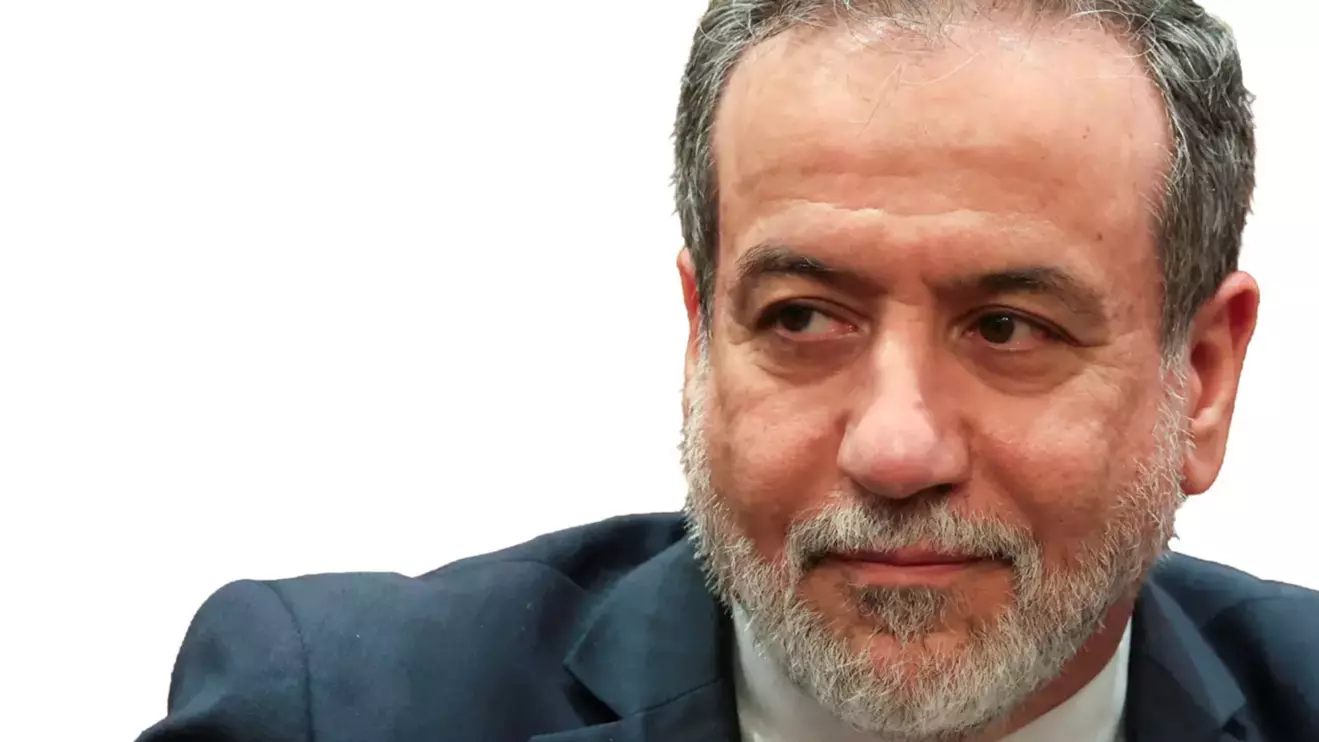
The United States did not seek zero uranium enrichment in nuclear talks this week and Iran did not offer to suspend enrichment, Iran's foreign minister said on Friday, adding that he expected to have a draft counterproposal ready within days.
"We have not offered any suspension and the U.S. side has not asked for zero enrichment," Iranian Foreign Minister Abbas Araqchi said in an interview on U.S. cable television news network MS NOW.
"What we are now talking about is how to make sure that Iran's nuclear program, including enrichment, is peaceful and would remain peaceful forever," he said.
Araqchi added that technical and political "confidence-building measures" would be enacted to ensure the program would remain peaceful in exchange for some kind of action on sanctions, but he gave no further details.
He gave no specific timing on Iran's counterproposal for U.S. envoys Steve Witkoff and Jared Kushner but said he believed a diplomatic deal was within reach and could be achieved "in a very short period of time."
Araqchi added that he expected to have a draft Iranian counterproposal ready in the next two or three days for top Iranian officials to review, with more U.S.-Iran talks possible in a week or so.
Representatives for the White House had no immediate comment on his remarks.
On Thursday, U.S. President Donald Trump gave Tehran a deadline of 10-15 days to make a deal or face "really bad things" amid a U.S. military buildup in the Middle East that has fueled fears of a wider war.
Araqchi said a military option would only complicate efforts to reach a deal.
MS NOW's Joe Scarborough, who conducted the interview, later cited an unnamed Trump administration official who, when asked about the foreign minister's remarks, said U.S. negotiators had told their Iranian counterparts that Trump's position was no enrichment. But the burden was on Tehran if its officials thought they could come back with a counterproposal that could show what safeguards would be put in place to show its nuclear program would be for power, the U.S. team added, according to the official.
U.S. negotiators also demanded a detailed proposal within a week, the official told MS NOW, Scarborough said.
Abbas Araghchi’s statements carry little weight beyond the talking points they are designed to deliver. The Iranian regime has long relied on calculated ambiguity, controlled narratives, and strategic deception to preserve its grip on power. Words, in this context, are tools, not commitments.
For decades, Tehran has mastered the art of negotiating while buying time. Promises are made, reinterpreted, delayed, or quietly abandoned. Public messaging is tailored for foreign audiences, while domestic rhetoric tells a different story. This dual-track communication is not accidental. It is structural.
The regime’s survival strategy is built on projection abroad and propaganda at home. Concessions are framed as victories. Setbacks are blamed on external enemies. Transparency is avoided unless it serves tactical advantage.
American negotiators understand this playbook. They are not naïve. Any dialogue with Tehran is approached with layers of verification, pressure mechanisms, and contingency planning. Trust is not assumed; it is tested, repeatedly.
In high-stakes diplomacy, rhetoric is cheap. Verification is everything.