Prime Minister Benjamin Netanyahu has revealed that he phoned Syrian President Ahmed al-Sharaa in July 2025 to demand an end to the killing of Druze in Syria's Sweida province.
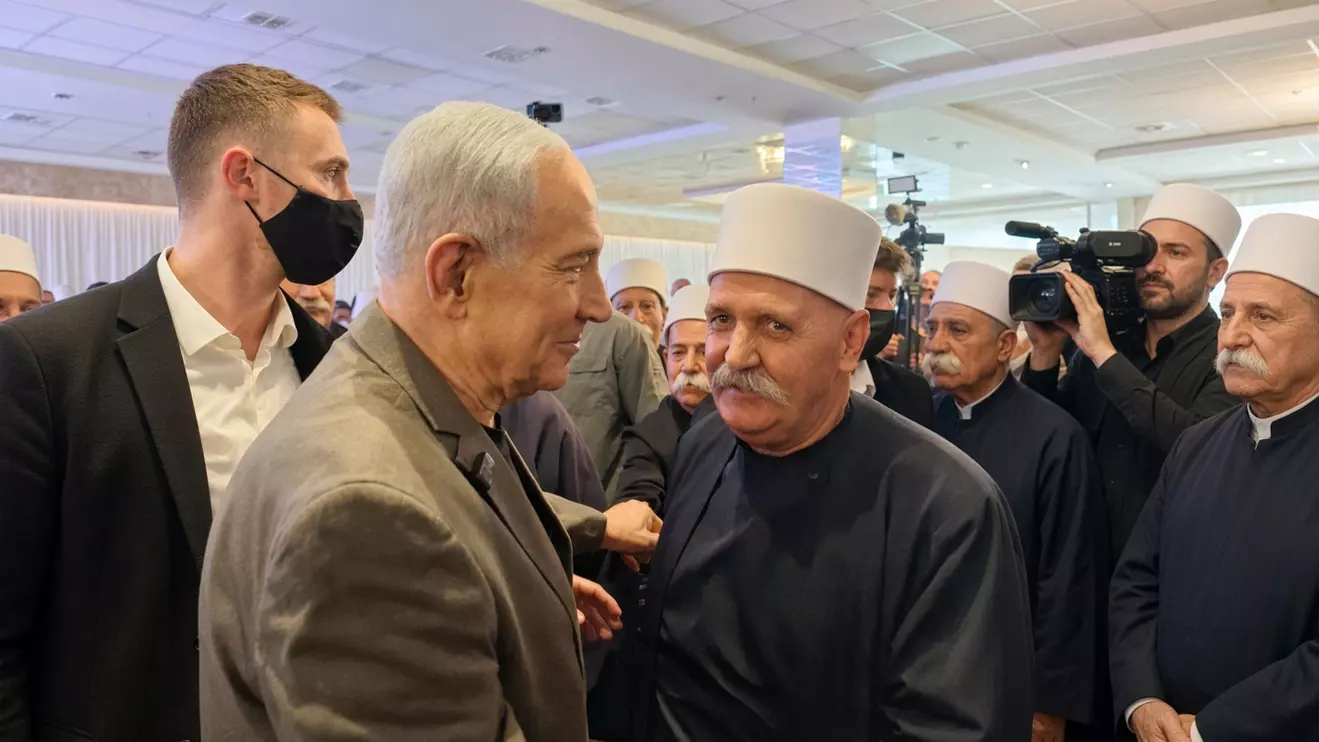
He made the disclosure on Thursday at a Likud campaign event for Druze voters in the northern Israeli town of Yarka, less than two weeks before the October 27 election.
He described the call as "very short and very sharp" and said: "And the slaughter stopped." He pledged to protect Druze "on both sides of the border." Israeli media, citing his account, reported that he warned Israel would intervene if the killings continued.
According to the Beirut daily L'Orient Le Jour, he also promised Druze voters that they would be able to return to their localities. Damascus has not denied the report.
L'Orient Le Jour asks what led Netanyahu to disclose the call now. It points to electoral calculations, "but not only." Polls put his bloc and the opposition level, and neither is near a majority.
The Druze are a minority that follows an offshoot of Islam, with communities in Syria, Lebanon and Israel.
In Syria, their heartland is Sweida province in the south. In Israel, they number well over 100,000, according to different press estimates, and their men serve in the army, unlike most Arab citizens. That gives their fate real weight in Israeli politics.
What happened in Sweida
Fighting began on July 12, 2025, after a clash at a checkpoint between Bedouin and Druze armed groups. Government forces moved in on July 14 and, according to Human Rights Watch, carried out summary killings and destroyed civilian property.
Bedouin groups allied with the government carried out kidnappings and looting, while Druze fighters also attacked and detained civilians, including 19 Bedouin civilians killed in Shahba. HRW says abuses by all sides may amount to war crimes.
The toll is disputed. The Syrian Observatory for Human Rights counted more than 2,000 dead, including 789 Druze civilians. UN experts reported about 1,000 killed in attacks on three villages alone.
The UN says some 187,000 people were displaced by late July. During the fighting, Israel struck the Syrian Defence Ministry and the area near the presidential palace in Damascus, saying it was protecting the Druze.
A province outside Damascus's control
Since then, Druze factions have united under a "National Guard" and Sweida has been run by the authorities of its spiritual leader, Sheikh Hikmat al-Hijri, who is at odds with Damascus.
The European Union Agency for Asylum reports repeated clashes between local fighters and government forces, including in December 2025, March 2026 and May 2026, as Damascus pushed for the province to be integrated into the state.
Rivals and critics of al-Hijri have also been targeted in killings and detentions inside Sweida. In May, the UN deputy envoy described "persistent political and security instability." Protesters have demanded the return of the displaced, the release of detainees and greater autonomy.
Israel and Syria have held several rounds of direct talks since September 2025 on a security arrangement. In March, Israel struck Syrian army camps in the south, reportedly after Druze fighters were attacked.