Lebanon
EU to train Lebanese army in new mission
The European Union announced on Monday that it will set up a mission to train the Lebanese army and security forces, separate from the UN peacekeeping force UNIFIL.

As direct Israeli-Lebanese negotiations prepare to open in Washington on Tuesday, Emmanuel Macron spent the weekend doing what he does best, talking.
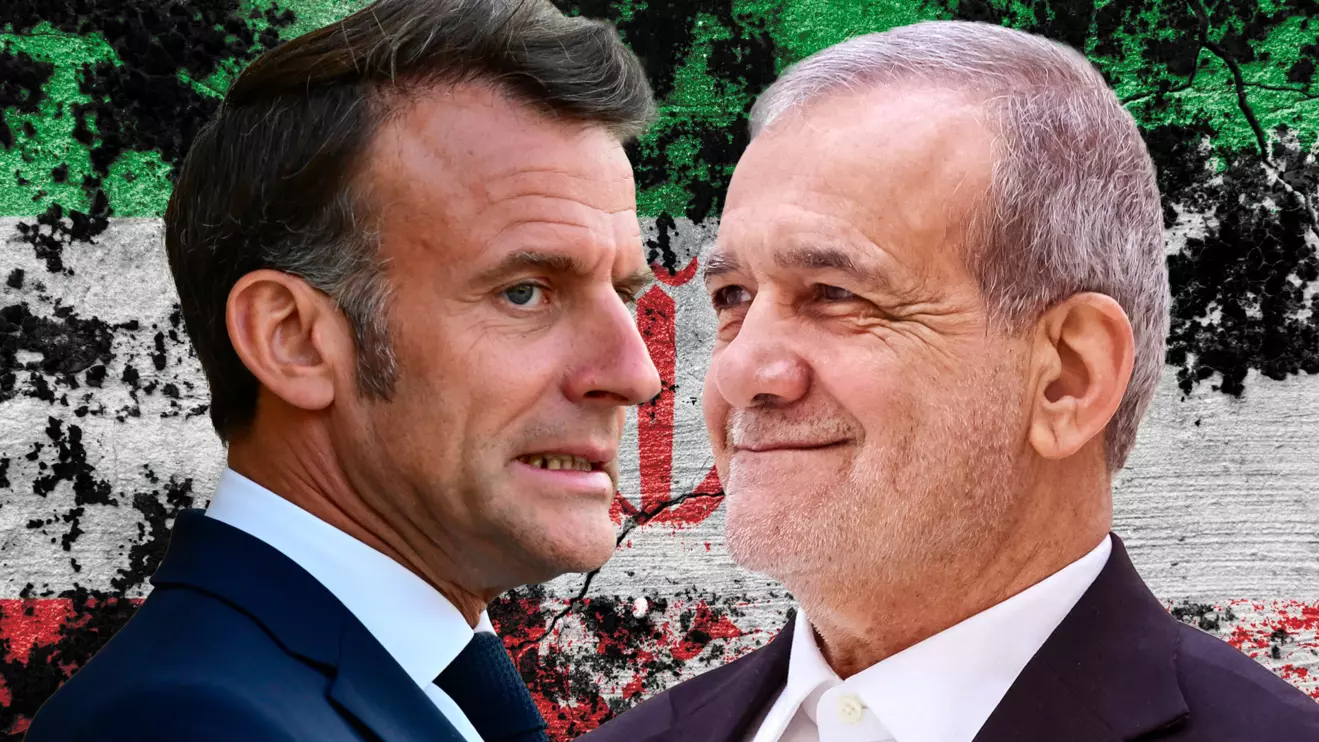
Emmanuel Macron and Massoud Pezeshkian © Mena Today
As direct Israeli-Lebanese negotiations prepare to open in Washington on Tuesday, Emmanuel Macron spent the weekend doing what he does best, talking.
Phone calls to Saudi Crown Prince Mohammed bin Salman, Turkish President Recep Tayyip Erdogan and Iranian President Massoud Pezeshkian. Posts on X. Declarations urging ceasefire, de-escalation and freedom of navigation in the Strait of Hormuz.
The problem is that nobody asked him to.
France was not consulted on the Washington talks. It was not involved. It was not invited. In a diplomatic crisis that is reshaping the Middle East and sending shockwaves through global energy markets, Paris has been reduced to a spectator, issuing carefully worded statements on social media while the decisions that matter are made elsewhere, by others.
The direct talks between Lebanon and Israel, brokered without a shred of French involvement, say everything. Once a defining power in the Levant, France now watches from the outside as Washington, Tel Aviv, Tehran and their regional partners carve out the region's future without so much as a courtesy call to the Élysée.
A Hollow Script, Repeated on Loop
Macron's weekend communiqués followed a pattern that has become almost ritualistic. He and Mohammed bin Salman agreed to "remain in close contact to contribute to de-escalation." He reminded Erdogan of the importance of respecting the ceasefire.
He called for the Strait of Hormuz to be reopened "as quickly as possible." Worthy sentiments, every one of them, and every one of them entirely disconnected from the levers of power that will actually determine how this crisis ends.
There is something almost performative about it. A president picking up the phone not because his calls will change anything, but because being seen to call is all that remains of French influence in the region.
Legitimising Tehran
Macron's outreach to Iranian President Massoud Pezeshkian deserves particular scrutiny. By urging Tehran to "seize the opportunity" offered by the Islamabad talks, Paris is effectively extending a diplomatic lifeline to a regime that has blockaded one of the world's most critical maritime chokepoints, fuelled Hezbollah's destabilisation of Lebanon, and dragged the region to the edge of a broader war.
His pointed insistence on "full respect of the ceasefire, including in Lebanon" is even more revealing. At a moment when Hezbollah's regional influence is under serious and sustained pressure, Macron's intervention reads less as principled diplomacy and more as an attempt to shield the group from the consequences of its own aggression. It is a stance that will not go unnoticed in Washington or Jerusalem.
Strip away the diplomatic language and the picture becomes uncomfortably clear. With less than a year left before his mandate expires, Macron is at the lowest point of his presidency, deeply unpopular at home, politically paralysed, governing a country mired in institutional dysfunction and economic anxiety.
His relentless engagement on the world stage has the look of a man in search of a legacy, reaching for relevance in foreign policy precisely because domestic politics have closed every other door.
The irony is that the more visibly he reaches, the more clearly his limitations are exposed.
Words Without Weight
In diplomacy, influence is not measured by the volume of phone calls made or the eloquence of statements published. It is measured by outcomes, by whether your involvement shapes events, shifts positions or opens doors that would otherwise remain closed. By that standard, France's position in this crisis is sobering.
The United States is brokering talks. Israel is dictating conditions. Iran is setting red lines. Gulf states are mediating. And France? France is posting on X.
Macron can talk. He can call. He can urge and implore and declare. But in a region where power is the only currency that counts, good intentions without leverage are worth very little.
The gap between Paris's self-image as an indispensable diplomatic power and the reality of its actual influence has rarely been so wide, or so painfully visible.
The European Union announced on Monday that it will set up a mission to train the Lebanese army and security forces, separate from the UN peacekeeping force UNIFIL.
British Prime Minister Andy Burnham said on Monday that a suspected plot targeting the RAF Fairford air base in Britain was "highly likely" to have been coordinated in Iran, and almost certainly directed by the Islamic Revolutionary Guard Corps.
Iran is still reviewing a US response to its proposal regarding the reopening of the Strait of Hormuz and will reply to Washington via intermediaries when the review is over, foreign ministry spokesperson Esmaeil Baghaei said on Monday.
To make this website run properly and to improve your experience, we use cookies. For more detailed information, please check our Cookie Policy.
Necessary cookies enable core functionality. The website cannot function properly without these cookies, and can only be disabled by changing your browser preferences.