United Arab Emirates
UAE society sponsors Russia's national Arabian horse championship
The 2026 Russian National Arabian Horse Championship opens on Saturday at Maxima Park, in the village of Gorki Sukharevsky, Dmitrovsky District, Moscow Region.

When Qatar's sovereign wealth fund quietly acquired Paris Saint-Germain (PSG) on June 30, 2011, for an estimated €100 million, the stated ambition was clear: to project influence, reshape perception, and buy prestige on the world's biggest sporting stage.
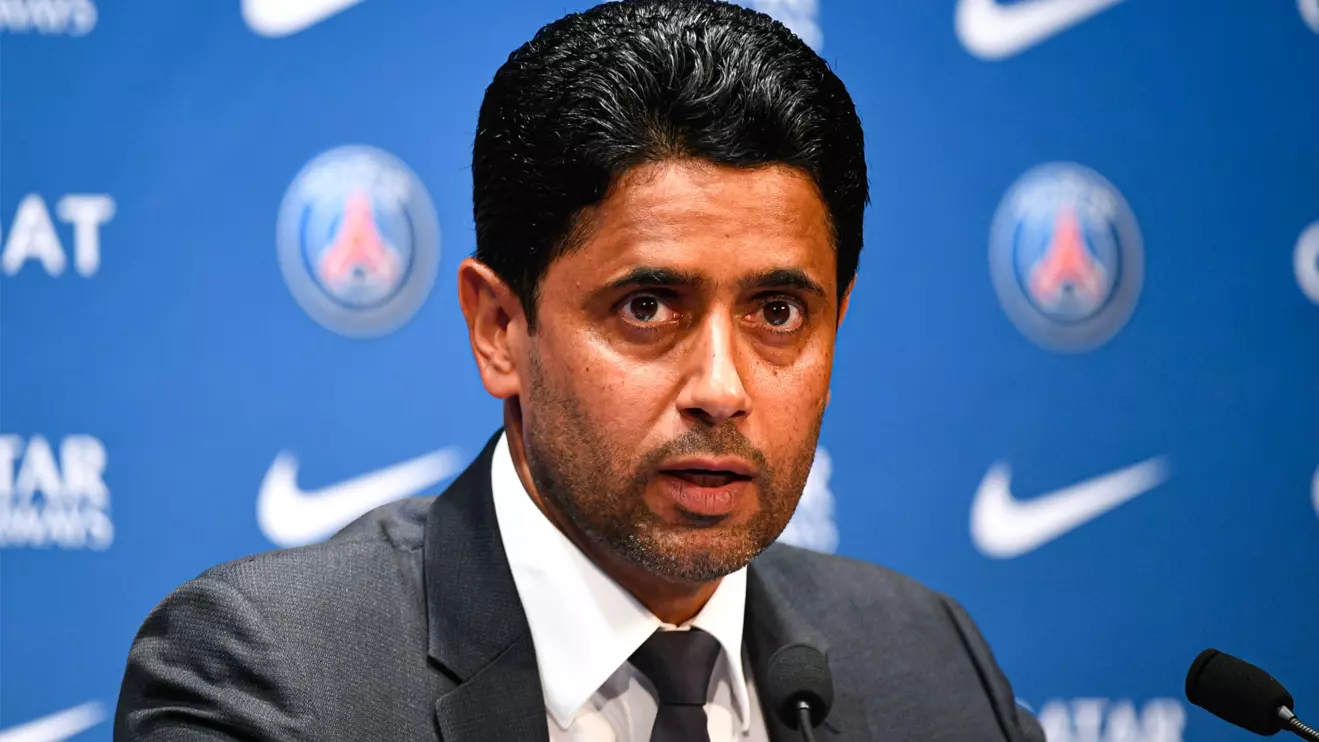
Nasser Al-Khelaifi © Mena Today
When Qatar's sovereign wealth fund quietly acquired Paris Saint-Germain (PSG) on June 30, 2011, for an estimated €100 million, the stated ambition was clear: to project influence, reshape perception, and buy prestige on the world's biggest sporting stage.
Fourteen years later, that strategy is delivering its ultimate dividend. This Saturday, PSG face Arsenal in the Champions League final in Budapest, their second consecutive final after last year's crushing 5-0 demolition of Inter Milan.
For long-suffering PSG supporters, it is the stuff of fantasy. For Qatar, it is the culmination of a carefully orchestrated image-building exercise worth billions.
The transformation has been staggering. When Qatar Sports Investments (QSI), a subsidiary of the Qatar sovereign wealth fund, took control of the club, PSG's annual budget stood at around €80 million.
It nearly doubled in the first season, doubled again the next, and today sits somewhere between €850 and €900 million, making PSG one of the most financially powerful clubs on the planet.
Under the stewardship of Nasser Al-Khelaifi, a close ally of the Qatari emir, the club has been used as a geopolitical instrument as much as a football institution, a vehicle for what academics call "sportswashing": the use of high-profile sporting investment to soften a country's international image and deflect scrutiny from its human rights record.
The Soft Power Playbook
Qatar has been candid about its intentions. The Gulf state has simultaneously hosted the 2022 FIFA World Cup, invested heavily in European football and media - notably via beIN Sports - and positioned itself as an indispensable player in global sport.
PSG sits at the heart of that strategy, a glamorous, globally recognised brand that keeps Qatar's name in headlines for the right reasons.
Whether a Champions League trophy changes perceptions of Qatar's domestic record on labour rights, press freedom, or the treatment of migrant workers is another matter entirely. But on Saturday night in Budapest, under the floodlights and in front of a global audience of hundreds of millions, the Qatar project will have its moment, win or lose.
The 2026 Russian National Arabian Horse Championship opens on Saturday at Maxima Park, in the village of Gorki Sukharevsky, Dmitrovsky District, Moscow Region.
The United Arab Emirates announced Thursday the opening of an investigation to determine whether the alleged attack aboard a Flydubai flight bound for Tel Aviv the previous day was of a "terrorist" nature.
The United Arab Emirates, represented by the UAE Winter Sports Federation, has officially joined World Curling as a Conditional Member Association, becoming the organization's 78th member following approval from the World Curling Board.
To make this website run properly and to improve your experience, we use cookies. For more detailed information, please check our Cookie Policy.
Necessary cookies enable core functionality. The website cannot function properly without these cookies, and can only be disabled by changing your browser preferences.