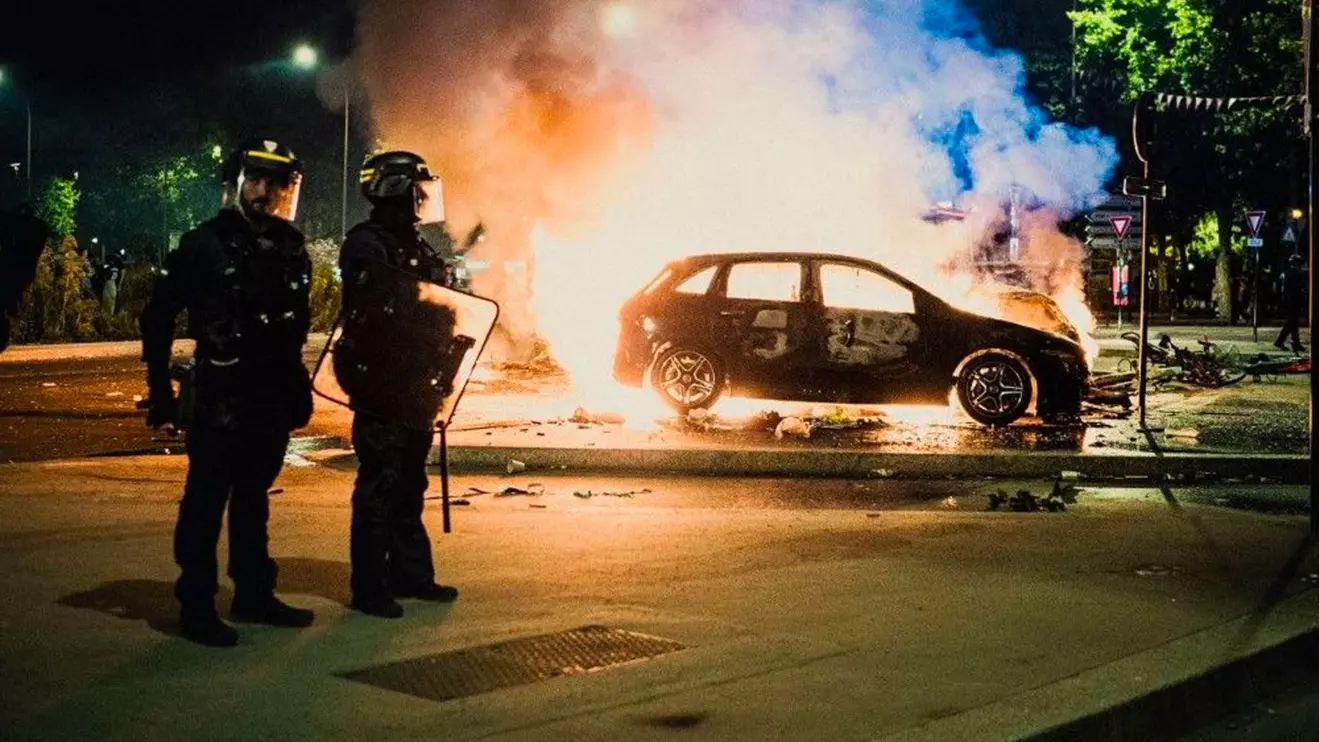
Paris and several French cities descended into chaos on Saturday night as violent clashes erupted following PSG's Champions League final victory over Arsenal in Budapest, scenes that have become a grim ritual whenever the Qatar-backed club wins a major trophy.
Violence broke out even before kick-off, with hundreds of young men, some masked and armed with fireworks, gathering in packs around the Parc des Princes. As the final whistle confirmed PSG's victory, the situation deteriorated sharply.
Cars and bicycles were set ablaze, shops were looted, and police came under sustained attack from rioters across the capital. Several hundred people were arrested across France, and at least seven police officers were injured.
PSG's management issued what can only be described as a half-hearted appeal for calm, a response widely seen as inadequate given the scale of the disorder.
The scenes are nothing new. Every significant PSG victory triggers the same cycle of celebration and destruction, raising uncomfortable questions about the club's relationship with its most volatile supporters, and its responsibility toward the city that hosts it.
Qatar's Soft Power, and Its Shadow
For Qatar, Saturday's victory represents the ultimate return on a fourteen-year, billion-euro investment in European football. Two consecutive Champions League titles. Global visibility. A polished image of ambition and modernity projected to hundreds of millions of viewers worldwide.
But the burning streets of Paris cast a long shadow over that carefully constructed narrative. If Qatar has successfully weaponised football as a soft power tool, it must also reckon with the violence its club indirectly ignites, night after night, victory after victory.
There is a deeper irony here that should not go unnoticed. Qatar is a state with well-documented links to organisations that Western governments classify as terrorist groups, including Hamas and Hezbollah. It has simultaneously cultivated a reputation as a regional mediator, a broker of peace, a voice of reason. It is a contradiction the Gulf state has managed with considerable skill on the diplomatic stage.
Managing the consequences of a football club's victories on the streets of Paris may prove rather harder.
PSG's players and staff are due to return to Paris on Sunday afternoon for a celebration at the Eiffel Tower, with 100,000 supporters expected to gather.
Further violent incidents are expected.