Israeli intelligence dominance and a new offensive doctrine come into focus.
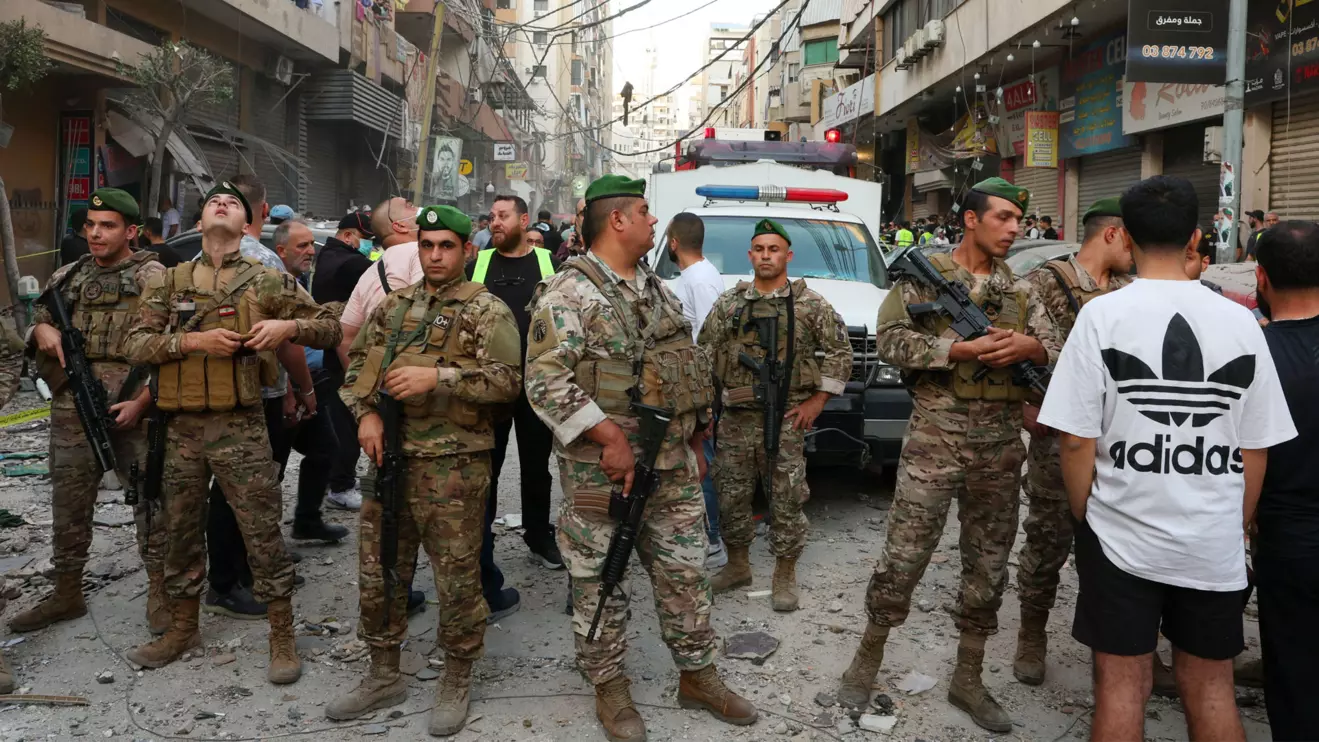
Hezbollah’s acting chief of staff, Ali Tabatabai, was killed in a targeted strike on his safehouse in Beirut’s Dahiyeh district, according to security sources.
Israeli officials say Tabatabai had been deeply involved in planning a series of attacks against Israel in recent months and played a central role in pushing the organization toward escalatory military activity.
According to Israeli assessments, Tabatabai was viewed not as a restraining influence but as a leading advocate of renewed military buildup and aggressive operations against Israel. His removal, officials say, reflects an emerging Israeli approach that prioritizes pre-emptive action against figures considered catalysts for confrontation.
Tabatabai, widely regarded as Hezbollah’s number-two official after Deputy Secretary-General Naim Qassem, had become one of the organization’s most influential military commanders.
He oversaw Hezbollah’s elite forces for years and effectively served as the group’s chief of staff following the assassinations of earlier senior commanders.
Over the past year, he shared responsibility for Hezbollah’s military apparatus with senior commander Mohammad Haidar, together steering efforts to restore and expand the group’s capabilities.
A Showcase of Israeli Intelligence Reach
Tabatabai’s elimination underscores a continued pattern: Israel’s intelligence services have maintained deep, persistent penetration of Hezbollah’s upper ranks.
The ability to track high-level movements inside Hezbollah’s core stronghold — particularly within Dahiyeh, an area considered one of the most tightly controlled environments in Lebanon — signals not only technical superiority but an expanding network of human and operational assets.
This strike follows a sequence of intelligence-guided eliminations that indicate Israel’s visibility into Hezbollah’s command architecture remains extensive despite the organization’s secrecy.
Analysts note that such precision suggests a long-term effort to map decision-making chains and identify figures whose removal could shift internal dynamics.
The operation also reflects a meaningful change in Israel’s security doctrine since the Hamas attack of October 7. For years, Israeli policy along the northern border leaned toward containment: deterrence, limited responses, and a preference to avoid “unnecessary” escalations. That approach is giving way to a more offensive, disruption-focused strategy.
This new model prioritizes: Preemption over reaction, targeting architects of escalation before attacks materialize, systematically degrading enemy command structures, not just field assets, preventing adversaries from dictating the pace and scope of conflict.
Within this framework, eliminating senior decision-makers like Tabatabai is not merely punitive but structural, aimed at reshaping Hezbollah’s strategic bandwidth and reducing its capacity for coordinated escalation.
Lessons for Gaza: Applying the Same Logic to Hamas
The shift visible in the northern arena is increasingly discussed in relation to Gaza as well. Analysts argue that if Israel intends to prevent Hamas from regenerating military power, the northern model — intelligence-driven, leadership-focused, pre-emptive — will need to be applied southward as well.
That would mean: Continuous pressure on mid- and top-tier Hamas commanders, even during lulls, preventing organizational regrowth instead of waiting for provocations, breaking patterns of cyclical conflict by disrupting leadership pipelines
In this view, the doctrine on display in Lebanon is not an isolated response but a blueprint: a long-term, proactive strategy designed to prevent adversarial entrenchment rather than absorb its consequences.