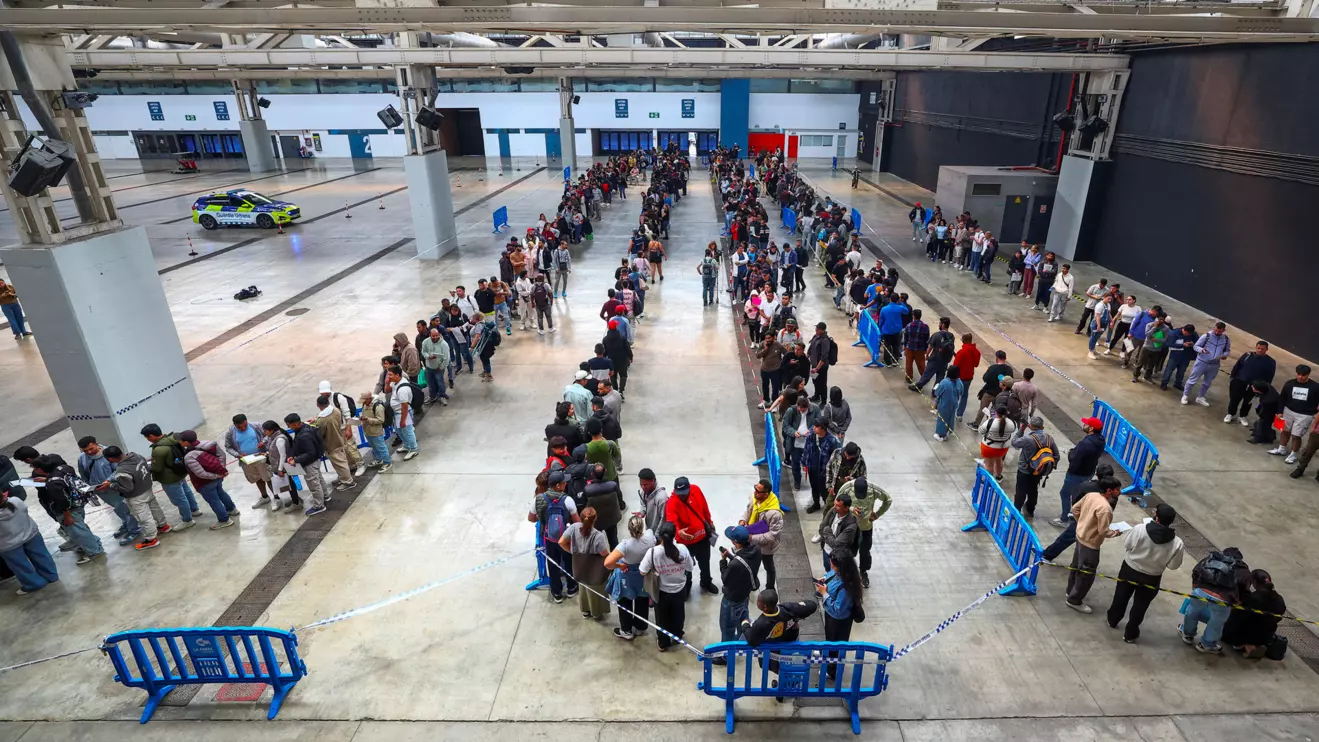
A reparations law granting descendants of Spaniards the right to citizenship has sparked a heated political debate as right-wing opposition figures accuse the government of trying to sway next year’s election with new voters.
At least 544,722 people have so far been granted citizenship under the law passed in 2022, with 306,000 registering on the electoral roll, according to government data.
Another 650,000 applications are being processed and at least 1.2 million more are awaiting review, the government said. The approval rate exceeds 90% but the full process is expected to last four or five years - far beyond the current electoral cycle.
Spanish consulates in Argentina alone have received 1.5 million applications, while nearly 800,000 requests have been submitted in Cuba, according to official data, reflecting past waves of emigration driven by war and economic hardship.
Right-wing politicians this week accused the Socialists, without evidence, of interfering in applications from countries whose citizens were less likely to support them, and of registering new voters in battleground areas to try to secure extra seats. The far-right party Vox on Tuesday called for postal voting from abroad to be suspended.
The rhetoric echoes false allegations of vote rigging made by Brazil's former president, Jair Bolsonaro, and U.S. President Donald Trump.
SOCIALIST PRIME MINISTER SANCHEZ UNDER PRESSURE
Prime Minister Pedro Sanchez is under pressure to call an early election before August 2027 amid parliamentary gridlock and corruption scandals in his inner circle.
Polls suggest the conservative People's Party, or PP, would win the most votes, but would require Vox's support to govern.
"Since the numbers don't add up for [Sanchez] with the current voters, he's going to see if manufacturing voters will," PP leader Alberto Nuñez Feijoo said on Monday.
The government rejected Feijoo's accusation as "profoundly irresponsible", saying it has no influence over where new citizens register to vote. Applications closed last October.
It also accused opposition figures of conflating the law with Spain's three-month amnesty drive, which grants legal residency - but not citizenship or voting rights - to undocumented migrants, after Vox alleged that scheme was another covert bid to shift the electoral balance.
The "Democratic Memory" law builds on a 2007 measure granting citizenship to the grandchildren of roughly half a million exiles from Spain's 1936-39 Civil War and the subsequent dictatorship of Francisco Franco, as well as first-generation descendants of Spaniards abroad.
In 2022, Sanchez's government extended citizenship rights to the adult children of those who received it under the 2007 law, descendants of people persecuted for their sexuality or beliefs, and women who lost their citizenship after marrying foreigners during the Franco era and their children.
Several European countries offer citizenship to children of expatriate nationals. Italy, Ireland, Poland and Hungary, among others, also extend it to grandchildren.
Only 9% of Spain's 2.3-million-strong diaspora voted in the 2023 parliamentary election, according to official data.
Overseas votes have leaned towards the Socialists in some regional ballots this year, although the party has still lost significant support overall.
By Victoria Waldersee and Corina Pons