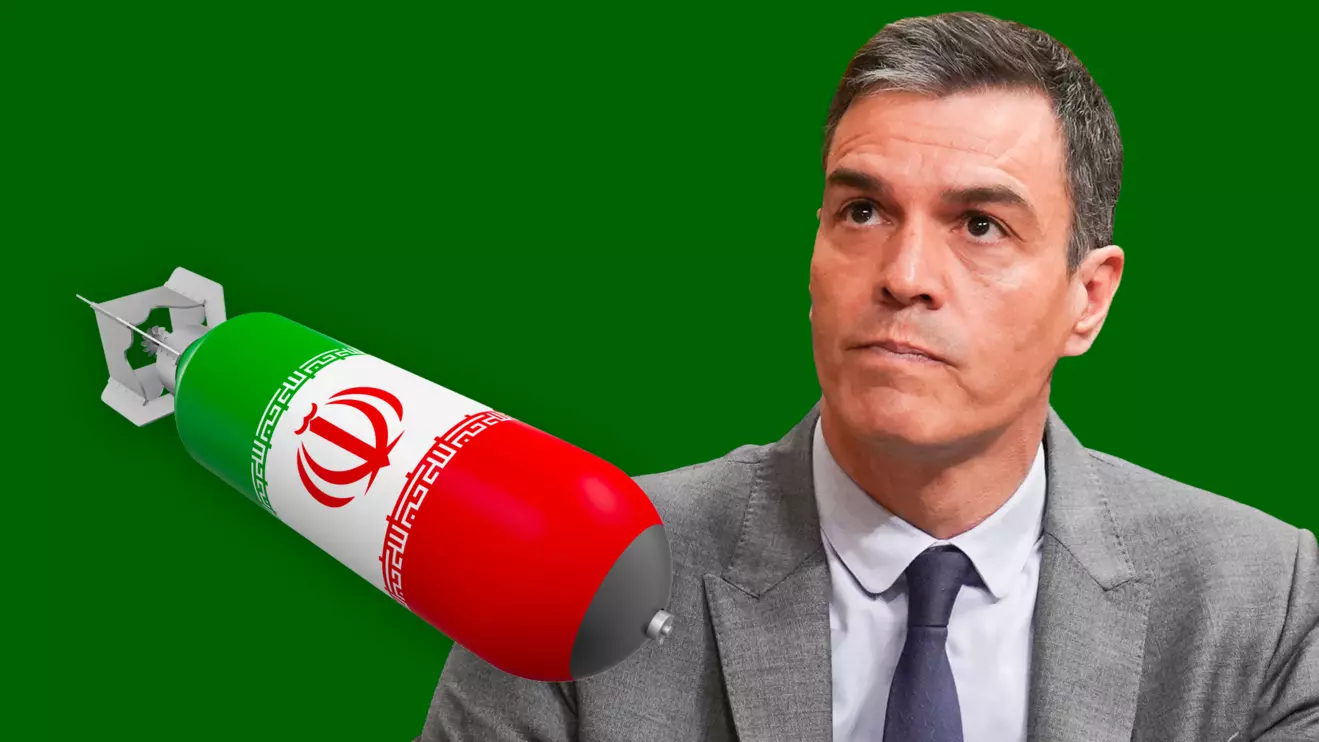
As the U.S. and Israel strike at the heart of Iran's nuclear ambitions, Madrid plays a dangerous game of moral grandstanding, at the expense of its NATO commitments and transatlantic credibility.
The revelation that fifteen U.S. aircraft departed from the Rota and Morón military bases in southern Spain amid the weekend strikes on Iran has thrust Pedro Sanchez's government into an uncomfortable spotlight, and exposed once again the deep contradictions at the heart of Spanish foreign policy.
Foreign Minister Jose Manuel Albares rushed to announce that Spain would not allow its jointly operated bases to be used for attacks on Iran. The statement was swift, emphatic, and deeply troubling for a NATO ally that continues to benefit from American military protection while simultaneously undermining Washington's strategic interests at every turn.
A Pattern of Anti-Western Posturing
This is not an isolated incident. Since the Hamas massacres of October 7, 2023, the Sanchez government has distinguished itself as one of Israel's most virulent critics in the Western world, going far beyond legitimate political disagreement into territory that many observers have described as edging uncomfortably close to antisemitic rhetoric.
Sanchez and his far-left coalition partners have unleashed a relentless torrent of condemnations against the Jewish state, with language and imagery that has alarmed Jewish communities both within Spain and across Europe.
For a government that prides itself on progressive values, the selective outrage has been striking, and revealing.
Spain moved to recognise a Palestinian state, cheered on by the radical left factions propping up Sanchez's fragile minority government. Meanwhile, expressions of solidarity with Israeli victims of October 7 have been conspicuously muted from the same quarters.
Sovereignty as a Shield for Obstruction
Madrid's invocation of Spanish sovereignty over the Rota and Morón bases is legally accurate but politically cynical.
These installations exist precisely because of Spain's membership in the Western alliance, an alliance built on shared values, mutual defence, and collective security. To use sovereignty as a weapon against that very alliance, at a moment of acute regional crisis, is a betrayal of the spirit of that partnership.
Washington will not forget. Already facing friction with European allies over burden-sharing, the Trump administration will have taken careful note of Madrid's posture. Spain, which consistently falls short of NATO's 2% GDP defence spending target, is hardly in a position to lecture its allies on the use of military assets it has benefited from for decades.
What makes this foreign policy adventurism all the more remarkable is that Pedro Sanchez governs without a clear popular mandate.
Deeply unpopular at home, clinging to power through a patchwork coalition of regional separatists and hard-left ideologues, Sanchez appears to use foreign policy as a distraction from mounting domestic troubles, from economic anxieties to corruption scandals surrounding his inner circle.
International grandstanding plays well with his radical base. Condemning Israel and America costs him nothing domestically while burnishing his credentials among the European far left. But the bill will eventually come due, in strained relations with Washington, in diminished influence within NATO, and in a Spain increasingly isolated from its closest allies.
The Bigger Picture
As Iran has spent years developing a nuclear programme that threatens regional and global stability, Spain's government chooses this moment to signal sympathy, however indirect, with Tehran's position. It is a choice that speaks volumes about where Sanchez's true political instincts lie.
Spain deserves better than a government that prioritises ideological posturing over genuine national interest. Its allies deserve better than a partner that invokes sovereignty selectively, accepting American protection while obstructing American strategy.
The Sanchez government's foreign policy is not principled neutrality. It is rogue diplomacy, dressed up in the language of peace.