
Egypt
Xi Jinping visits Egypt for first time in a decade
Chinese President Xi Jinping arrives in Egypt Tuesday evening on his first visit in a decade, as the war in the Middle East and US sanctions increasingly threaten Beijing's economic interests.

Sudan’s gold sector is posting record production numbers even as the state captures only a thin slice of the proceeds, highlighting how the war has accelerated the shift of the industry into informal channels.
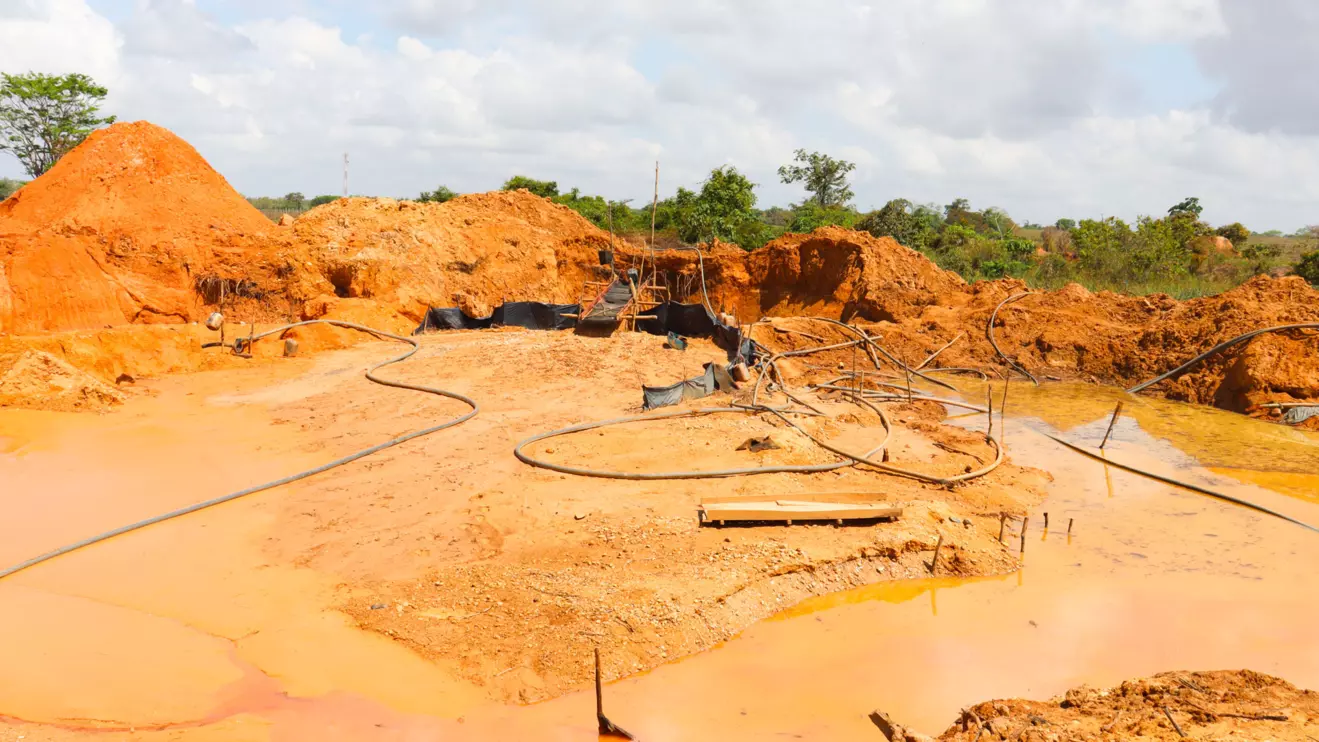
Illegal gold extraction in Sudan © Mena Today
Sudan’s gold sector is posting record production numbers even as the state captures only a thin slice of the proceeds, highlighting how the war has accelerated the shift of the industry into informal channels.
Total output reached an estimated 70.15 tonnes between 2023 and 2025, according to figures cited by industry sources. Yet official exports through government channels account for only a fraction of that volume, implying that more than 55 tonnes have been diverted into a shadow economy outside the treasury.
Artisanal mining and parallel markets are described as controlling more than 80 percent of the sector, with proceeds increasingly flowing through unguarded borders and informal trade routes.
Finance Minister Gibril Ibrahim acknowledged the scale of the gap in comments to Agence France Presse, saying only 20 tonnes were exported through formal channels out of 70 tonnes produced in 2025.
A source at the Sudanese Mineral Resources Company told Sudan Tribune that wartime volatility has been extreme: production fell to 6.4 tonnes in 2023 when fighting began, then rebounded sharply to record levels. Even in the rebound year, the source said only 12.5 tonnes entered the public treasury as official exports, while pre-existing smuggling networks expanded rapidly amid the breakdown of oversight.
Industry representatives point to structural damage in the formal supply chain. Haitham Tabidi of the Gold Exporters Union said many established mining companies are dormant or operating at reduced capacity, while the closure of key institutions such as the national gold refinery has weakened the state’s ability to measure, process and monetise production.
Illicit gold is not only a lost fiscal resource but a revenue stream that helps sustain the armed conflict
With fewer functioning control points, more gold leaves the mine gate as raw product with minimal traceability.
The result is a war economy built around “shadow networks” and armed actors involved in unregulated extraction, the Mineral Resources Company source said.
Smuggling is attributed to the absence of state oversight in mining areas, price and policy distortions, and the ease of cross border movement. Traders are reported to prefer routing raw gold to Egypt, citing lower taxes and a reduced risk of confiscation. Others blame inconsistent government policy and slow bureaucracy for pushing legitimate exporters toward informal markets.
Some observers argue even the headline production numbers may understate the scale of the trade. One source suggested actual output could be closer to 100 tonnes, with 90 percent coming from artisanal producers.
Although the Sudan Gold Refinery has introduced incentive pricing intended to pull volumes into the formal system, technical reporting cited in the article suggests up to 60 percent of gold still exits via land borders and unmonitored airports.
The regional dimension is central. A 2025 report by Swissaid is cited as documenting a sharp rise in informal flows to the United Arab Emirates in 2024, while neighbouring countries including South Sudan, Chad and Ethiopia are described as transit points where Sudanese gold is relabelled before entering global markets.
In this framing, illicit gold is not only a lost fiscal resource but a revenue stream that helps sustain the armed conflict.
Key takeaway. Sudan’s paradox is that rising production has not translated into higher public revenue. With artisanal mining dominating and formal institutions weakened, control of the gold value chain is shifting away from the state precisely when foreign exchange and budget income are most critical.
Chinese President Xi Jinping arrives in Egypt Tuesday evening on his first visit in a decade, as the war in the Middle East and US sanctions increasingly threaten Beijing's economic interests.
Algerian President Abdelmadjid Tebboune, whose country has observed a moratorium on the death penalty since 1993, announced Monday his intention to reinstate its application against arsonists, following deadly wildfires that ravaged eastern and northern Algeria.
Representatives of Libya's rival political parties on Sunday signed an agreement on holding long-delayed national elections within two years to resolve contentious issues over electoral laws and reform the national elections body.
To make this website run properly and to improve your experience, we use cookies. For more detailed information, please check our Cookie Policy.
Necessary cookies enable core functionality. The website cannot function properly without these cookies, and can only be disabled by changing your browser preferences.