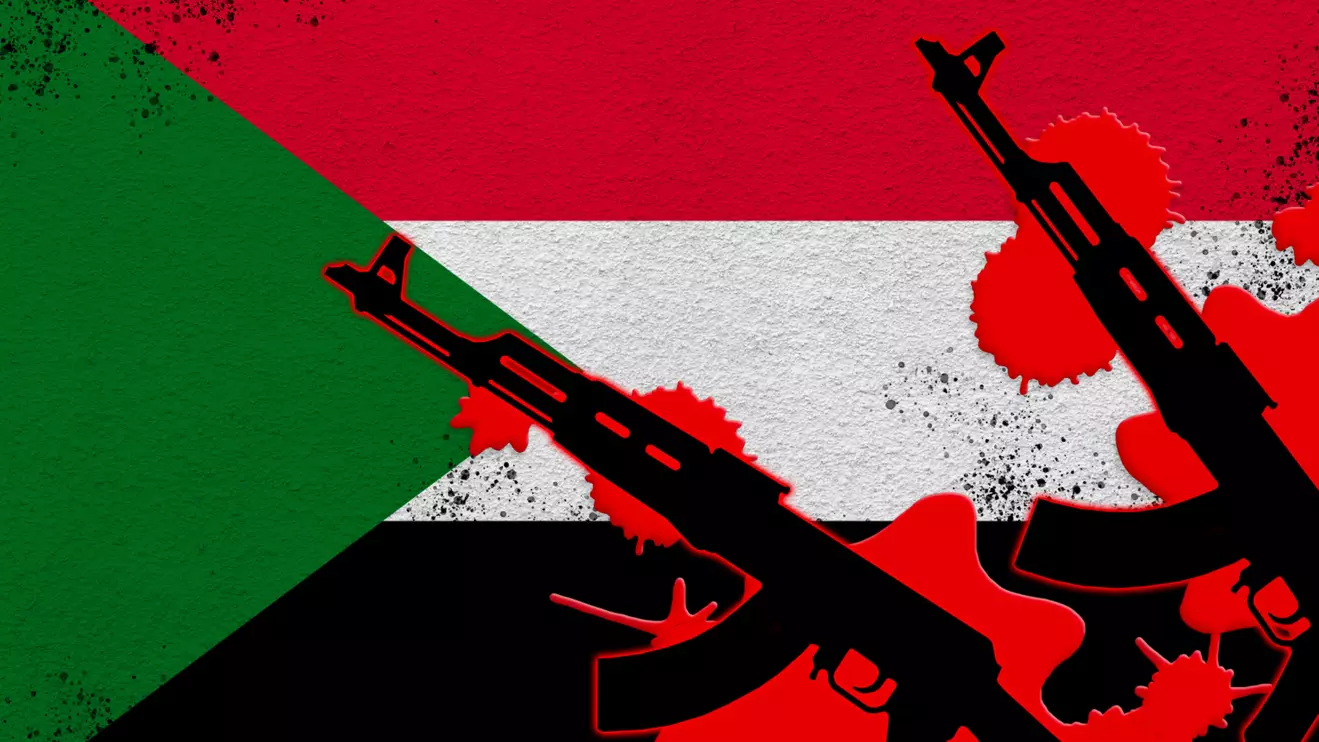
On April 15, 2026, the war in Sudan entered its fourth year, a grim milestone that passed largely unnoticed, overshadowed by conflicts elsewhere. Yet the United Nations has called it unequivocally the world's worst humanitarian crisis. Here is what you need to know.
Two Generals, One Catastrophic Falling Out
The war pits two former allies against each other. On one side, the Sudanese Armed Forces (SAF), led by General Abdel Fattah al-Burhan. On the other, the Rapid Support Forces (RSF), a powerful paramilitary group commanded by General Mohamed Hamdan Dagalo, known as Hemeti.
The two men had joined forces in 2019 to topple longtime autocrat Omar al-Bashir, after which Burhan assumed the role of head of state.
Their alliance unravelled over disagreements on a new democratic transition and the integration of their respective forces. When war erupted on April 15, 2023, it quickly drew in local militias, regional powers and foreign backers — transforming a power struggle into a full-blown regional conflict.
The United Arab Emirates stands accused by UN researchers, US lawmakers and the Sudanese army of providing critical support to the RSF through neighbouring countries, a charge Abu Dhabi firmly denies. The Sudanese army, meanwhile, counts Egypt, Turkey, Saudi Arabia and Qatar among its supporters to varying degrees.
A Country Carved in Two
Two years in, Sudan is effectively split. The RSF has consolidated control over the vast Darfur region in the west - its traditional stronghold - and has moved to establish a parallel government there. The army holds the eastern half of the country.
The battle is currently raging in the Kordofan region caught between the two zones, while a new front has opened along the Sudanese border with Ethiopia in the southeast. Drone warfare has largely replaced ground campaigns, allowing the RSF to neutralise the army's previous air superiority — at an enormous cost to civilians, with at least 700 civilian deaths recorded this year alone, according to the UN.
A People Abandoned
The human toll is staggering. Nearly three-quarters of Sudan's population are in need of humanitarian assistance, according to the UN. Famine or risk of famine has been declared across multiple conflict zones, worsened by deliberate blockades and bureaucratic obstruction by both warring parties.
Healthcare systems have collapsed across large swaths of the country, allowing diseases including dengue fever to spread unchecked. Throughout the conflict, the RSF has carried out waves of ethnically targeted killings that UN researchers say bear the hallmarks of genocide, most recently in North Darfur's al-Fashir.
The death toll remains impossible to calculate with precision. Sudan's health ministry has documented over 11,200 deaths, but experts estimate excess mortality since the war began runs into the hundreds of thousands.
A Funding Crisis Within a Crisis
Despite overwhelming need, the UN's 2026 humanitarian appeal for Sudan is only 17% funded — a damning figure that reflects a broader retreat from global solidarity. The United States has pulled back from foreign aid commitments, European donors are cutting budgets, and Gulf powers are redirecting contributions to bilateral channels.
Aid agencies are scaling back operations, while Sudanese grassroots mutual aid networks, including the Nobel Peace Prize-nominated Emergency Response Rooms, have tried to fill the void. But a study by Islamic Relief this week found that more than 40% of local community kitchens run by these groups have been forced to shut down due to lack of funding.
Peace Talks Going Nowhere
The international community has paid lip service to ending the war, but concrete progress remains elusive. A US-led diplomatic grouping, the so-called Quad, also comprising Egypt, Saudi Arabia and the UAE, presented a preliminary ceasefire proposal to both sides last year.
Both the army and the RSF have alternately welcomed and rejected mediation, while the fighting has never stopped.
With competing regional interests pulling in different directions and no credible peace process on the horizon, Sudan's civilians are left to bear the consequences of a war that the world has largely turned away from.
Four years in. No end in sight. And the world is looking elsewhere.