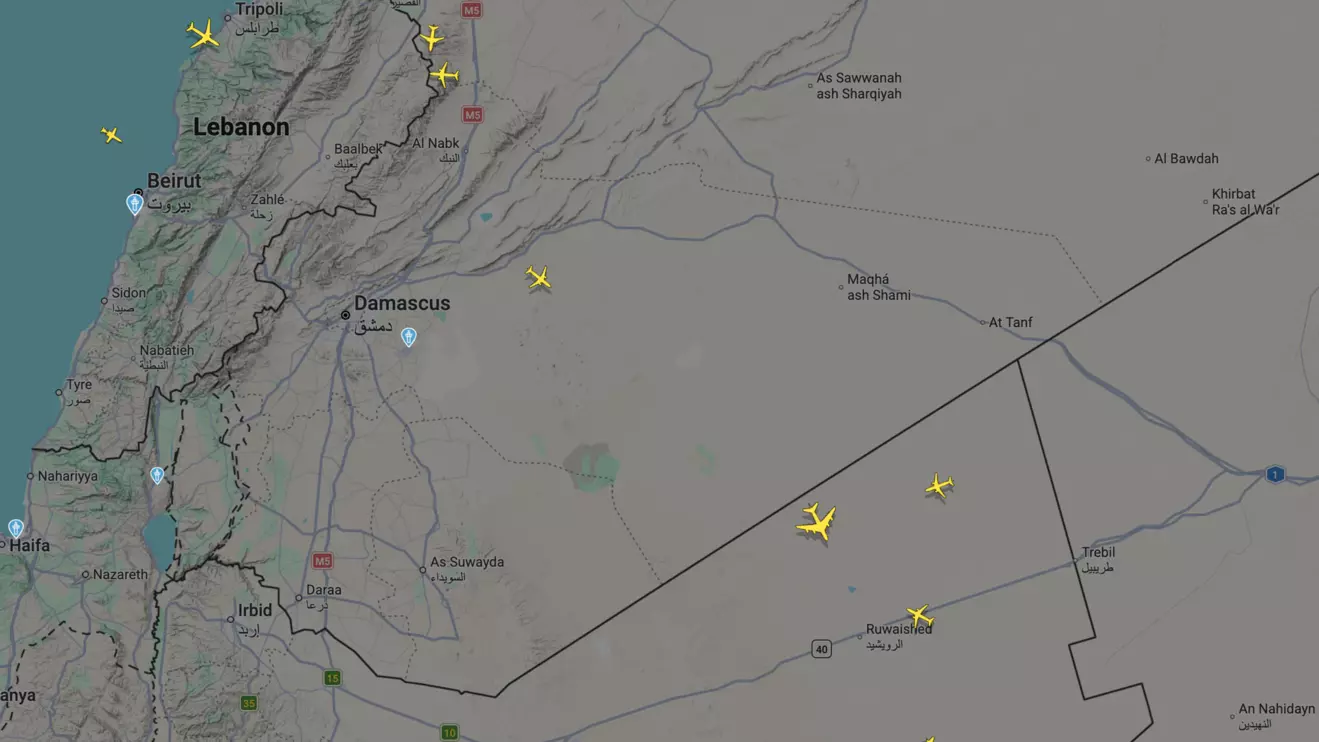
For over a decade, Syrian airspace was a no-fly zone that airlines wouldn't touch. Now it's one of the busiest corridors in the Middle East.
Nearly 12,000 aircraft crossed Syrian skies in May alone, more than double February's figure and a staggering 375% above the same month last year.
The reason: the Iran war that erupted on February 28 shut down Iraqi and Gulf airspace, forcing airlines to find alternatives fast. Syria, newly opened after Bashar al-Assad's ousting in late 2024, was suddenly the only viable route.
The timing couldn't be better for Damascus. Syria's new government introduced a flat overflight fee of $499 per flight earlier this year. At May's traffic levels, that translates to nearly $6 million in a single month — serious revenue for a country rebuilding from scratch after 14 years of civil war.
And the traffic keeps coming. With Gulf airspace still disrupted and airlines locked into new routings, Syria's skies are no longer an emergency detour. They're becoming a permanent fixture on the regional aviation map.
From pariah state to regional air hub, in under six months. The transformation is as unlikely as it is lucrative.