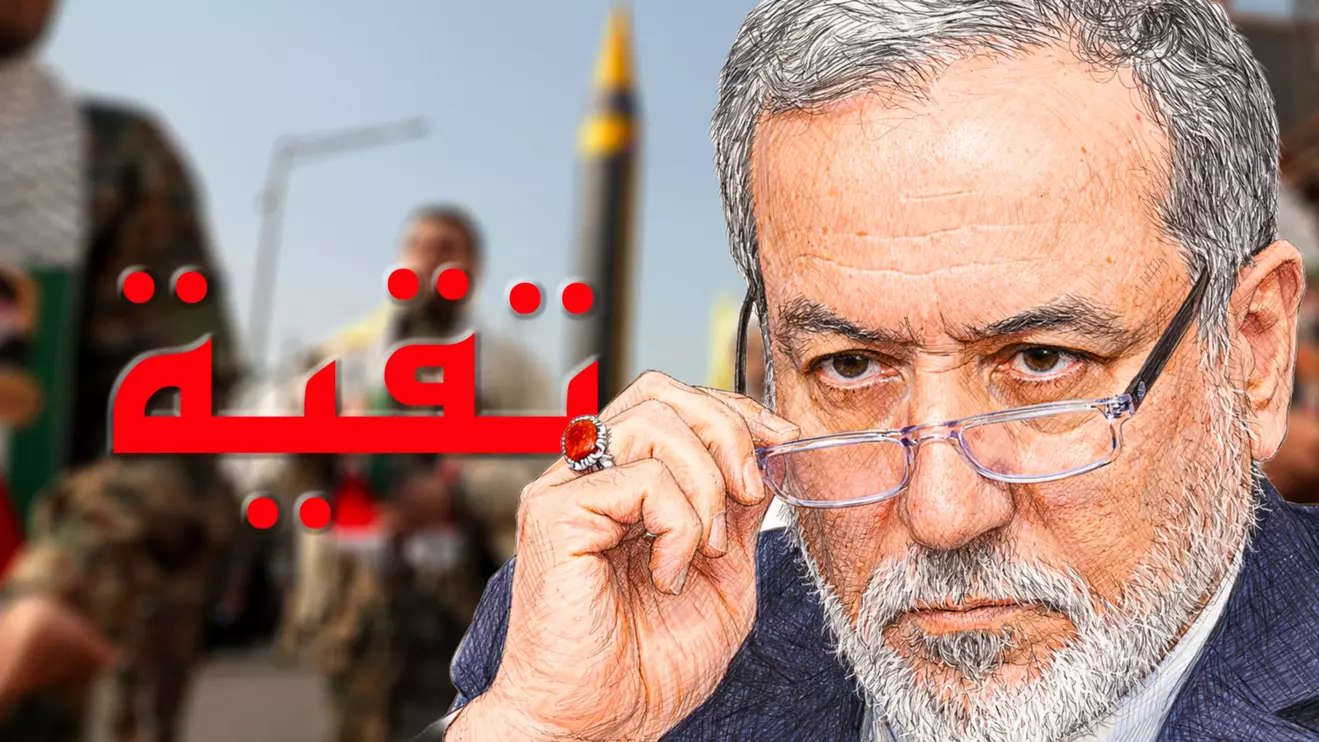
Ian's Foreign Minister Abbas Araqchi has left the door open - just a crack - for peace talks with the United States, via Pakistani mediation. "We are deeply grateful to Pakistan for its efforts and have never refused to go to Islamabad," he wrote on X, adding that what Iran cares about are "the terms of a conclusive and lasting end to the illegal war that is imposed on us."
The language is carefully calibrated. The tone is measured. The posture is dignified.
None of it should be taken at face value.
Araqchi is a skilled diplomat operating within a system built on strategic ambiguity and calculated dissimulation. The concept of Taqiyya, the religiously sanctioned practice of concealment and misdirection, has been a cornerstone of the Islamic Republic's diplomatic toolkit for four decades. Iranian officials have consistently used the language of negotiation to buy time, deflect pressure and preserve the regime's core interests while making no substantive concessions.
The real question is not what Araqchi says. It is what he is authorised to concede, and whether anyone in Tehran's actual power structure is willing to pay the price that Washington and Jerusalem are demanding.
The answer, for now, appears to be no.
The Price of Peace Tehran Cannot Pay
The United States and Israel have stated their conditions with clarity: a complete halt to Iran's nuclear programme, an end to the production of ballistic missiles, and the termination of all funding and arming of proxy forces, Hezbollah, Hamas, the Houthis and the broader network of militias that Tehran has spent decades cultivating across the Middle East.
These are not peripheral demands. They are existential ones, from the Islamic Republic's perspective. The nuclear programme is the regime's ultimate insurance policy.
The missile arsenal is its deterrent. And the proxy network is its primary instrument of regional power projection. Surrendering all three, simultaneously, under military pressure, would not merely be a strategic retreat. It would accelerate the regime's internal collapse.
Tehran's leadership understands this calculus with perfect clarity. To concede on these points is to begin the process of losing power. Which is why, behind the diplomatic language and the carefully worded statements, the Islamic Republic's core position has not moved.
What has moved, dramatically, is Iran's military capacity. The sustained Israeli-American campaign has inflicted severe and in some cases irreversible damage on Iran's defence infrastructure.
Missile production facilities, drone manufacturing plants, steel mills feeding the weapons industry, Revolutionary Guards command structures, all have been struck, repeatedly and precisely.
The regime that entered this war projecting confidence and regional dominance is managing a military apparatus that has been significantly degraded.
The missiles it fires today are drawn from stockpiles that cannot easily be replenished. The industrial base that produced them is partially destroyed. The financial revenues that funded them, from oil, from steel, from the proxy networks themselves, are under sustained pressure.
Iran's foreign minister speaks from a position of principle. Iran's generals speak from a position of diminishing capacity.
Within Tehran's own leadership, a fracture is developing. Pragmatists, among them former Foreign Minister Zarif, who has publicly called for a negotiated settlement, are increasingly convinced that there is no sustainable path forward without an agreement.
They understand that the longer the war continues, the weaker Iran's negotiating position becomes, and the more severe the ultimate terms of any settlement will be.
The hardliners, for their part, continue to invoke resistance, sovereignty and revolutionary principle. But principle does not repair missile factories. Rhetoric does not rebuild steel mills. And defiance does not slow the pace at which Iran's military capacity is being systematically dismantled.
The Gap Between Words and Reality
Araqchi's statement is, in its own way, a signal, a carefully constructed one, but a signal nonetheless. A regime genuinely confident in its military position does not express gratitude for Pakistani mediation efforts. It does not speak of "conclusive and lasting" ends to conflicts. It does not leave doors open, even slightly.
The language of diplomacy has appeared precisely because the language of military power is running out.
Tehran's clock is ticking. The regime knows it. And no amount of carefully worded foreign ministerial statements on X can change the fundamental reality: Iran entered this war with a formidable arsenal and a network of regional proxies. It is prosecuting it with a degraded military, a fractured leadership and an economy under severe strain.
The door to talks may be open. But Iran is no longer negotiating from strength. It is negotiating, however reluctantly, however deceptively, from a position of accelerating weakness.