The Islamic Revolutionary Guard Corps (IRGC) has issued what it apparently considers a fearsome ultimatum: condemn American-Israeli strikes on Iranian universities by noon Monday, or US university campuses across the Middle East will face "retaliation."
Students and faculty, the IRGC helpfully advised, should move at least one kilometer away from their campuses.
Let that sink in. A regime that has spent decades funding terrorism across four continents, that arms proxy militias from Beirut to Sanaa, that builds underground nuclear facilities and fires ballistic missiles at civilian populations, is now threatening to bomb university libraries in Qatar and Abu Dhabi.
The Targets: Some of the World's Finest Institutions
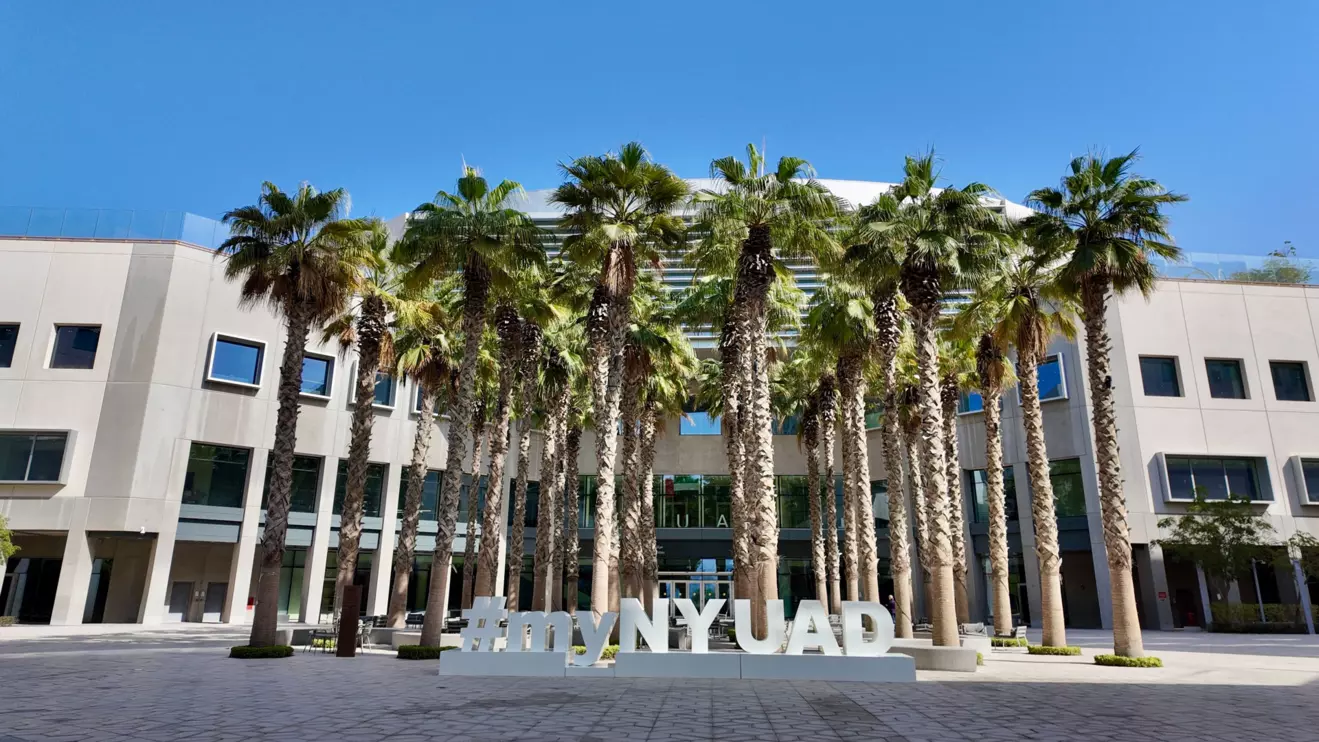
The IRGC's hit list reads like a prospectus for the world's best higher education. In Qatar's Education City alone: Georgetown, Carnegie Mellon, Northwestern, Cornell, Texas A&M and Virginia Commonwealth. In the UAE: New York University Abu Dhabi. In Saudi Arabia: partnerships with MIT. In Kuwait, Bahrain and beyond, a constellation of institutions that have brought world-class education to a region hungry for it.
And in Lebanon, the American University of Beirut, one of the most respected academic institutions in the entire Middle East, founded in 1866, which has educated generations of Arab doctors, engineers, lawyers and intellectuals.
These are the targets Iran is threatening. Not military installations. Not weapons depots. Universities.
The Stupidity Is Strategic - and Revealing
This threat is not a sign of strength. It is a sign of collapse.
A regime that once projected power through Hezbollah, Hamas, the Houthis and a vast network of regional proxies now finds itself reduced to threatening to bomb the campus where students study journalism and medicine. Its proxies are degraded. Its nuclear program is under attack. Its economy is in ruins. Its leadership is fractured and, in some cases, literally missing.
So it threatens universities. Because that is all it has left.
The IRGC's ultimatum will achieve precisely nothing, except to remind the world, once again, that this is a regime whose instinct, when cornered, is to lash out at civilians and civilian institutions. It is the behavior not of a serious military power, but of a wounded, desperate organization that has run out of viable options.
To the students and faculty at NYU Abu Dhabi, Georgetown Qatar, AUB Beirut and every other targeted campus: the regime issuing these threats could not even protect its own territory from airstrikes.
Its ability to project meaningful force against hardened, internationally protected institutions in Gulf states, countries that host American military bases and have air defense systems capable of intercepting Iranian missiles, is minimal.
Iran is not targeting your campus because it is strong.
It is threatening your campus because it is losing.