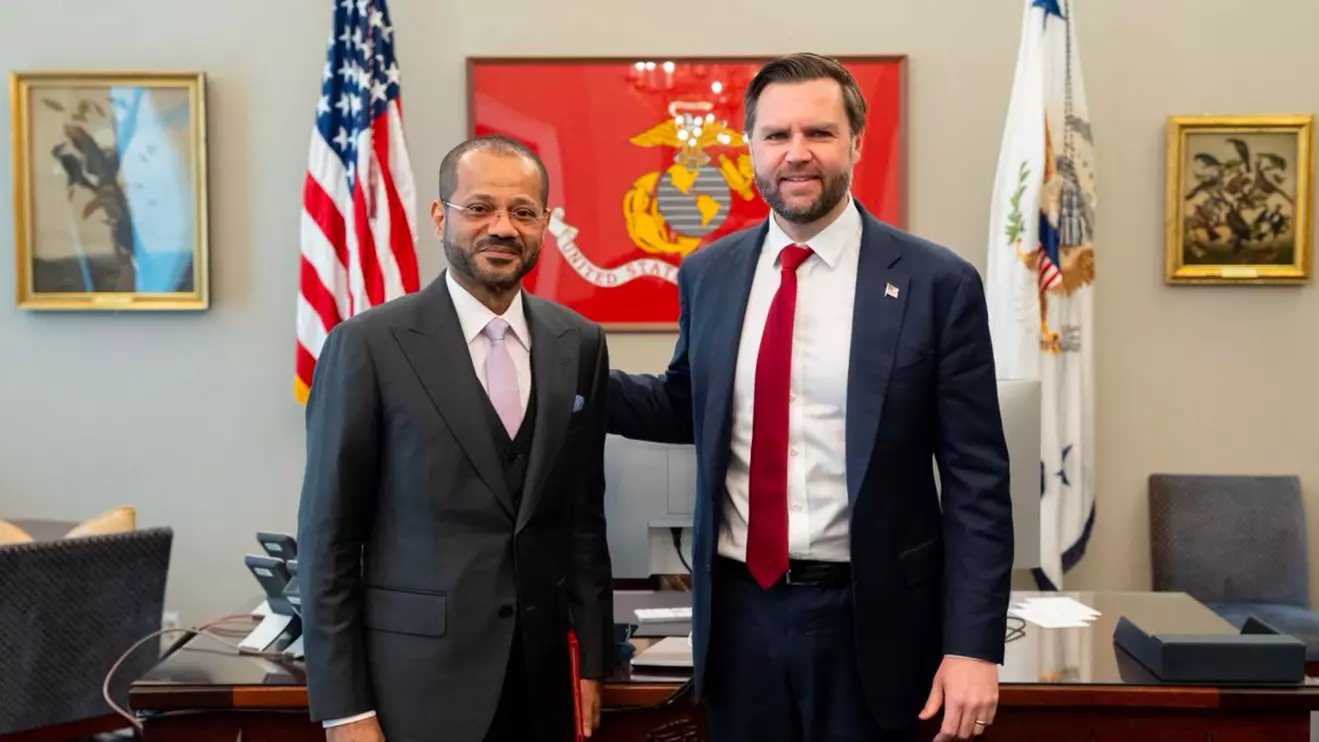
In the hours following the collapse of Iran-US negotiations in Pakistan, Oman's Foreign Minister Badr al-Busaidi took to X with a message of studied diplomatic balance.
"For success, each party may need to make painful concessions," he wrote, "but that is nothing compared to the pain of failure and war." He also called for a ceasefire extension and a continuation of talks.
It sounds reasonable. It is not.
The False Symmetry of "Both Sides"
When al-Busaidi speaks of "painful concessions," the implication is clear: both Washington and Tehran must give something up. But this framing is fundamentally dishonest. It treats a democratic superpower and a theocratic regime that has spent four decades exporting terror, building nuclear weapons and massacring its own people as moral and political equivalents. They are not.
Let us be precise about what Iran would need to concede for any deal to be meaningful. Tehran must halt its nuclear programme.
It must end its ballistic missile development. It must stop financing and arming Hezbollah in Lebanon, Hamas in Gaza and the Houthis in Yemen. These are not American demands born of arrogance. They are the minimum requirements for regional stability and international security.
On none of these points is there any conceivable justification for Washington to offer Tehran a sweetener. These are not negotiating positions to be horse-traded. They are red lines that exist because Iran's behaviour has made them necessary.
What Concessions, Then?
The uncomfortable truth that al-Busaidi carefully avoids is this: the concessions must come entirely from Iran. And the Iranian regime knows it.
That is precisely why the Islamabad talks collapsed. Tehran did not come to negotiate. It came to perform negotiation, to create the appearance of dialogue while conceding nothing, preserving its nuclear ambitions, its proxy network and its grip on power.
The regime's calculus is brutally simple. Every day of talking is a day of not being bombed. Every round of diplomacy is an opportunity to advance centrifuges, rearm proxies and consolidate control. Oman's minister, a seasoned diplomat who has served as a back-channel between Washington and Tehran for years, understands this perfectly.
Muscat's Comfortable Role
Oman has long positioned itself as the Middle East's indispensable mediator, the quiet, neutral broker that keeps channels open when everyone else has slammed doors. It is a role that has served Muscat well, earning it goodwill on all sides and a reputation for pragmatic statesmanship.
But there is a point at which pragmatism becomes complicity.
By calling for "painful concessions" from both sides after Iran walked away from talks having offered nothing, on nuclear weapons, on missiles, on proxies, on the Strait of Hormuz, al-Busaidi is not being balanced. He is providing diplomatic cover for a regime that has no intention of changing anything.
Calling for a ceasefire extension when Iran has just demonstrated its bad faith in Islamabad is not a neutral act. It is a gift to Tehran, more time to stall, more time to arm, more time to delay the reckoning it has spent years making inevitable.
Al-Busaidi is right about one thing. Painful concessions are sometimes necessary. But the pain in this negotiation belongs to Iran alone.
A regime that wants sanctions lifted, assets unfrozen and military pressure removed while surrendering nothing in return is not a negotiating partner. It is a hostage-taker demanding ransom.
Oman's minister knows this. His carefully worded post on X suggests he has chosen the comfort of false balance over the discomfort of speaking plainly.
That, too, is a choice, and it carries its own consequences.