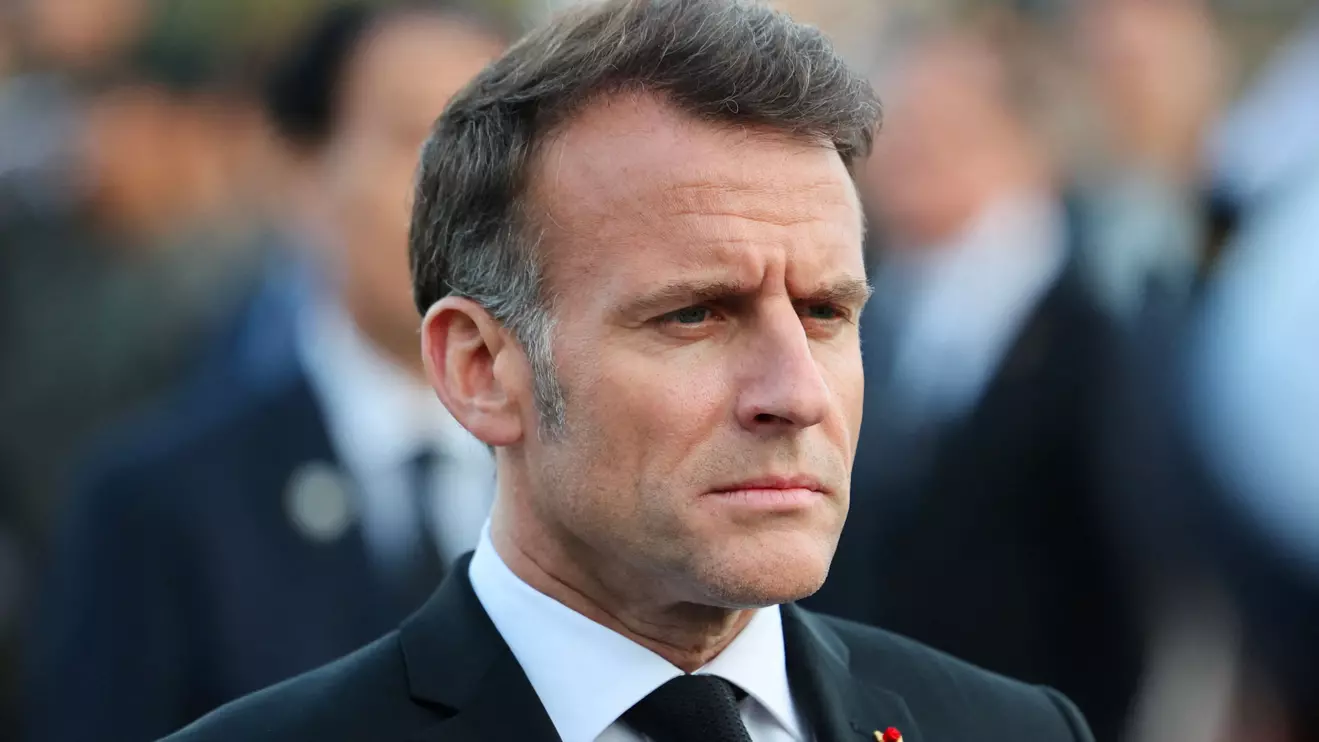
Emmanuel Macron has spoken. The Strait of Hormuz will not be forced open by military means. It would be "unrealistic," he told reporters during a trip to South Korea, a location that, one must admit, puts him admirably close to the action.
This is, of course, excellent news. France, which has no military assets in the region, no credible force projection capability in the Gulf, and a defence budget that struggled for years to meet NATO's 2% threshold, has ruled out a military option it was never going to exercise anyway. A bold stand.
Macron's intervention follows a well-established playbook. When a crisis erupts that France cannot influence militarily or diplomatically, the French president holds a press conference, delivers a nuanced analysis of why the obvious solution won't work, proposes a vague alternative involving dialogue, and returns to his hotel. The world notes his wisdom. Nothing changes.
On Hormuz, the formula is familiar: military force is unrealistic, talking to Iran is essential, and France supports free navigation in principle while doing precisely nothing to achieve it. Meanwhile, thousands are dead, a fifth of global oil supplies is blocked, and energy prices are devastating the world's most vulnerable economies.
But at least Macron has a position.
A Coalition of Words
We are told that France has been "working with European and other allies to build a coalition to guarantee free passage through Hormuz once hostilities have stopped." Once hostilities have stopped. A coalition for after the war. A guarantee for when it is no longer needed. This is French diplomacy at its most refined.
"What we say from the beginning," Macron explained, "is that this strait must be reopened, but only in consultation with Iran." The same Iran that closed the strait. The same Iran that is firing ballistic missiles at Gulf states, at Kuwait, at Qatar, at Jordan. The same Iran whose ambassador is still drinking his morning coffee in Beirut, having refused a Lebanese expulsion order. France wants to consult with them.
One imagines Tehran is deeply moved.
Asked about Trump's criticism of NATO allies and threats to withdraw from the alliance, Macron rose magnificently to the occasion: "That's not our operation. We want peace as soon as possible."
This is technically accurate. It is also a remarkable statement from the leader of a permanent UN Security Council member and self-described major Western power. The United States and Israel launched a military campaign against a regime that was developing nuclear weapons, funding terrorist proxies across the Middle East, and destabilising half a dozen countries. France's response: not our operation.
One is left to wonder: which operation, exactly, is France's?
Macron also found time to address Trump's mockery of himself and his wife Brigitte, calling the comments "neither elegant, nor commensurate with the moment." He is right. They were not elegant.
But then, neither is lecturing your allies about military realism from South Korea while they bear the costs, in blood, treasure and energy prices, of confronting a threat that France spent years trying to negotiate away through a nuclear deal that Tehran violated at every opportunity.
The Macron Doctrine
France under Macron has developed a distinctive foreign policy: speak loudly, carry no stick, and ensure that every position is framed as moral clarity rather than strategic incapacity.
The Strait of Hormuz should be open, but not by force. Iran must be engaged, but not pressured. NATO must be supported, but not this operation. Israel should have peace, but not like this. Ukraine must win, but not too quickly.
It is a foreign policy built entirely for press conferences. Sophisticated enough to sound serious, vague enough to require nothing, and positioned carefully enough to offend no one, except, increasingly, France's actual allies.
Emmanuel Macron is not a great power. He leads a country that is not a great power, whatever the Élysée's communications team may believe. France has a permanent Security Council seat, a nuclear deterrent, and a president with an extraordinary gift for self-presentation.
What it does not have is the will, the means, or the coherent strategy to shape the outcome of the world's most dangerous crisis.
But it does have opinions. And in Macron's France, that will have to be enough.